

📑 Table of Contents
- Introduction: The 2026 Credit Union Landscape
- Architecting the Invisible: Deep Digital Branch Strategy
- Beyond the Interface: Predictive Personalization and Emotional Design
- The Technical Foundation: Security, Velocity, and Edge Computing
- The GrafWebCUSO Implementation Framework
- Conclusion: Leading the Credit Union Evolution
- References
Architecting the Invisible: Deep Digital Branch Strategy
The first layer of any world-class digital experience is the architecture that lies beneath the surface. For credit unions in 2026, this means moving beyond simple navigation to complex branch "flows." This strategy focuses on the invisible hand that guides a member from interest to transaction without friction.
We leverage fundamental psychological principles like Hick's Law—which states that the time it takes to make a decision increases with the number and complexity of choices—to simplify member journeys. By reducing the cognitive load at every touchpoint, we ensure that members can access what they need within milliseconds, adhering to the Doherty Threshold (0.4 seconds) for optimal user engagement.
Consider the typical loan application process. In the legacy world, this was a multi-page form fraught with technical jargon. In the 2026 Digital Branch, we utilize progressive disclosure, showing only the information a member needs at each step, significantly reducing abandonment rates and increasing the "Active User" productivity quotient.

Beyond the Interface: Predictive Personalization and Emotional Design
In 2026, personalization has moved far beyond "Hello, [Name]." It is now predictive. By utilizing advanced AI integration, our digital branches can anticipate member needs based on historical behavior and real-time interactions. If a member frequently checks their mortgage balance, the interface might proactively surface a "Refinance Calculator" or relevant educational content on home equity.
This is where Emotional Design comes into play. We are not just building tools; we are building relationships. According to Don Norman's levels of design, we focus on the Visceral (how it feels), Behavioral (how it works), and Reflective (what it says about the brand). For credit unions, this means creating an environment that feels secure through visual cues—stable typography, professional color palettes—while also feeling approachable and empathetic through AI-driven conversational interfaces.
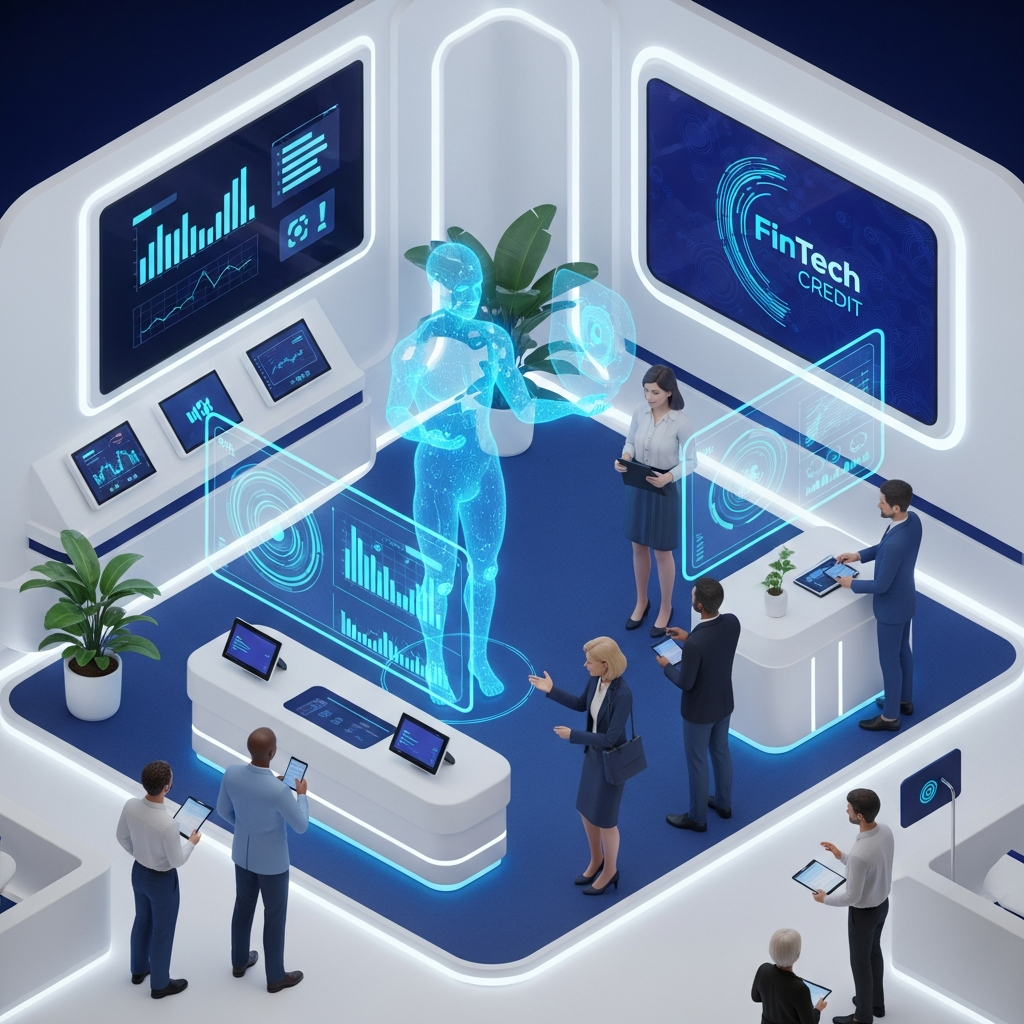
Our AI avatars aren't just chatbots; they are digital reflections of the credit union's service culture. They utilize natural language processing to understand not just the *what* but the *how* of member inquiries, responding with appropriate empathy and speed.
The Technical Foundation: Security, Velocity, and Edge Computing
A beautiful interface is worthless if it isn't fast and secure. In 2026, we utilize Edge Computing to bring data closer to the member, ensuring that interactions are near-instantaneous regardless of location. This is crucial for maintaining the "flow" state that members expect from modern digital experiences.
Security is no longer a department; it's an architectural feature. We implement Zero Trust Architecture at every layer, ensuring that member data is protected through continuous verification. This is coupled with ADA Compliance as a core design principle—not a checkbox at the end. Every element, from color contrast ratios to ARIA roles, is designed to be accessible to everyone, including neurodiverse and aging demographics who are increasingly relying on digital channels.
The GrafWebCUSO Implementation Framework
How do we bring these concepts to life? We follow a rigorous implementation framework that prioritizes member needs and business outcomes. This involves:
- Deep Discovery: Understanding the unique strategic goals and member personas of each credit union.
- Iterative Prototyping: Utilizing high-fidelity wireframes and AI-accelerated design tools to test concepts early and often.
- Security-First Engineering: Building on a foundation of secure, high-performance hosting and cloud-native services.
- Continuous Optimization: Using data-driven insights to refine the member experience long after launch.
As Alex Hormozi famously notes, the most significant risk is often the "cost of inertia." Credit unions that wait to modernize are effectively ceding member share to more agile fintech competitors. Our role is to bridge that "skill gap," providing the expertise and tools necessary to transform from a traditional institution into a digital powerhouse.
Conclusion: Leading the Credit Union Evolution
The future of the credit union movement is digital. By embracing the principles of deep UX theory, AI augmentation, and technical excellence, credit unions can offer a member experience that is not only competitive with fintechs but superior in its empathy and relationship-driven approach. At GrafWebCUSO, we are proud to be at the forefront of this revolution, helping credit unions build the digital branches of tomorrow, today.
References
- Ten Usability Heuristics for User Interface Design - Nielsen Norman Group
- Hick's Law - Laws of UX
- Doherty Threshold - Laws of UX
- Introduction to Emotional Design - Interaction Design Foundation
- Web Content Accessibility Guidelines (WCAG) Overview - W3C
This article was brought to you by GrafWeb CUSO – Building the future of digital credit unions.