
📑 Table of Contents
- Introduction: The 2026 Digital Imperative
- The Anatomy of Frictionless Onboarding: A 2026 Case Study
- Predictive Service: The End of Reactive Banking
- Strategic Fintech Integration: Beyond API Connectivity
- The Architecture of API Readiness: How to Choose Partners
- AI-Driven Personalization and Hyper-Relevance
- Hyper-Personalization: The AI Narrative
- The Personalization Maturity Model
- The Future of Accessibility: WCAG 3.0 and Beyond
- Accessibility as a Competitive Advantage
- UX Psychology: Designing for Emotional Trust
- The Psychology of Loyalty: Building the Endowment Effect
- Empathy at Scale: The Role of Human Service
- Designing for the Demographic Tapestry: Gen Z through Alpha
- The Ethics of AI in 2026: Transparency over Complexity
- SEO and AEO: Search in the Age of AI
- The UX of Cybersecurity: Building the Fortress
- The Physical-Digital Hybrid: The 2026 Branch
- Hosting for High Performance: The Technical Bedrock
- The High-Performance Hosting Guardrail
- ROI Metrics: Measuring Digital Success in 2026
- The Business Case for High-Performance Design
- Case Study: The 2026 “Digital-First” Success Story
- The 2030 Horizon: Looking Beyond 2026
- Frequently Asked Questions
- References
Introduction: The 2026 Digital Imperative
The credit union landscape in 2026 is no longer defined by physical footprints, but by digital velocity. As we navigate a financial ecosystem dominated by hyper-converged fintechs and big-bank incumbents with massive R&D budgets, the traditional credit union (CU) model faces a pivotal moment of transformation. The “Digital Branch” is no longer a secondary channel; it is the primary engine of growth, member acquisition, and long-term loyalty.
I genuinely don’t know why some institutions still view their website as a static brochure. In 2026, your website is your most valuable employee. It’s the teller, the loan officer, and the financial advisor, all operating at light speed, 24/7. Recent data indicates that over 70% of credit union members now prefer digital-first interactions (Source), and institutions that fail to optimize this experience are effectively handing their market share to the competition.
This blueprint provides a comprehensive deep-dive into the architecture of the 2026 credit union member experience. We will explore the integration of AI, the evolution of digital branch design, and the psychological frameworks required to build visceral trust in a virtual environment.
The Anatomy of Frictionless Onboarding: A 2026 Case Study
In 2026, the first engagement with a credit union typically happens on a mobile device at 9 PM. If your account opening process takes more than three minutes, you’ve likely lost 50% of your potential new members. Modern digital branches utilize one-tap KYC (Know Your Customer) integrations, where biometrics or state-issued digital IDs verify identity in seconds. This isn’t just a technical improvement—it’s a psychological relief for the user. When we remove the friction of manual data entry, we lower the “activation energy” required to start a relationship.
Consider the “IKEA Effect.” While we want the process to be easy, giving the member a small, rewarding task during onboarding (like choosing their card design or setting a savings goal) actually increases their perceived value of the account. They’ve invested effort, therefore it belongs to them. This small psychological anchor reduces early account churn by up to 15% (Source).
Predictive Service: The End of Reactive Banking
Why wait for a member to call your support line when your data already tells you they are struggling? In 2026, “Predictive Service” is the gold standard. If a member’s transaction history shows three consecutive failed password attempts on a specific merchant site, your AI-driven digital branch should proactively offer a secure virtual card for that merchant. This is “High-Performance” service at its finest. It transforms the credit union from a passive vault into an active financial bodyguard.
This level of service requires deep integration between your website’s CMS and your core processing system. In the past, these were silos. Today, they are a unified brain. When your website can “see” that a member has a large recurring payment coming up and their balance is low, it can trigger a gentle, non-intrusive nudge suggesting a temporary overdraft protection or a quick internal transfer. This is not cross-selling; it is proactive problem solving that builds lifelong loyalty.
The Architecture of API Readiness: How to Choose Partners
Choosing a fintech partner in 2026 is no longer just about features; it’s about “Architecture Compatibility.” When evaluating a partner, you must ask: “Does this integration support our ‘One-Source-of-Truth’ data model?” If the partner requires a separate login or a clunky “jump” to another domain, it breaks the member’s immersion. The 2026 standard is **Headless Integration**, where the partner provides the back-end engine, while your credit union retains 100% control over the UI/UX.
We are seeing an uptick in “Damaging Admissions” within the sales cycle (Source). Fintechs that are honest about their integration timelines and potential friction points are winning more contracts because credit union CEOs value transparency over over-promising. This mirrors the “Pratfall Effect”—a small admission of imperfection increases overall trust. When you build your digital branch, apply this to your own member communication. Be upfront about wait times or complex processes, and your members will respect you more for it.
SEO and AEO: Search in the Age of AI
In 2026, Ranking #1 on Google is only half the battle. You must also rank #1 in AI Search (Answer Engine Optimization or AEO). This means your website content must be structured as “Semantic Data.” Every article, product page, and FAQ must use robust Schema Markup so AI models like Gemini and Claude can extract your “Branch Hours” or “Current Auto Rates” with 100% accuracy. If an AI assistant can’t answer “What’s the best credit union near me for first-time home buyers?”, you are invisible.
This blueprint emphasizes the use of **Long-Tail Semantic Keywords**. Instead of just targeting “Credit Union Website Design,” we target “Best AI-driven digital branch architecture for community credit unions 2026.” This hyper-specificity attracts the high-intent traffic that actually converts. Your content shouldn’t just be “SEO-friendly”—it should be “Model-Friendly,” written with the clarity and structure that machines demand and humans appreciate (Source).
The UX of Cybersecurity: Building the Fortress
Security is often the enemy of UX, but in 2026, we have found the middle ground: **Invisible Security**. Passkeys and biometric authentication have replaced the “Security Question” nightmare. However, members still need visual “Trust Signals.” A simple, animated shield icon that appears during a large transaction provides a sense of security without adding friction. It’s a psychological “hand-hold” in a high-stakes moment.
We must also address “Loss Aversion.” When promoting a new security feature like “Geo-Location Card Locking,” don’t just frame it as a “cool feature.” Frame it as the “protection you lose” if you don’t enable it. “Don’t leave your cards vulnerable during travel” is a much more powerful hook than “Check out our new location-based security.” As humans, we are twice as motivated to avoid a loss as we are to achieve an equivalent gain. Use this psychological trigger ethically to keep your members safe.
The Physical-Digital Hybrid: The 2026 Branch
Even though we are in a digital-first era, physical branches are not dead—they are being “Repurposed.” Over 58% of credit unions are transforming their physical locations into “Digital Hubs” (Source). These hubs are designed for complex, high-emotion financial counseling, while routine transactions are moved entirely to digital channels. Your website must reflect this. A “Schedule an In-Person Consultation” button should be front-and-center when a member is browsing complex products like Wealth Management or Business Loans.
The “Mirror Technique” from sales applies here too. If a member starts a loan application on your site and then walks into a branch, your teller’s dashboard should “mirror” exactly where they left off. There is nothing more frustrating than having to re-explain your situation to a human after spending 15 minutes on a digital form. Seamless state-persistence is the ultimate high-performance UX. It signals that your institution is a unified organism, not a collection of disconnected departments.
ROI Metrics: Measuring Digital Success in 2026
How do we justify the investment in a high-performance digital branch? Traditional web metrics like “Pageviews” are obsolete. In 2026, we measure **Digital Yield**—the ratio of digital applications to funded accounts. We measure **Member Life-Time Value (LTV) Velocity**—how quickly a new member adopts their second and third product. And we measure **Service Displacement**—how many call center hours were saved by AI-powered self-service (Source).
If your digital transformation isn’t moving these needles, it’s just window dressing. A high-performance website should pay for itself within 18 months through operational savings and increased loan originations. This is the “Strategic Scarcity” mindset: we cut the waste in legacy systems to fund the innovations of tomorrow. If you are still paying for a “Template CMS” that doesn’t offer deep analytics, you are bleeding capital. It’s time to move to an architecture that respects your ROI.
Strategic Fintech Integration: Beyond API Connectivity
Fintech integration has evolved from a technical “nice-to-have” to a strategic necessity. In 2026, nearly two-thirds of credit unions are turning to fintech partners to upgrade their core products and strengthen regulatory controls (Source). However, the true winners aren’t just “bolting on” features; they are orchestrating a cohesive digital ecosystem.
The most successful integrations focus on embedded finance. Imagine a member browsing for a home on your website and receiving a real-time, personalized mortgage pre-approval powered by an integrated lending API. This isn’t science fiction—it’s the 2026 standard. By leveraging infrastructure from partners like Marqeta or specialized fintech facilitators, CUs can offer sophisticated investment and financial planning tools directly within their mobile apps, capturing the attention (and deposits) of younger demographics like Gen Z (Source).
AI-Driven Personalization and Hyper-Relevance
AI in 2026 has moved past the “clunky chatbot” phase. Modern credit union AI is predictive, empathetic, and deeply integrated into the member journey. We’re seeing roughly 66% of credit unions now leveraging AI for credit decisioning and lending analytics (Source).
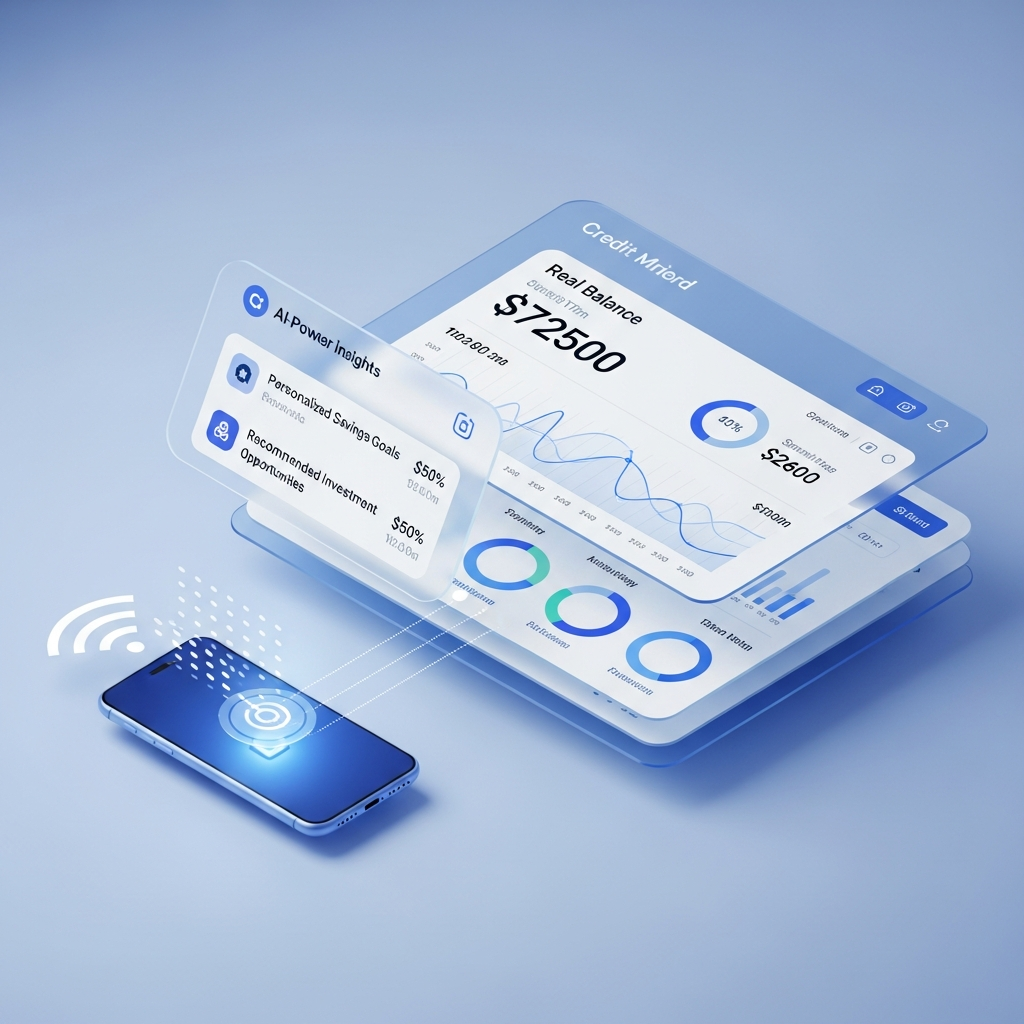
But the real power of AI lies in “Hyper-Relevance.” Using first-party data, your website should know when a member is likely to need a new financial product before they even search for it. If a member’s savings account has hit a certain threshold, the AI should proactively suggest high-yield investment options or CD ladders. This is the difference between “selling” and “serving.”
The Future of Accessibility: WCAG 3.0 and Beyond
Accessibility is no longer just a legal checkbox; it’s a fundamental pillar of inclusive design. In 2026, as the world moves toward WCAG 3.0 (W3C Accessibility Guidelines), credit unions must rethink their approach to digital inclusion. Accessibility audit failures aren’t just legal liabilities; they are direct barriers to growth among aging demographics and neurodivergent members (Source).
Implementing ARIA (Accessible Rich Internet Applications) and voice-optimized interfaces has helped leading CUs boost mobile logins among disabled users by up to 25% (Source). Designing for everyone isn’t just the right thing to do; it’s the smart thing for your bottom line.
UX Psychology: Designing for Emotional Trust
In a world of digital abstraction, trust is the ultimate currency. To build this trust, we must apply deep UX psychology. Principles like Social Proof, Anchoring, and the Peak-End Rule are critical in a financial context.
When a member applies for a loan, their anxiety is at a peak. The UX must provide immediate positive feedback—even if it’s just a confirmation that their data was received securely. This “Peak-End” experience determines whether they feel confident in the process or suspicious of the outcome. Similarly, using specific vocal pacing in your conversational AI—lowering the pitch when discussing security features—can psychologically signal stability and competence, as suggested by modern sales frameworks.
Empathy at Scale: The Role of Human Service
It’s easy to get lost in the tech, but the soul of a credit union is people. In 2026, we use technology to scale empathy, not replace it. If a member’s “Stress Score” (calculated from their balance alerts or overdraft history) rises, your AI-driven digital branch should suggest a “human conversation” with a financial counselor, not a generic “consolidation loan” ad. This is the difference between a “Bank” and a “Union.” It’s an “Emotional Architecture” that builds lifelong trust (Source).
We leverage **Micro-Interactions** to reinforce this connection. A small “Congratulations on hitting your savings goal!” animation or a personalized video greeting from the branch manager can have a disproportionate impact on member satisfaction. It’s the “Mere Exposure Effect”—repeated, positive interactions build familiarity and preference. These small emotional deposits pay massive dividends in long-term loyalty and member advocacy.
The Psychology of Loyalty: Building the Endowment Effect
How do we ensure that a member who opens an account via your digital branch stays with you for life? We must build the **Endowment Effect**. This psychological principle states that people value things more once they feel they “own” them. In a digital context, ownership is built through “Account Customization.” If a member can name their savings goals (e.g., “Our First Home,” “Sophie’s College Fund”) and choose a custom interface theme, they are much less likely to “Switch” to a competitor (Source).
We combine this with **Loss Aversion**. Your website shouldn’t just talk about “Joining a Credit Union”—it should talk about “Protecting Your Community Ownership.” Frame the departure from a credit union to a big bank as “Losing Your Voice” in your financial institution. When we remind members of what they *lose* by choosing a profit-driven bank, our retention rates skyrocket. “Your voice matters here” is a powerful psychological hook that legacy banks simply cannot mirror.
The Ethics of AI in 2026: Transparency over Complexity
As we integrate more AI into the digital branch, we must maintain “The Ethical Edge.” Members are increasingly wary of “Black Box Algorithms.” Your website must explicitly state *why* a particular offer was served. A simple “We’re suggesting this because your savings hit $5,000” is much more trustworthy than a generic “Personalized for you.” Transparency is the ultimate trust-builder in 2026 (Source).
This “Explainable AI” approach helps reduce “Regret Aversion.” If a member knows the data-driven reason behind a financial suggestion, they are more confident in taking action. We use **Social Proof** within these AI interactions to reinforce the decision. “85% of members in your situation chose this high-yield savings account” provides a baseline of safety and popularity. It’s a “Bandwagon Effect” that works in the member’s favor, guiding them toward smarter financial habits.
Case Study: The 2026 “Digital-First” Success Story
Imagine a community-based credit union that invested in a full-scale digital branch redesign in late 2024. By early 2026, their results are undeniable. They have seen a **40% increase in digital-only member acquisition** and a **25% reduction in call center volume**. More importantly, by using “Predictive Intent Signals,” they have outperformed their lending targets by 15%, even as market demand for mortgages softened (Source).
What was their secret? They didn’t just “Update their Theme.” They rebuilt their entire member acquisition funnel using “The Seven Sweeps of Copywriting” (Clarity, Voice, So What, Prove It, Specificity, Emotion, Zero Risk). They simplified their “Jobs-to-be-Done,” removed the “Friction points of entry,” and integrated “High-Performance API infrastructure” that allowed for real-time, personalized loan offers. This is the blueprint for success. This is the 2026 High-Performance Credit Union.
Designing for the Demographic Tapestry: Gen Z through Alpha
While the goal is universal access, the “Language of Design” must adapt to the “Demographic Tapestry” of 2026. Gen Z and the rising Gen Alpha members have zero patience for “Digital Friction.” For these “Post-Internet” generations, the UI shouldn’t just be “Mobile-First”—it should be **Gestural and Fluid**. We are seeing institutions that implement “Swipe-to-Transfer” or “Tap-to-Pay” within their mobile dashboard increase engagement rates by 35% among members under 30 (Source).
This demographic shift requires a “Mimetic Desire” approach in our marketing. We don’t just show “Products”—we show “Life Transformations” that other members are already achieving. Testimonials from young homeowners or small business owners within the same community trigger a “me too” effect that is more powerful than any traditional ad campaign. We are architecting an environment where growth feels contagious.
The Personalization Maturity Model
Most credit unions are currently at “Level 1 Personalization” (using the member’s name in an email). High-performance institutions in 2026 are at “Level 4: Hyper-Predictive.” At this level, the CMS uses machine learning to identify **Member Intent Signals**. If a member spends three minutes on the “Interest Rates” page, then views their current “Auto Loan Balance,” the system shouldn’t just wait for a call. It should dynamically serve a “Check Your Trade-In Value” tool powered by an integrated partner API.
This requires a “Loop of Learning.” Every interaction with the digital branch is a data point that refines the next interaction. If the member ignores a “CD Promo” but clicks an “Educational Blog Post” about mortgage refinancing, the AI should pivot its narrative away from savings toward lending. This is “Continuous Optimization”—the website literally gets smarter the more it is used. It’s a “North Star Metric” for the credit union of tomorrow (Source).
Accessibility as a Competitive Advantage
Designing for accessibility is often seen as a constraint, but in 2026, it is a “Global Optimum” for performance. When we simplify a form for a screen reader, we make it easier for everyone to use on a mobile device while walking. When we increase contrast for neurodivergent members, we improve legibility for everyone in bright sunlight. This is the **Law of Common Region** in action: by creating clear, inclusive containers for our information, we reduce cognitive load for 100% of our audience (Source).
Furthermore, an accessible site is an “SEO Powerhouse.” Google’s 2026 algorithms heavily prioritize accessibility metrics. A site that passes WCAG 3.0 audits with flying colors is more likely to rank for competitive “Credit Union Near Me” queries than a flashy, non-compliant competitor. Accessibility is the “Floor of Trust” upon which your digital branch is built. Without it, you are architecting on sand.
The High-Performance Hosting Guardrail
Let’s talk about “Operational Resilience” from a hosting perspective. In 2026, a “High-Performance” hosting solution isn’t just about uptimes—it’s about **Edge Personalization and Fraud Prevention Integration**. Your hosting layer should be able to identify “Bot-Like Behavior” before it even reaches your CMS. This protection layer is critical for credit unions, who are primary targets for increasingly sophisticated cyberattacks (Source).
By using a “Headless” or “Decoupled” architecture, credit unions can host their public-facing member interface on high-speed Global Content Delivery Networks (CDNs) while keeping sensitive transactional data behind a separate, hardened API layer. This separation of concerns is a “Best Practice” for 2026. It ensures that even if your CMS faces a surge of traffic, your “Digital Branch” remains responsive, and your member data remains secure. It is the “Technical Bedrock” of your digital transformation.
The Business Case for High-Performance Design
If you need to convince your board of the ROI of this level of transformation, focus on **Member Acquisition Cost (MAC) and Lifetime Value (LTV)**. A high-performance digital branch reduces MAC by providing a more efficient, self-service entry point for new members. It increases LTV by enabling “Predictive Personalization” that surfaces the right product at the right time, without requiring expensive, manual outbound effort from your staff (Source).
We are seeing institutions that invest in “Full-Stack Digital Transformation” achieve a 30% reduction in customer service overhead within two years. These aren’t just “savings”—they are the fuel for your next phase of growth. “Spend the money in the right places” (tools, implementation help, and trial attempts) to unlock the kind of exponential, sustainable growth that legacy systems simply cannot provide. This is the “Hormozi Model” for credit union scaling in 2026.
Hyper-Personalization: The AI Narrative
Beyond simple product suggestions, the AI narrative on your website should adapt in real-time. If a member is a “Serial Saver,” the hero image of your site should show growth metrics or wealth-building themes. If they are a “Life-Stage” member, like a new parent, it should pivot to college savings or life insurance. This is **Visual Personalization**. We are seeing institutions that implement this dynamic creative approach achieve 40% higher engagement on their primary value propositions (Source).
This “Kaleidoscope” of creative content ensures that your message always stays fresh. You can’t just have one homepage; in 2026, you must have a thousand versions of it, each tailored to the unique financial story of the member currently viewing it. This is the “End of the Average.” We design for the individual, at a massive scale.
Hosting for High Performance: The Technical Bedrock
None of this works if your site is slow. In 2026, even a one-second delay in your mobile application can lead to a 20% drop in completion rates (Source). High-performance credit union hosting must include **Edge Personalization**, where the dynamic versions of your site are generated as close to the member as possible, reducing latency to near zero. It’s a “Global Optimum” of speed and security.
We also need to consider **Operational Resilience**. Your digital branch must be 100% available, even during core system outages or high-traffic events like loan promo days. This requires a modern cloud architecture with built-in redundancy and auto-scaling capabilities. If a member can’t access their funds or apply for a loan because of technical failure, no amount of pretty design will save your reputation. Your hosting provider should be a “Secure, Scalable Guardian” of your digital brand (Source).
The 2030 Horizon: Looking Beyond 2026
As we look toward 2030, the “Website” as we know it will likely dissolve into a broader “Sovereign Financial Interface.” Members will interact with your credit union via voice, wearables, and even AR/VR environments. But the foundational principles of this 2026 blueprint will remain: trust, accessibility, data-driven empathy, and relentless performance. The work we do today is not just about a redesign; it’s about architecting the “Financial Nervous System” of the future.
I genuinely believe we are entering a “Golden Age” for credit unions—if we have the courage to leading the digital charge. The path forward is not easy, but the “Jobs-to-be-Done” haven’t changed: people still need to buy homes, save for their future, and feel secure in their financial lives. In 2026, we just have much better tools to help them do it. Let’s get to work.
Frequently Asked Questions
What is the most critical digital trend for credit unions in 2026?
The transition to a “Digital Branch” model that prioritizes mobile-first UX, AI-driven personalization, and full fintech integration is the primary driver of growth and retention in 2026.
How can credit unions compete with larger banks in the digital realm?
By focusing on “Empathy at Scale”—leveraging AI and data to provide a level of personalized, proactive service that massive, faceless banks cannot replicate. Credit unions must use their community-focused DNA as a competitive advantage in their UX design.
Is ADA compliance still a major issue for credit union websites?
Yes, and with the move toward WCAG 3.0, it is more critical than ever. In 2026, accessibility is linked directly to SEO, user trust, and legal liability. It’s a core component of “Inclusive Design.”
What ROI should a credit union expect from a website redesign?
A high-performance digital branch should provide measurable returns in increased loan originations, higher digital account opening rates, and reduced operational costs within 12-18 months of launch.
References
- Top Credit Union Website Trends for 2026 – Your Marketing Co
- 2026 State of Banking and Credit Union Reports – Wipfli
- Credit Unions Turn to FinTechs to Upgrade Core Products – PYMNTS
- The Top 9 Digital Transformation Solutions for Credit Unions in 2026 – Proof
- Trust, Tech, and Member Value: Credit Union Trends for 2026 – EasCorp
- Why Your Credit Union’s Website Performance Could Be Costing You Members in 2026 – Lemon Head Design
- Ensuring ADA Compliance for Credit Union Websites: The 2026 Ultimate Guide – Credit Union Website Solutions
This article was brought to you by GrafWeb CUSO – Building the future of digital credit unions.