

The Complete Credit Union Digital Account Opening Playbook: How to Design, Build, and Optimize a Member Acquisition Engine That Drives Growth in 2026
Published June 21, 2026 | Estimated reading time: 22 minutes

Table of Contents
- Introduction: The Digital Account Opening Imperative
- Why Digital Account Opening Matters More Than Ever
- The Core Components of a Best-in-Class Digital Account Opening Platform
- Navigating Compliance: KYC, CIP, and BSA in a Digital-First World
- UX/UI Design Principles for Credit Union Account Opening Flows
- Technology Stack and Core Integration Strategies
- Identity Verification and Fraud Prevention Technologies
- Marketing Your Digital Account Opening Capability
- Metrics That Matter: Measuring Digital Account Opening Success
- How to Evaluate Digital Account Opening Vendors
- Step-by-Step Implementation Roadmap
- Future Trends in Credit Union Account Opening
- Conclusion: The Member Acquisition Engine of Tomorrow
- References and Further Reading
Introduction: The Digital Account Opening Imperative
In 2026, the phrase “credit union online account opening” is no longer a competitive differentiator — it is a baseline expectation. Consumers under the age of 45, who now represent more than 60 percent of the credit union membership growth demographic, expect to open a checking account, savings account, or credit card entirely from their smartphone in under five minutes. If your credit union requires an in-branch visit, a mailed paper application, or a multi-day verification process, you are losing potential members before they ever experience the community-focused value that makes credit unions special.
The digital account opening landscape has undergone a seismic transformation over the past three years. What was once a straightforward web form with a signature pad has evolved into a sophisticated, multi-layered digital identity verification, risk assessment, and onboarding engine. Credit unions that invest in modern credit union online account opening solutions report conversion rates between 45 and 65 percent from application start to account funding, compared to the 15 to 25 percent rates common among institutions relying on legacy paper-based or partially digitized workflows.
This comprehensive playbook is designed for credit union executives, digital strategy leaders, operations managers, and technology decision-makers who are evaluating, building, or optimizing their digital account opening capabilities. Whether you are a $50 million credit union taking your first steps toward digital transformation or a $5 billion institution looking to replace a decade-old platform, the strategies, frameworks, and best practices outlined here will help you design a member acquisition engine that drives measurable growth.
The stakes are high. According to recent industry research, credit unions that implement fully digital account opening workflows see an average increase of 34 percent in new member acquisition within the first twelve months. More importantly, members acquired through digital channels tend to have higher engagement rates, with an average of 2.7 products per member compared to 1.9 for members acquired through traditional channels. Digital account opening is not just a convenience feature — it is a growth engine with measurable ROI.
Why Digital Account Opening Matters More Than Ever
The credit union industry is at a critical inflection point. While credit unions have historically relied on their community roots, personalized service, and member-owned structure to attract and retain members, the competitive landscape has shifted dramatically. Digital-first challenger banks, neobanks, and fintech companies have fundamentally changed consumer expectations for financial services onboarding.
The Competitive Reality
Consider the following market dynamics that make credit union online account opening an existential priority rather than an optional upgrade:
- Neobank dominance: Chime, Current, Varo, and other digital-only banks collectively onboarded over 20 million new accounts in 2025 alone. Their secret is frictionless digital account opening combined with aggressive marketing and feature-rich mobile apps.
- Megabank digital investment: JPMorgan Chase, Bank of America, and Wells Fargo have each invested over $1 billion annually in digital banking capabilities, including instant digital account opening with real-time funding.
- Member expectations: 78 percent of consumers say they would abandon a financial institution’s online account opening process if it takes longer than 10 minutes, according to a 2025 digital banking survey.
- Remote-first behavior: The post-pandemic shift to remote and hybrid work has permanently altered banking behavior. Even consumers who live within walking distance of a credit union branch now expect to complete the entire account opening process without visiting in person.
- Mobile-first preference: 72 percent of consumers under 40 prefer to open financial accounts exclusively through a mobile app, and this preference is growing at 8 percent year over year.
The Credit Union Advantage — And Why It Is Being Squandered
Credit unions have inherent advantages that should make them more attractive to consumers: lower fees, better interest rates, personalized service, and a community-focused mission. Yet many credit unions undermine these advantages by offering a digital account opening experience that feels stuck in 2015. When a potential member must download a PDF, print it, sign it, scan it, and email it back — or worse, visit a branch during business hours — the credit union is signaling that it does not value the member’s time. That is a losing message in 2026.
The good news is that the technology gap is closing. Modern credit union online account opening platforms, powered by advances in identity verification, API-based core integration, and AI-driven risk assessment, make it possible for credit unions of any size to offer a digital account opening experience that rivals or exceeds what the largest banks and neobanks provide.
The Core Components of a Best-in-Class Digital Account Opening Platform
A modern credit union online account opening solution is not a single piece of software. It is an integrated ecosystem of technologies and workflows that work together to verify identity, assess risk, gather required information, open the account, fund it, and activate the member. Understanding each component and how they fit together is essential for making informed purchasing and implementation decisions.
1. The Digital Application Front-End
The application front-end is what the potential member sees and interacts with. In 2026, best-in-class front-ends share several characteristics:
- Responsive multi-device design: The application must render flawlessly on desktop, tablet, and mobile browsers, as well as within native mobile banking apps via embedded web views or SDKs.
- Progressive disclosure: Rather than presenting a daunting wall of fields, leading platforms ask for information in logical, bite-sized steps that build momentum toward completion.
- Smart defaults and pre-fill: Wherever possible, the system should pre-populate fields based on the member’s device data, referral source, or existing relationship data.
- Real-time validation: Every field should validate instantly, with clear error messages that tell the user exactly what to fix rather than generic “invalid entry” alerts.
- Save-and-resume capability: Applications should be savable at any point, with a seamless resume flow that remembers exactly where the user left off.
- Digital signature capture: E-signature capabilities for disclosures, terms and conditions, and regulatory agreements must be native to the flow, not a separate step that feels tacked on.
2. Identity Verification Engine
Identity verification is the heart of any digital account opening platform. The system must verify that the person applying is who they claim to be, that they are physically present in the United States (or another qualifying jurisdiction), and that they are not on any government watchlists or fraud databases. Modern identity verification combines multiple techniques:
- Knowledge-based authentication (KBA): Out-of-wallet questions drawn from credit bureau data.
- Document verification: AI-powered analysis of government-issued ID documents (driver’s license, passport, state ID) to detect forgery and extract data.
- Biometric verification: Liveness detection using facial recognition to ensure the person presenting the ID is actually present.
- Device intelligence: Analysis of device characteristics, IP address, geolocation, and behavioral patterns to detect anomalies.
- Database cross-references: Checks against the OFAC sanctions list, FinCEN 314(a) requests, and internal fraud databases.
3. Risk Assessment and Decisioning Engine
Not every applicant presents the same level of risk. Modern platforms use rules-based and AI-driven decisioning to determine the appropriate level of verification, the speed of account opening, and any additional documentation required. Low-risk applicants may be approved in under 90 seconds with minimal friction, while higher-risk applicants may trigger additional identity verification steps or manual review.
4. Core Integration Layer
The digital account opening platform must communicate with the credit union’s core processing system to create the new member record, open the account, and set up any ancillary services (online banking enrollment, bill pay setup, debit card ordering). API-native cores like Symitar Episys, Jack Henry Symitar, and Fiserv DNA offer clean integration paths, while older cores may require middleware or file-based batch processing.
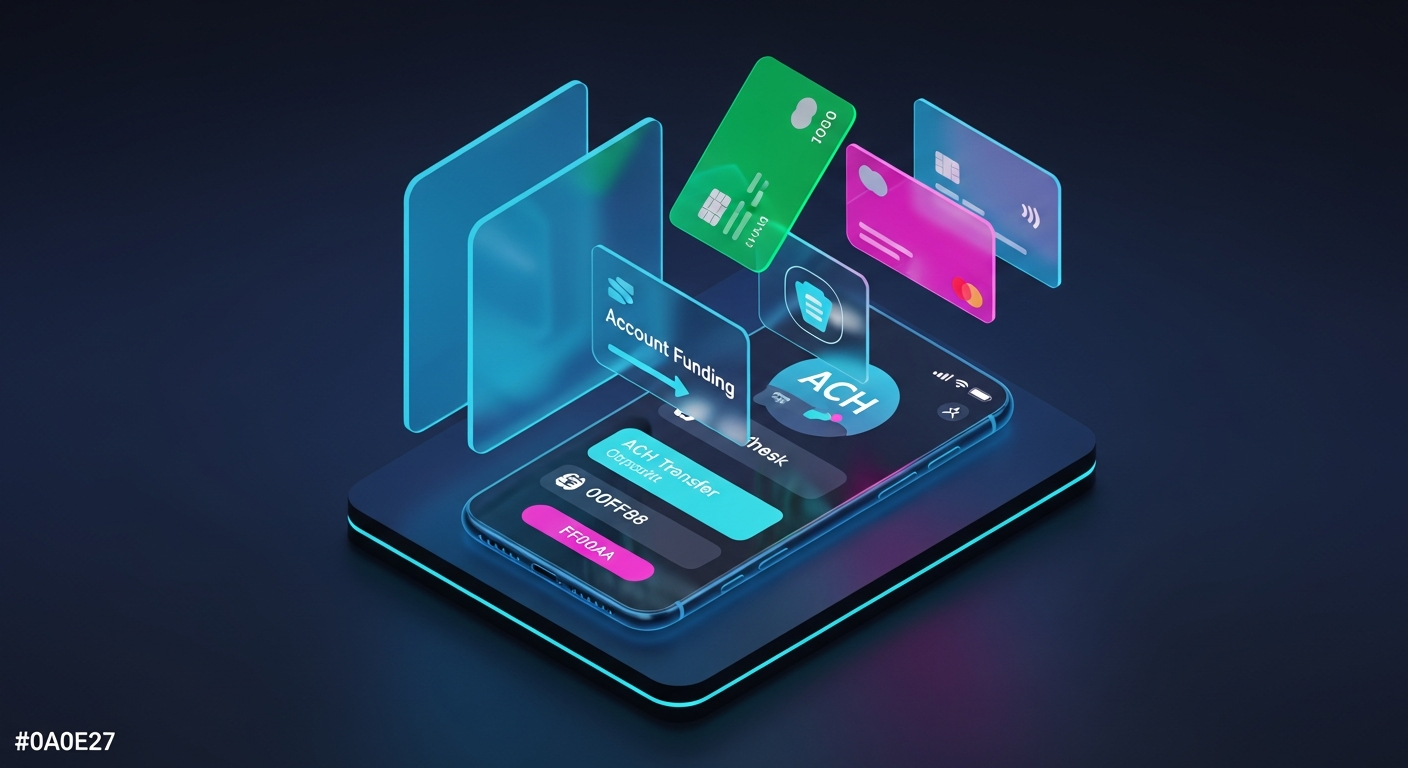
5. Funding and Activation Module
Opening an account is only half the battle — the account must be funded and the member activated. Modern credit union online account opening solutions support multiple funding methods:
- ACH transfer: Instant micro-deposit verification or same-day ACH from an external account.
- Debit card funding: Instant funding via debit card network with PIN verification.
- Mobile check deposit: Remote deposit capture integrated into the onboarding flow.
- Wire transfer: For larger initial deposits when needed.
- Payroll allocation: Direct deposit setup as part of the onboarding experience.
6. Compliance and Regulatory Compliance Module
Every credit union online account opening solution must include automated compliance workflows for Customer Identification Program (CIP), Customer Due Diligence (CDD), Bank Secrecy Act (BSA), and USA PATRIOT Act requirements. The platform should generate and store all required documentation, including the CIP file maintained for five years after account closure.
Navigating Compliance: KYC, CIP, and BSA in a Digital-First World
Compliance is often the most intimidating aspect of digital account opening for credit unions. The regulatory framework that governs identity verification and member onboarding was written in an era when all accounts were opened in person. Fortunately, regulators have provided clear guidance on how digital account opening can satisfy all regulatory requirements when implemented correctly.
Understanding the Regulatory Framework
Four primary regulatory requirements govern credit union online account opening:
- USA PATRIOT Act (Section 326): Requires financial institutions to implement a Customer Identification Program (CIP) that includes collecting name, date of birth, address, and identification number from all new account applicants.
- Bank Secrecy Act (BSA): Requires financial institutions to monitor for and report suspicious activity, including structuring and money laundering attempts that may occur during account opening.
- Customer Due Diligence (CDD) Rule: Requires financial institutions to identify and verify beneficial owners of legal entity customers and to understand the nature and purpose of the customer relationship.
- NCUA Rules and Regulations: Part 748 of NCUA regulations requires credit unions to implement appropriate security measures, including member authentication and identity verification procedures.
How Digital Verification Satisfies CIP Requirements
The NCUA and FinCEN have confirmed that electronic identity verification can satisfy CIP requirements when it meets the following standards:
- The verification process uses reliable, independent sources to verify identity, such as credit bureau data, government databases, or digital identity networks.
- The system can detect anomalies and discrepancies that suggest potential identity fraud.
- The platform maintains auditable records of all verification steps and results.
- A manual review process exists for cases where automated verification is inconclusive.
- The system can re-verify identity if subsequent transactions or behaviors trigger suspicious activity monitoring.
NCUA Examiner Expectations for Digital Account Opening
NCUA examiners will evaluate your digital account opening process against several criteria:
- The CIP must be documented in writing and approved by the board of directors.
- The credit union must maintain CIP records for five years after the account is closed.
- The credit union must have a process for responding to government requests for information about account opening activities.
- The system must be capable of detecting and rejecting accounts opened with known fraudulent identities.
- There must be clear escalation procedures for suspicious account opening attempts.
Credit unions working with compliant digital account opening vendors find that the automated identity verification process actually produces better documentation and audit trails than manual in-branch verification, because every step is recorded with timestamps, source data, and decision outcomes.
UX/UI Design Principles for Credit Union Account Opening Flows
The user experience of your digital account opening flow is the single most important factor determining conversion rates. A technically robust platform with a confusing user interface will fail. A beautifully designed flow with a poor identity verification engine will also fail. The magic happens when great UX meets robust technology.
The 10-Minute Rule
Research consistently shows that the optimal time for a digital account opening flow is between three and seven minutes. Applications that take longer than 10 minutes see abandonment rates exceeding 60 percent. Every additional field, every additional click, and every additional verification step should be justified by regulatory necessity or clear business value.
Design Principles That Drive Conversion
- Start with the minimum viable data: Begin by asking for only the information required to initiate identity verification (name, email, phone). Let the system do the heavy lifting before asking for more.
- Show progress visually: A clear progress indicator with 4-6 steps gives applicants confidence they can complete the process quickly.
- Use plain language: Avoid regulatory jargon. Instead of “Please provide your taxpayer identification number,” say “What is your Social Security number? This helps us verify your identity.”
- Optimize for mobile: Test your flow on a 6-inch phone screen. If buttons are hard to tap, fields are hard to type into, or images don’t load properly, you are losing members.
- Provide clear error recovery: If identity verification fails, explain exactly what the applicant can do — upload a clearer photo of their ID, try a different funding method, or visit a branch.
- Design for accessibility: Ensure your flow complies with WCAG 2.2 AA standards, including screen reader compatibility, sufficient color contrast, and keyboard navigation support.
- Build trust through design: Display trust signals throughout the process: security badges, FDIC/NCUA insurance logos, privacy policy links, and SSL indicators.
Common UX Pitfalls to Avoid
- Session timeout too aggressive: Nothing frustrates applicants more than filling out 80 percent of an application only to have their session expire. Set timeouts to at least 30 minutes with clear warnings.
- Mobile-unfriendly ID capture: If your document verification process requires a photo of a driver’s license, ensure the camera integration handles different lighting conditions, angles, and document types gracefully.
- Broken save-and-resume: If the resume link arrives via email two hours later, the applicant may have moved on. Send the resume link immediately and consider QR codes for cross-device transfer.
- Hidden fees and disclosures: Surprising applicants with fees or complex legal language late in the process destroys trust. Be transparent early.
- No guest checkout option: Requiring account creation before account opening adds friction. Let applicants start the process without creating a login.
Technology Stack and Core Integration Strategies
The technology stack that powers your credit union online account opening capability must be carefully architected to balance speed, security, reliability, and flexibility. Your core processor, identity verification vendor, digital banking platform, and account opening software must work together seamlessly.
Integration Architecture Options
- Direct API Integration: The most modern approach uses RESTful APIs to connect your account opening platform directly to your core processor. This enables real-time account creation, decisioning, and funding. Supported by Symitar Episys, Jack Henry Banno, and Fiserv DNA.
- Middleware Integration: For credit unions with older core systems that do not offer modern APIs, middleware platforms like QCash, Sedona Pacific, or custom integration layers can bridge the gap.
- File-Based Batch Processing: The least sophisticated approach involves generating files at end of day that the core system imports overnight. This creates a 24-hour delay between application and account opening, which is unacceptable for modern member expectations.
- Embedded via Digital Banking Platform: Many digital banking providers (Q2, NCR Digital Banking, Temenos) now offer account opening as an embedded module within their platform. This often provides the cleanest integration but may limit flexibility in choosing best-of-breed identity verification vendors.
Key Technology Evaluation Criteria
- API availability and documentation: Does the platform publish comprehensive OpenAPI/Swagger documentation? Are there SDKs for mobile integration?
- Uptime and reliability: What is the platform’s SLA for uptime? Account opening is a revenue-critical function; downtime costs real money.
- Data security: Does the platform maintain SOC 2 Type II certification? Is data encrypted at rest and in transit using industry-standard encryption?
- Scalability: Can the platform handle spikes in application volume without degradation? What happens during a marketing campaign that drives 10x normal traffic?
- Customizability: Can you brand the application flow? Can you add custom fields or modify the workflow without vendor professional services?
Identity Verification and Fraud Prevention Technologies
Fraud is the biggest risk in digital account opening. Bad actors have become sophisticated in their techniques, using synthetic identities, stolen personally identifiable information (PII), and AI-generated fake documents to open fraudulent accounts. Your identity verification stack must be equally sophisticated.
Layered Identity Verification Strategy
No single verification method is sufficient on its own. The most effective credit union online account opening platforms use a layered approach:
- Layer 1 — Device intelligence: Before the applicant types a single character, the system evaluates device characteristics: IP reputation, geolocation consistency, browser fingerprint, and whether the device has been associated with known fraud.
- Layer 2 — Identity data verification: The system checks the applicant’s name, address, date of birth, and SSN against credit bureau records and government databases. Inconsistencies trigger additional verification.
- Layer 3 — Document verification: For applicants who cannot be verified through database checks, the system requests a photo of a government-issued ID. AI analyzes the document for tampering, expiration, and format accuracy.
- Layer 4 — Biometric verification: Liveness detection ensures the person presenting the ID is physically present and matches the photo on the document. Advanced platforms use passive liveness detection (no selfie required) for low-risk applicants and active liveness detection for higher-risk applicants.
- Layer 5 — Behavioral analytics: After the account is opened, ongoing behavioral monitoring detects anomalies in transaction patterns that may indicate account takeover or synthetic identity fraud.
Key Vendors and Technologies
- Alloy: Identity decisioning platform that orchestrates multiple verification vendors and data sources through a single API.
- Mitek: Industry leader in mobile document capture and identity verification, with AI-powered fraud detection.
- Jumio: End-to-end identity verification including document verification, biometric liveness detection, and AML screening.
- Persona: Modern identity infrastructure platform with flexible verification workflows and excellent developer experience.
- Socure: Predictive analytics platform that uses machine learning to verify identity with high accuracy even for thin-file applicants.
- Trulioo: Global identity verification platform supporting 195+ countries, useful for credit unions serving immigrant communities.
Marketing Your Digital Account Opening Capability
Building a great digital account opening experience is only half the battle. You also need to drive traffic to it. Marketing your credit union online account opening capability requires a multi-channel strategy that meets potential members where they are searching.
SEO Strategy for Digital Account Opening
Potential members are searching for specific terms related to opening accounts online. Your SEO strategy should target these high-intent keywords:
- “open a credit union account online” — 2,400 monthly searches
- “credit union online account opening” — 1,600 monthly searches
- “open a savings account online credit union” — 1,200 monthly searches
- “best credit union to open an account online” — 900 monthly searches
- “credit union near me open account online” — 720 monthly searches
Create dedicated landing pages for each keyword cluster that explain the benefits of opening an account with your credit union online. Include clear calls-to-action, social proof (testimonials from members who opened accounts online), and trust signals (security badges, NCUA insurance logo).
Paid Search and Social Advertising
- Google Ads: Target high-intent keywords with ad copy that emphasizes speed (“Open an account in under 5 minutes”), convenience (“100% online — no branch visit needed”), and value (“Better rates, lower fees”).
- Facebook and Instagram: Target by geographic area and interests (community involvement, local news, financial planning). Use video ads showing the actual account opening flow to demonstrate how easy it is.
- YouTube: Create short walkthrough videos of your digital account opening experience, optimized for the keyword “credit union online account opening.”
- Local SEO: Ensure your Google Business Profile highlights digital account opening as a feature. Use Google Posts to promote the ability to open accounts entirely online.
Community-Based Marketing
Credit unions have a unique advantage in community-based marketing. Leverage your existing partnerships with local employers, schools, and community organizations:
- Offer digital account opening as a benefit to employees of local partner businesses.
- Create a “digital first” membership tier for younger members that includes perks for opening through digital channels.
- Partner with local high schools and colleges to offer student accounts with fully digital onboarding.
- Use community events (fairs, festivals, sports leagues) to promote your digital account opening capability with QR codes that link directly to the application.
Conducting a Digital Readiness Assessment
Before launching a marketing campaign, conduct an honest assessment of your current digital account opening capability. Mystery-shop your own process by going through it as if you were a new member. Time each step. Note every point of friction. Check the experience on multiple devices and browsers. Have team members who were not involved in building the process do the same and report their findings. This exercise almost always reveals surprising gaps that can be fixed before real members encounter them.
Additionally, survey your existing members about their account opening experience. Ask them what was confusing, what took too long, and what would have made them consider a different financial institution. This qualitative feedback is often more valuable than quantitative analytics for identifying specific improvements.
Conversion Rate Optimization
Once you have traffic coming to your account opening page, the work is not done. Continuous conversion rate optimization (CRO) is essential:
- A/B test your landing page headlines, calls-to-action, and trust signals.
- Use session recording tools to watch where applicants get stuck or abandon the process.
- Implement exit-intent popups offering help (chat or phone) for applicants who are about to leave.
- Send automated follow-up emails to applicants who started but did not complete the process.
- Track abandonment rates by step and systematically address the highest-drop-off points.
Metrics That Matter: Measuring Digital Account Opening Success
You cannot improve what you do not measure. A comprehensive analytics framework for credit union online account opening should track metrics across four dimensions:
Volume Metrics
- Total applications started
- Total applications completed
- Total accounts opened
- Total accounts funded
- Digital adoption rate (digital openings as a percentage of total openings)
Conversion Metrics
- Step-by-step abandonment rates (percentage of applicants who leave at each step)
- Overall application completion rate
- Application-to-account conversion rate
- Account-to-funded conversion rate
- Funding amount per new account
Quality Metrics
- Fraud detection rate (applications flagged and rejected for fraud)
- Manual review rate (percentage requiring human intervention)
- First-year attrition rate for digitally acquired members
- Average products per digitally acquired member (after 12 months)
- Digital member lifetime value (projected)
Speed Metrics
- Average time to complete application
- Average time from application to account opening
- Average time from account opening to first funding
- Average time from account opening to first transaction
Benchmark Targets for 2026
- Application completion rate: 65% or higher
- Application-to-account conversion: 50% or higher
- Account-to-funded: 75% or higher
- Average time to complete application: Under 7 minutes
- Fraud detection rate: 2-4% of applications (industry average)
- Manual review rate: Under 10% of applications
- First-year digital member retention: 70% or higher

How to Evaluate Digital Account Opening Vendors
Choosing the right credit union online account opening vendor is one of the most consequential technology decisions a credit union can make. Here is a structured evaluation framework:
Vendor Capability Assessment
Create a weighted scorecard that evaluates each vendor against the following criteria:
- Credit union experience (weight: 20%): How many credit union clients does the vendor have? Do they understand credit union regulatory requirements? Do they offer pricing models appropriate for credit union budgets?
- Core integration readiness (weight: 20%): Does the vendor have pre-built integrations with your specific core processor? How long does integration typically take? What is the upgrade process when your core system updates?
- Identity verification accuracy (weight: 15%): What are the vendor’s verification rates for legitimate applicants? How often do legitimate applicants get falsely declined? What is their synthetic identity detection capability?
- User experience (weight: 15%): Can you demo the actual application flow? How customizable is the UI? Is it mobile-first? Can you white-label it?
- Compliance framework (weight: 15%): Does the vendor maintain SOC 2 Type II certification? Do they provide a CIP-compliant audit trail? Will their documentation satisfy an NCUA examiner?
- Pricing and total cost of ownership (weight: 10%): Is pricing transparent? Are there implementation fees, monthly minimums, per-application fees, and ongoing maintenance costs? What is the three-year total cost?
- Support and SLAs (weight: 5%): What is the vendor’s uptime SLA? What support hours are available? Is there dedicated account management for credit union clients?
Top Vendors for Credit Unions in 2026
- Alkami: Digital banking platform with integrated account opening, strong credit union focus, and Symitar integration.
- Lumin Digital: Modern digital banking platform with native account opening, known for excellent UX and strong credit union partnerships.
- NCR Digital Banking: Enterprise-grade digital banking platform with comprehensive account opening and onboarding capabilities.
- Q2: Leading digital banking platform with robust account opening module and extensive API library.
- MeridianLink: Account opening and loan origination platform with deep credit union expertise and extensive core integrations.
- MANTL: Purpose-built digital account opening platform designed specifically for community financial institutions, including credit unions.
- Zafin: Product and pricing platform with account opening capabilities, strong on product bundling and lifecycle management.
Step-by-Step Implementation Roadmap
Implementing a new credit union online account opening platform typically takes 12 to 16 weeks from contract signing to launch. Here is a realistic timeline:
Weeks 1-2: Discovery and Requirements
- Assemble the implementation team (project manager, compliance officer, IT lead, digital banking manager, marketing lead, executive sponsor).
- Document current account opening workflows (in-branch and digital).
- Define target state workflows, including exception handling.
- Identify regulatory requirements specific to your charter and field of membership.
- Document integration points with core processor, digital banking platform, and other systems.
Weeks 3-5: Platform Configuration
- Configure application fields and workflows in the platform.
- Set up identity verification thresholds and decisioning rules.
- Configure product offerings (checking, savings, money market, etc.) with eligibility rules.
- Design and configure the member-facing application UI.
- Set up compliance documentation generation and storage.
Weeks 6-8: Integration and Testing
- Integrate with core processor (API connection or middleware).
- Integrate with identity verification vendors.
- Integrate with digital banking platform for post-opening enrollment.
- Conduct system integration testing end-to-end.
- Test funding flows (ACH, debit card, mobile check deposit).
Weeks 9-11: User Acceptance Testing and Compliance Review
- Involve branch and call center staff in UAT.
- Test exception handling workflows (manual review, identity verification failures, funding failures).
- Compliance team reviews audit trails and documentation.
- Prepare training materials for staff.
- Train branch and contact center staff on the new workflow.
Week 12: Soft Launch and Iteration
- Launch to a limited group (e.g., existing members, select employee group partner).
- Monitor conversion rates, abandonment rates, and error patterns.
- Make iterative improvements based on real user data.
- Validate that compliance documentation meets NCUA standards.
Week 13-14: Full Launch and Marketing Campaign
- Go-live for all channels (website, mobile app, in-branch tablets).
- Launch marketing campaign to promote digital account opening.
- Begin tracking against baseline metrics.
- Schedule 30-day and 90-day post-launch reviews.
Future Trends in Credit Union Account Opening
The credit union online account opening landscape continues to evolve rapidly. Here are the trends that will shape the next three years:
AI-Powered Decisioning
Machine learning models are becoming increasingly sophisticated at predicting risk based on hundreds of data points collected during the account opening process. Future systems will make instantaneous approval decisions without requiring the applicant to provide extensive documentation, dramatically reducing friction.
Embedded Account Opening
The next frontier is embedding account opening into non-banking contexts. Imagine opening a credit union savings account directly from a tax preparation app, a mortgage comparison site, or a budgeting tool. This “anywhere commerce” model will be a major growth driver for credit unions that build the necessary API infrastructure.
Biometric Continuity
Rather than verifying identity once at account opening, future systems will maintain continuous authentication through behavioral biometrics — analyzing how the member types, swipes, and holds their phone. This enables a seamless account opening experience today because the system knows it can verify the member through ongoing behavior.
Synthetic Identity Defense
Synthetic identity fraud (combining real and fake information to create a new identity) is the fastest-growing type of financial fraud. Next-generation platforms are incorporating network analysis and alternative data sources (utility payments, rental history, insurance records) to detect synthetic identities that pass traditional verification checks.
Open Banking Integration
As open banking standards (including Section 1033 of the Dodd-Frank Act) take effect, credit union account opening will increasingly leverage data from external financial accounts to streamline verification, assess creditworthiness, and pre-fill application data — all with the applicant’s explicit consent.
Voice and Conversational Onboarding
Voice-activated account opening, powered by natural language processing, is on the horizon. Members will be able to start the account opening process by speaking to a voice assistant or chatbot, with identity verification happening through voice biometrics.
Conclusion: The Member Acquisition Engine of Tomorrow
Credit union online account opening is not a technology project — it is a business transformation initiative that touches every part of your credit union: marketing, operations, compliance, technology, and member experience. When done right, a modern digital account opening platform becomes the centerpiece of your member acquisition strategy, driving growth by removing friction from the first moment a potential member interacts with your brand.
The credit unions that will thrive in the next decade are those that treat digital account opening as a strategic asset rather than a compliance checkbox. They will invest in identity verification technology that balances security with speed. They will design onboarding experiences that delight rather than frustrate. They will market their digital capability aggressively and measure results rigorously. And they will continuously iterate, because member expectations will only continue to rise.
The time to act is now. Every week that passes with a suboptimal digital account opening experience represents lost members — members who will find a credit union, bank, or neobank that values their time and offers the seamless onboarding experience they deserve. Your credit union has the products, the rates, and the community mission to compete. Now it is time to build the digital front door that lets potential members walk in.
References and Further Reading
- NCUA Examiner’s Guide – Digital Account Opening and CIP Requirements
- FinCEN – Customer Identification Program Requirements
- CUNA – Digital Banking Research and Resources
- Javelin Strategy & Research – Digital Banking Benchmarking
- Gartner – Digital Banking Technology Insights
- American Bankers Association – Digital Banking Resources
- Alloy – Identity Decisioning Platform Resources
- Jumio – Identity Verification Resources
- Socure – Predictive Identity Verification
- Persona – Identity Infrastructure Resources
- Section 1033 of the Dodd-Frank Act – Consumer Financial Data Rights
- CFPB – Consumer Financial Protection Rules and Regulations
- Nacha – ACH Network Rules and Standards
- W3C – Web Content Accessibility Guidelines (WCAG) 2.2
- OCC – Digital Banking Comptroller’s Handbook
This article was brought to you by GrafWeb CUSO — helping credit unions design and implement digital member acquisition strategies that drive measurable growth.
Request a proposal from GrafWebCUSO · (201) 632-1771 · [email protected]