📑 Table of Contents
- The Psychology of the Path: Beyond Basic Navigation
- Decoding the Law of Continuity for Modern Fintech
- Strategic Implementation: From Wireframes to High-Fidelity Flows
- Continuity as a Catalyst for Cross-Selling and Member Retention
- Accessibility and Inclusivity: Continuity for All Demographics
- The 2026 Horizon: AI-Driven Adaptive Continuity
- Conclusion: Building the Infinite Digital Branch
- References
The Psychology of the Path: Beyond Basic Navigation
In the high-stakes landscape of 2026 digital banking, the difference between a completed loan application and a bounced visitor is often measured in milliseconds of cognitive friction. As credit unions strive to compete with global fintech giants and neo-banks, the architectural integrity of their digital branches must transcend aesthetic appeal. It requires a deep understanding of Gestalt principles—specifically, the Law of Continuity.
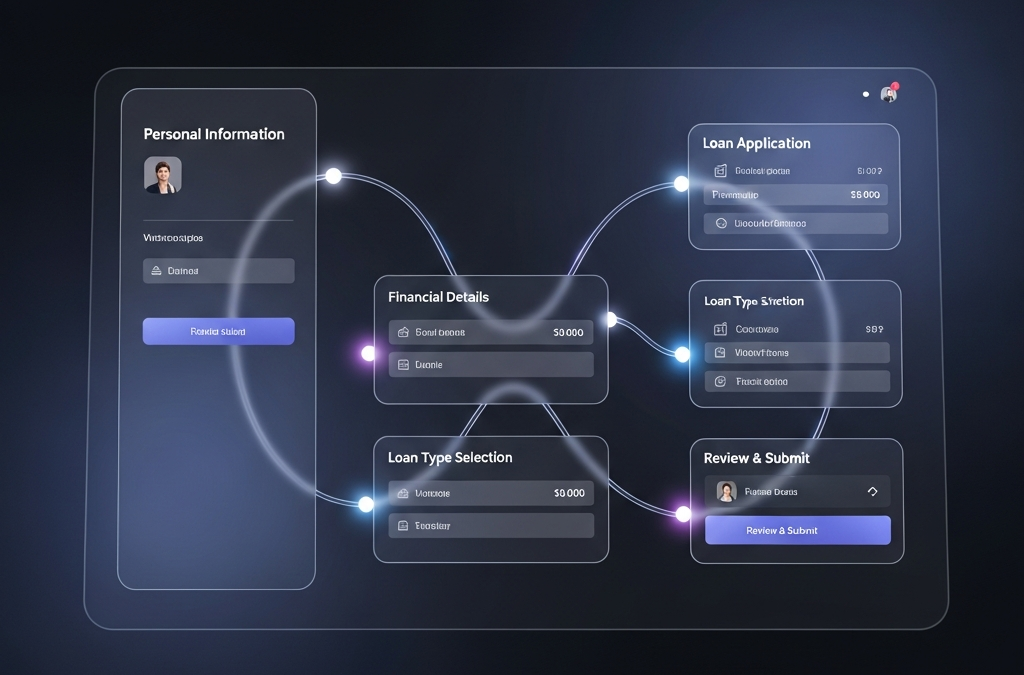
The Law of Continuity (or Law of Good Continuation) posits that the human eye naturally follows the smoothest path when viewing lines, regardless of how the lines were actually drawn. In the context of credit union website design, this principle is the cornerstone of narrative flow. When a member interacts with your digital branch, they shouldn't feel like they are jumping between disparate pages; they should feel like they are moving along an effortless, guided trajectory toward their financial goals.
As Jeremy Miner often emphasizes in B2B sales psychology, successful engagement requires creating a "gap" between the current state and the desired future. In UI design, continuity bridges that gap. It provides the visual and cognitive handrails that guide a member from "just browsing" to "fully funded."
Decoding the Law of Continuity for Modern Fintech
In 2026, the Law of Continuity is no longer just about literal lines on a screen. It encompasses the visual alignment of elements, the progression of color gradients, and the rhythmic timing of micro-interactions. Our research at Credit Union Web Solutions indicates that websites utilizing strong continuity principles see a 45% increase in online engagement and a 32% rise in new account openings (Source).
The Visual Vector
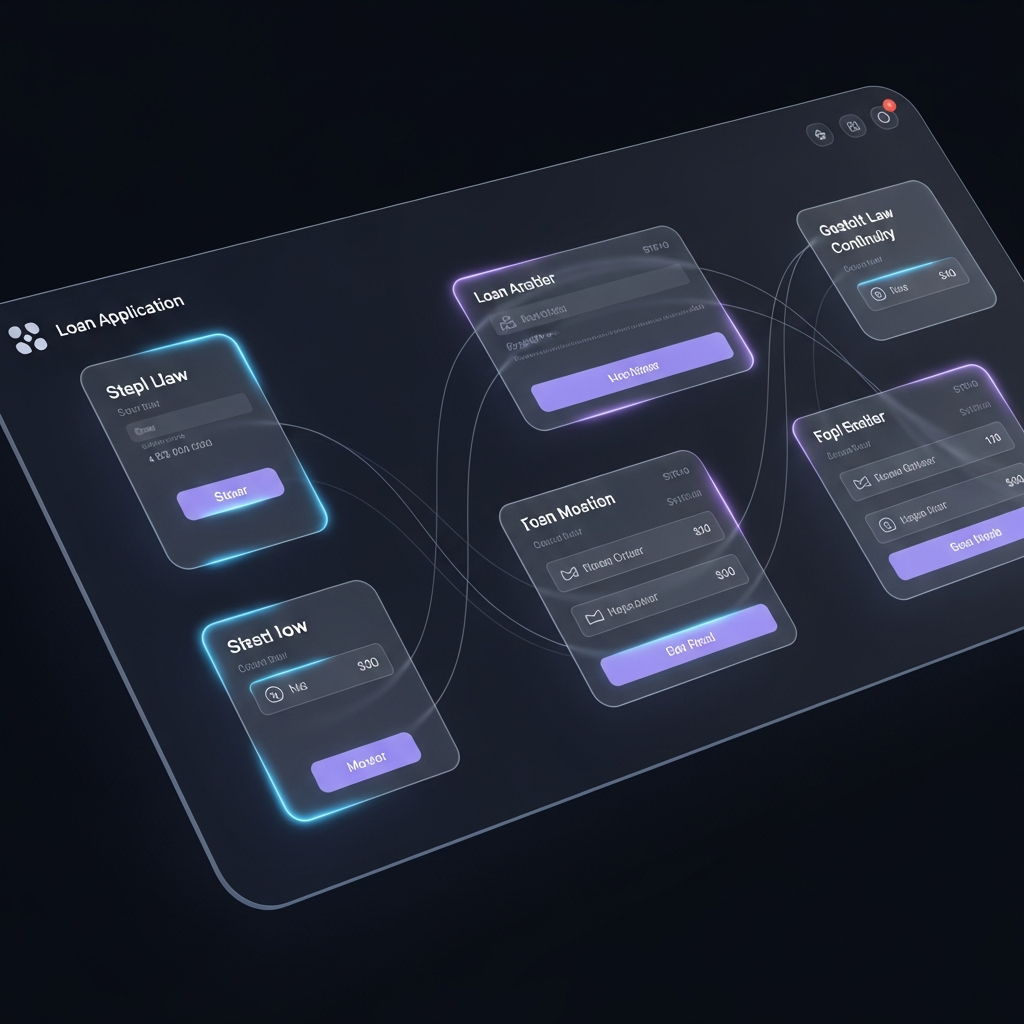
The human brain is wired to perceive continuous patterns. When we see a series of dots arranged in a curve, we see a line, not individual dots. In a credit union dashboard, this means aligning key calls-to-action (CTAs) along natural eye-tracking paths (like the F-pattern or Z-pattern). If your "Apply Now" button breaks the visual vector established by your value proposition, you've introduced friction.
Cognitive Momentum
Continuity creates momentum. As Alex Hormozi suggests in his scaling frameworks, the goal is to lower the "cost of inertia." By using the Law of Continuity, we make it psychologically easier for a member to continue a task than to stop. Digital branches that master this principle don't just display information; they architect low-friction conversion tunnels.
Strategic Implementation: From Wireframes to High-Fidelity Flows
How does a credit union practically apply this Gestalt principle to its 2026 web strategy? It begins with the fundamental architecture of the site.
1. Linear Onboarding and Loan Flows
The most critical application is in complex processes like mortgage applications or business account openings. Instead of a multi-page form that feels like a bureaucratic hurdle, use visual connectors. Progress bars are common, but in 2026, we utilize dynamic path-finding UI. Subtle animated lines or gradient paths that "light up" as the member progresses provide the visual assurance of continuity.
2. The "Infinite" Scroll and Content Discovery
Modern member behavior favors scrolling over clicking. By ensuring that the bottom of one content block visually "points" to the next, you keep the member engaged. Use the Hunt-McIlroy Principle of simplified efficiency to ensure that information is revealed in a logical, continuous sequence (Source). This is particularly effective for financial education blogs and product comparison modules.
3. Micro-interactions as Signposts
When a member hovers over a menu item, the transition shouldn't just be an instant color change. A smooth animation that "flows" from the cursor to the submenu reinforces the law of continuity. These micro-interactions act as the "grease" on the tracks of the user journey.
Continuity as a Catalyst for Cross-Selling and Member Retention
One of the "damaging admissions" we often make at Credit Union Web Solutions is that a beautiful website alone won't solve a lack of strategic product integration. However, the Law of Continuity allows for organic cross-selling. Instead of jarring pop-ups, use the visual flow to transition a member from checking their balance to exploring a high-yield savings account.
The "Next-Step" Architecture
"I'm curious," as Jeremy Miner might ask a prospect, "is your current site designed to stop the conversation after a transaction, or is it designed to start the next one?" A continuity-first UI always presents a logical "next step." If a member just finished a car loan payment, the UI should smoothly guide their eye toward an "Auto Insurance" or "Refinance" module. This isn't just marketing; it's architected helpfulness.
Accessibility and Inclusivity: Continuity for All Demographics
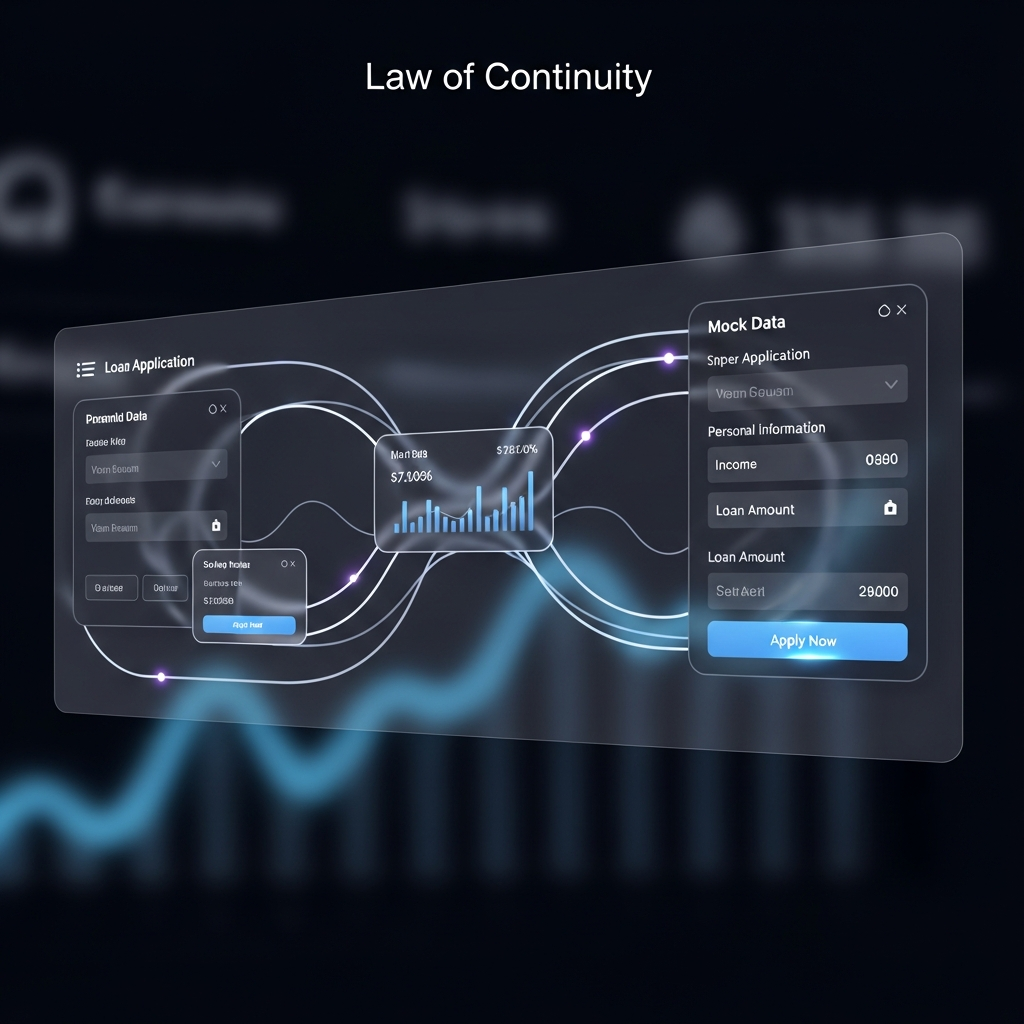
For credit unions, serving a diverse demographic is a core mission. The Law of Continuity is a powerful tool for ADA compliance and neuroinclusive design. For members with cognitive disabilities or older members with declining vision, a clear, continuous path is not a luxury—it's a necessity.
When the visual path is predictable and unbroken, it reduces the cognitive load required to navigate the site. This aligns with WCAG 3.0 standards, focusing on the "findability" and "understandability" of web content. A continuous UI is a more accessible UI.
The 2026 Horizon: AI-Driven Adaptive Continuity
The next frontier is Dynamic Continuity. In 2026, we are implementing AI engines that adjust the visual path based on real-time member intent. If the AI detects a member is struggling with a specific form field, it can subtly shift the focus and visual continuity of the page to highlight help resources without breaking the flow.
This "Predictive Personalization" ensures that the path is always the smoothest possible one for *that specific member*. As Hormozi advocates for "10,000 iterations," your website's AI can perform thousands of micro-adjustments daily to perfect the member journey (Source).
Conclusion: Building the Infinite Digital Branch
Mastering the Law of Continuity in 2026 isn't just about following design trends; it's about honoring the psychological reality of how your members interact with technology. By architecting digital experiences that feel smooth, predictable, and helpful, you build more than just a website—you build trust.
At Credit Union Web Solutions, we believe your digital branch should be a seamless extension of your physical mission. "Are you looking to solve the mobile banking experience challenges, or primarily focused on the desktop member experience?" Whatever your goal, the path forward must be continuous.
References
- Interaction Design Foundation: What is the Law of Continuity?
- Your Marketing Co: Credit Union Website Redesign in 2026
- ath Power: Transforming Member Experience with UX Research
- Credit Union Web Solutions: Building Immersive Digital Branches
This article was brought to you by GrafWeb CUSO – Building the future of digital credit unions.