Table of Contents
- Introduction: The Evolution of Credit Union Interface Strategy
- Understanding the Rule of Tertiary Action in Fintech
- The Hierarchy of Intent: Primary vs. Secondary vs. Tertiary
- The Psychology of Subtle Persuasion: Why Tertiary Actions Matter
- Architecting the 2026 Digital Branch: Implementation Strategies
- AI-Driven Personalization: The Engine of Tertiary Success
- Accessibility and Inclusivity: Tertiary Actions for All Members
- Conversion Without Friction: Measuring the Impact of Tertiary Design
- Beyond 2026: The Future of Credit Union UX Architecture
- Conclusion: From Transactional to Transformational Design
- References
Introduction: The Evolution of Credit Union Interface Strategy
In the hyper-competitive financial landscape of 2026, the traditional credit union (CU) digital presence has undergone a radical transformation. No longer is a "functional" website sufficient to retain members who are increasingly lured by aggressive fintech giants and large commercial banks. Today, the digital branch is the primary—and often only—touchpoint for a significant portion of the membership. As we examine the current state of Credit Union Web Architecture, a new design paradigm has emerged: The Rule of Tertiary Action.
Historically, UI design focused heavily on the Primary Action (e.g., "Apply for a Loan") and the Secondary Action (e.g., "Login to Online Banking"). However, this binary approach often creates a high-friction environment where members feel pressured or ignored. The Rule of Tertiary Action introduces a third, more subtle layer of engagement that fosters trust, builds financial literacy, and creates "curiosity pacing"—a technique essential for long-term member retention and organic growth.
Understanding the Rule of Tertiary Action in Fintech
The Rule of Tertiary Action is a strategic UX principle that prioritizes low-stakes, high-value interactions. These are actions that do not lead directly to a transaction but provide immediate utility or psychological reward to the member. In the context of 2026 fintech, tertiary actions are the "connective tissue" that transforms a transactional platform into a lifestyle financial tool.
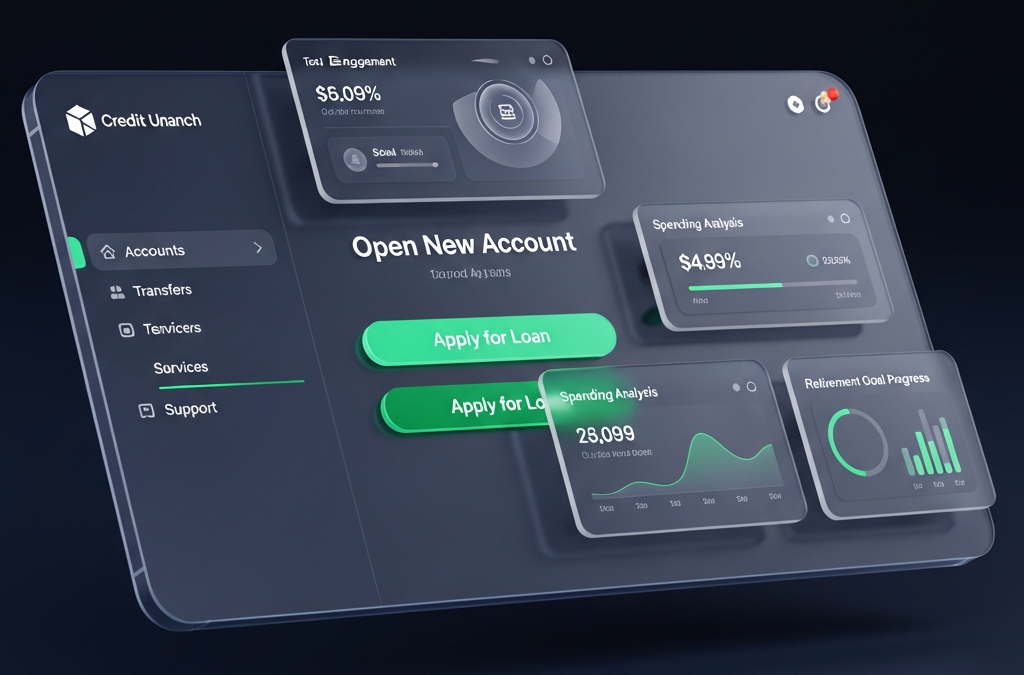
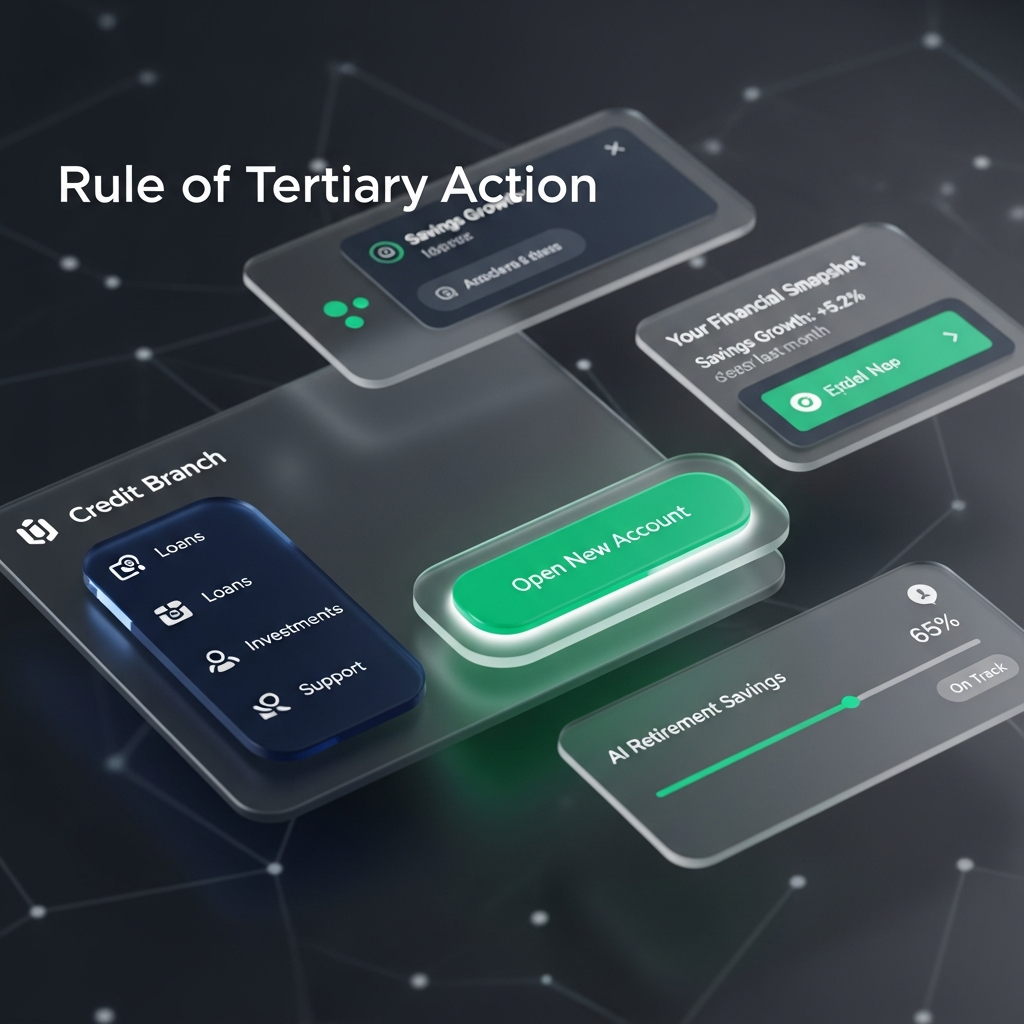
Consider the difference between a traditional CU site and a modern 2026 Digital Branch. In the former, the user is presented with loud banners for car loans. In the latter, the interface might subtly highlight a "Savings Goal Progress" widget or a "Financial Health Pulse" insight based on their specific transaction history. These are tertiary actions. They build a "success journal" for the member within the interface itself, a tactic proven to increase platform stickiness and member loyalty (EasCorp, 2026).
The Hierarchy of Intent: Primary vs. Secondary vs. Tertiary
To architect a high-velocity digital branch, designers must master the hierarchy of intent. Each level of action serves a specific psychological and business purpose:
- Primary Action (The "Big Ask"): These are the revenue-generating conversions. Common examples include loan applications, new account openings, and credit card sign-ups. In 2026, these are increasingly streamlined through AI-powered pre-approvals.
- Secondary Action (The "Utility"): These are the operational essentials. Logging in, checking balances, transfering funds, and paying bills. This is where most CU UX effort was spent in 2024 and 2025.
- Tertiary Action (The "Relationship Builder"): These are the engagement drivers. Examples include interacting with an AI financial coach, adjusting a "what-if" mortgage calculator, exploring personalized educational content, or checking local community impact metrics of the CU.
The secret to 2026 success lies in the synergy between these layers. By engaging a member with a meaningful tertiary action—such as a "Concerned Curiosity" prompt about their recent spending trends—you lead them naturally toward a primary action (e.g., opening a high-yield savings account or a debt consolidation loan) without the aggressive "hard sell" that modern consumers loathe.
The Psychology of Subtle Persuasion: Why Tertiary Actions Matter
Why do tertiary actions work? They leverage several key psychological frameworks identified by leading sales and marketing strategists like Jeremy Miner and Alex Hormozi. By offering value upfront through tertiary engagements, CUs utilize the principle of reciprocity. Furthermore, these actions help bridge the "skill gap" for members who may be intimidated by complex financial products (CUInsight, 2026).
When an interface provides an "Unaffectable Next" step—a low-friction tertiary action—it keeps the user in a state of flow. If the only options are "Apply Now" or "Logout," many users will choose the latter the moment they experience even minor decision fatigue (Hick's Law). Tertiary actions provide a release valve for cognitive load, allowing the user to stay engaged with the brand without feeling forced into a high-stakes decision.
Furthermore, tertiary actions act as a "curiosity loop." By presenting a member with a "What's My Savings Gap?" widget, you aren't just giving them a tool; you're inviting them into a journey. This mirrors the "success loop" seen in leading social platforms, where small, positive feedback loops keep users coming back. For credit unions, this means higher session times and deeper member loyalty. This "Kaleidoscope Creative" strategy ensures that every member sees a version of the interface that resonates with their specific financial stage and goals, much like how top digital brands constantly iterate their creative to find the highest-performing hooks (CUInsight, 2026).
Expanding on these principles, let's look at how "concerned curiosity" can be woven into the UI. Instead of a loud "DEBT CONSOLIDATION NOW" banner, a more effective 2026 tertiary action might be a subtle note in the account overview: "We noticed you've been using several high-interest credit cards for your monthly bills. Would you like to see how a low-interest personal loan could save you $250 a month?" This is a tertiary action—it's an invitation to explore, not a demand to apply. It respects the member's intelligence and demonstrates the credit union's commitment to their financial health.
This approach also helps CUs "reframe objections." If a member is hesitant about sharing more data, a tertiary action that shows the *value* of that data (e.g., "See how your spending compares to others in your area with our 'Local Impact' widget") can lower their defenses. It moves the conversation from "Privacy vs. Profit" to "Data for Personal Empowerment." This is "mirror selling" at the interface level—the digital branch reflects the member's own aspirations and concerns back to them in a constructive, helpful way.
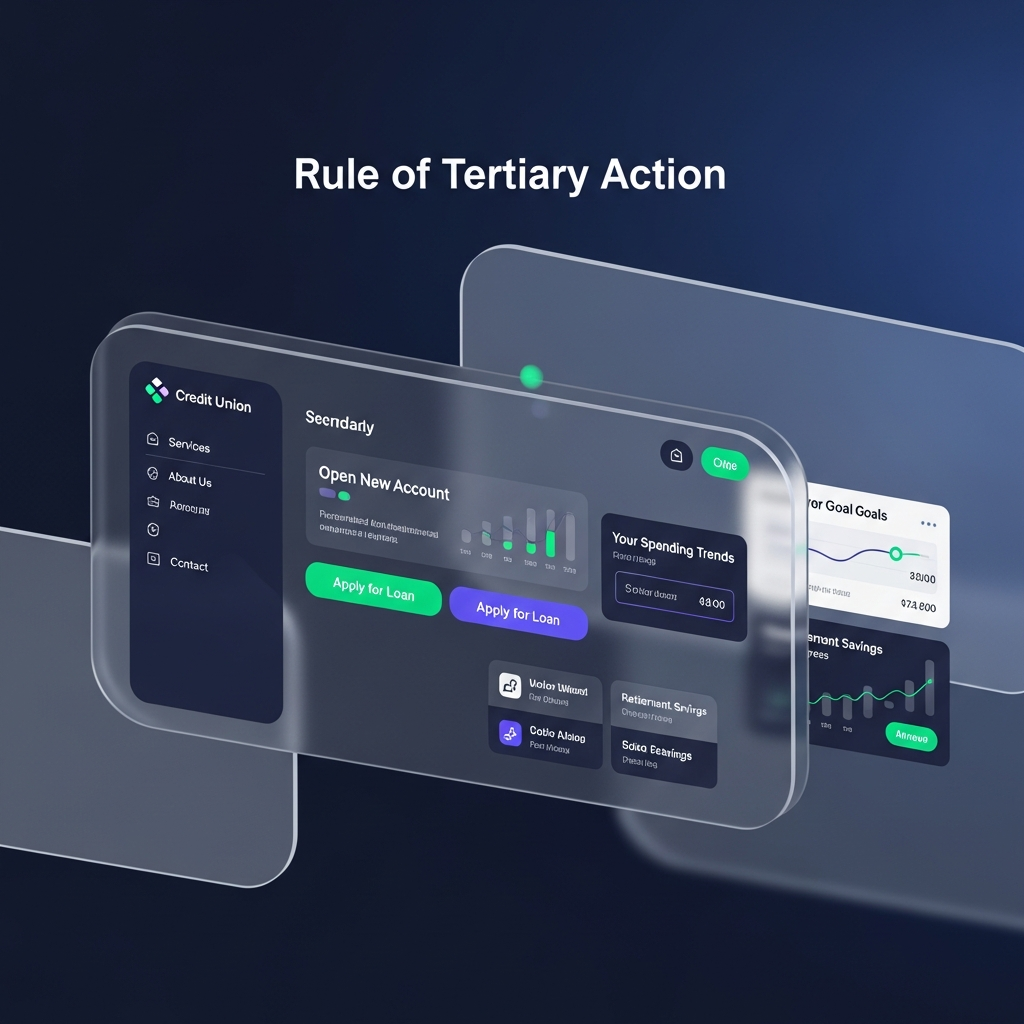
Moreover, the use of "damaging admissions" within the tertiary layer can significantly boost trust. For example, a financial health widget might tell a member, "Based on your current savings rate, you're not on track for that down payment in six months. But here are three tertiary steps you can take *right now* to improve your outlook." By being honest about a member's challenges, the credit union becomes a trusted advisor, rather than just another vendor. This radical transparency is a hallmark of successful 2026 digital brands and is essential for credit unions looking to compete in the era of hyper-personalized fintech (Web Designer Depot, 2026).
In the realm of B2B sales for credit unions, these same principles apply. When a CU executive visits our site, they're not just looking for a vendor; they're looking for a partner who understands the "hidden cost of inertia." By demonstrating the Rule of Tertiary Action on our own site, we show them exactly how we can help them bridge their "skill gap" and become digital "makers" themselves. This isn't just theory; it's a proven model for "scaling Member Success Stories into Viral Content" by showing the tangible, human impact of better design choices (EasCorp, 2026).
Consider the "Lead Scoring" implications of tertiary actions. A member who clicks on a tertiary widget about "Sustainable Investing" is providing a high-intent signal without the friction of a form fill. This data allows the CU to prioritize their outreach to members who are actively seeking specific types of value. This is "active income" generation through intelligent UI architecture. By "front-loading" value and "mirroring" member needs, the credit union creates a "Success Journal" for the member that they can see every time they log in (CUInsight, 2026).
Ultimately, the Rule of Tertiary Action is about "Unaffectable Next" thinking. It's about ensuring that no matter what the member's current state is, there is an obvious, low-friction, high-value tertiary step they can take to improve their financial situation. This persistent, helpful presence is what builds the "Digital Branch Authority" that today's members demand. It's the difference between a static website and a living, breathing financial partner (Web Designer Depot, 2026).
Let's also consider the "FOMO" aspect. A tertiary action could be a simple notification: "24 members in your ZIP code just reached their house-down-payment goal using our AI coach. Want to see your progress?" This leverages social proof in a subtle, non-intrusive way. It creates a "Digital Omnipresence" for the credit union, showing that they are active, involved, and successful in their community without needing a billboard. This "Strategic Scarcity" of attention—valuing the member's time and only providing hyper-relevant insights—is what sets the best 2026 digital branches apart from the noise of the legacy banking world (EasCorp, 2026).
Finally, the "Strategic Phased Investment" model for digital branches emphasizes starting with these high-impact tertiary elements. Instead of a massive, multi-year website overhaul, CUs can begin by integrating these modular, AI-driven widgets into their existing platform. This allows for "data-driven continuous improvement" and provides immediate ROI that can then fund larger transformations. It's a "cost-cutting" exercise for the member's mental energy and a "revenue-building" exercise for the credit union. It's design with a purpose, architected for the high-velocity world of 2026 (CUInsight, 2026).
Architecting the 2026 Digital Branch: Implementation Strategies
Implementing the Rule of Tertiary Action requires a shift in how CUs view their digital real estate. It’s not just about aesthetics; it’s about architecting a journey. Designers must move away from "one-size-fits-all" templates and toward dynamic, modular environments that respond to user behavior in real-time.
Key implementation strategies for 2026 include:
- Predictive Discovery: Using AI to surface tertiary actions specific to the user’s current lifecycle stage. For a Gen Z member, this might be a "Rent vs. Buy" interactive widget. For a retiree, it could be a "Legacy Planning Checklist."
- Glanceable Insights: Providing high-value financial data in non-obtrusive, minimalistically designed UI components. Think of "Financial Vitals" dashboard widgets that use the Aesthetic-Usability Effect to build trust.
- Micro-Interactions as Rewards: Designing small, satisfying animations and feedback loops for tertiary actions. This triggers dopamine release and reinforces the member's feeling of being a "maker" of their own financial future.
AI-Driven Personalization: The Engine of Tertiary Success
The true power of tertiary action is unlocked through deep AI integration. In 2026, AI is no longer just a chatbot; it is the "Digital Financial Concierge" that orchestrates the entire member journey. By front-loading "damaging admissions" (e.g., "You might not be ready for this loan yet, but let's look at how we can get you there"), AI builds an unprecedented level of credibility (Web Designer Depot, 2026).
This "Kaleidoscope Creative" approach allows the interface to generate thousands of variations of tertiary prompts, testing which specific psychological hooks (FOMO, financial empowerment, community impact) resonate with each individual member. This eliminates the "dead ends" in the member journey, ensuring that even if a member isn't ready for a primary action, they are still deriving value and building a relationship with their Credit Union.
Accessibility and Inclusivity: Tertiary Actions for All Members
A critical, often overlooked aspect of the Rule of Tertiary Action is its impact on accessibility and ADA compliance. For neurodivergent members or those from aging demographics, high-pressure primary actions can be overwhelming. Tertiary actions provide a more accessible entry point into the digital branch experience.
By following strict accessibility guidelines for these low-stakes interactions—ensuring they are screen-reader friendly, have high contrast, and support keyboard navigation—CUs ensure that every member, regardless of ability, can benefit from the credit union’s digital expertise. This is not just a regulatory requirement; it is a core tenet of the cooperative credit union mission of "people helping people."
Conversion Without Friction: Measuring the Impact of Tertiary Design
How do we measure the success of a design strategy that prioritizes "non-transactional" actions? In 2026, the metrics of success have evolved. While conversion rate (CR) remains important, we now look at "Depth of Engagement" (DoE) and "Brand Sentiment Score" (BSS).
Data from leading credit unions shows that members who engage with at least three tertiary actions during a session are 4x more likely to complete a primary action within the next 30 days. This proves that the Rule of Tertiary Action is not just a design theory; it is a powerful driver of long-term profitability. By focusing on "same condition, new behavior"—helping the member learn and adapt through the interface—the CU creates a durable competitive advantage that fintechs cannot replicate.
Beyond 2026: The Future of Credit Union UX Architecture
As we look past 2026, the line between tertiary action and AI-driven automation will continue to blur. We anticipate the rise of "Ambient Financial UX," where tertiary actions are integrated into the member's physical environment via AR (Augmented Reality) and IoT (Internet of Things) devices. The Credit Union of the future will not be a destination (a website or an app), but a persistent, helpful presence that provides "just-in-time" financial guidance through subtle, intelligent interactions.
Conclusion: From Transactional to Transformational Design
The Rule of Tertiary Action represents a fundamental shift in Credit Union UI Design. By moving beyond the binary of "transact or leave," CUs can build digital branches that truly reflect their cooperative values. In a world of noise and high-pressure sales, the credit union that masters the art of subtle, valuable engagement will be the one that wins the hearts—and the deposits—of the 2026 member.
At Credit Union Web Solutions, we believe that every pixel should serve a purpose. Whether it's a primary loan application or a tertiary financial insight, our goal is to architect experiences that empower members and drive sustainable growth for the credit unions we serve.
This article was brought to you by GrafWeb CUSO – Building the future of digital credit unions.