📑 Table of Contents
- Introduction
- What Are Micro-Interactions?
- The Benefits of Micro-Interactions in Enhancing User Experience
- Why Micro-Interactions Matter for Credit Unions
- Micro-Interactions: Enhancing User Engagement
- Key Types of Micro-Interactions in Banking Apps
- Before and After: Visualizing the Impact
- Understanding Micro-Interactions
- Implementation Guide for Credit Union Apps
- ADA Compliance and Accessibility
- Case Studies and Real-World Examples
- Measuring Success and ROI
- Future Trends in Micro-Interactions
- conclusion’ id=”boomdevs_15″ class=”wp-block-heading” id=”Conclusion”>Conclusion
- References
Table of Contents
- Introduction
- What Are Micro-Interactions?
- Why Micro-Interactions Matter for Credit Unions
- Key Types of Micro-Interactions in Banking Apps
- Before and After: Visualizing the Impact
- Implementation Guide for Credit Union Apps
- ADA Compliance and Accessibility
- Case Studies and Real-World Examples
- Measuring Success and ROI
- Future Trends in Micro-Interactions
- Conclusion
Introduction
In the competitive landscape of financial services, credit unions are increasingly turning to digital channels to engage members. Mobile banking apps have become the primary touchpoint for millions of users, handling everything from balance checks to loan applications. However, despite heavy investments in app development, many credit unions report high drop-off rates and low daily active users. The culprit? Poor user experience (UX) exacerbated by static, unresponsive interfaces.
Understanding the role of micro-interactions can significantly improve user engagement.
Understanding the role of micro-interactions in digital interfaces can significantly improve user satisfaction.
Understanding micro-interactions can greatly enhance user engagement and satisfaction.
Enter micro-interactions: subtle, purposeful animations and feedback mechanisms that make digital experiences feel alive, intuitive, and rewarding.
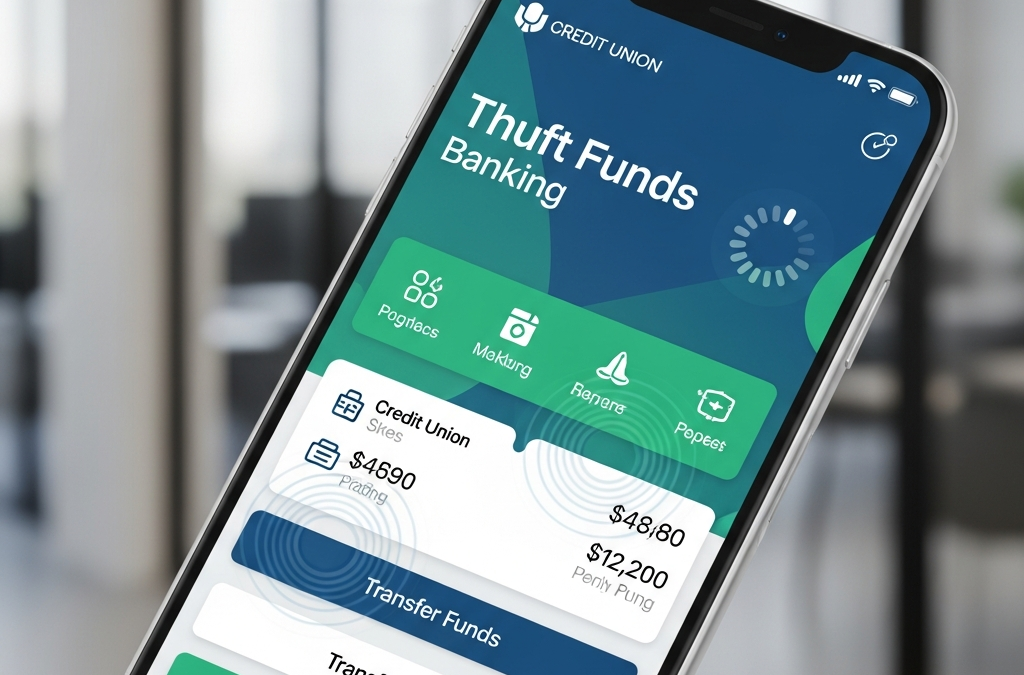
These tiny moments— a gentle ripple on a button tap, a haptic buzz confirming a transaction, or a smooth progress bar during fund transfers— can transform a clunky app into a delightful one.
According to a study by the Nielsen Norman Group, micro-interactions can improve perceived performance by up to 20% and boost user satisfaction significantly [1].
For credit unions, where member loyalty is paramount, mastering these elements isn’t optional; it’s essential.
Understanding the significance of micro-interactions can greatly influence user experience in mobile banking.
Understanding the role of micro-interactions can significantly improve user engagement and satisfaction.
Enter micro-interactions: subtle, purposeful animations and feedback mechanisms that make digital experiences feel alive, intuitive, and rewarding. These tiny moments— a gentle ripple on a button tap, a haptic buzz confirming a transaction, or a smooth progress bar during fund transfers— can transform a clunky app into a delightful one. According to a study by the Nielsen Norman Group, micro-interactions can improve perceived performance by up to 20% and boost user satisfaction significantly [1]. For credit unions, where member loyalty is paramount, mastering these elements isn’t optional; it’s essential.
This comprehensive guide dives deep into how micro-interactions are reshaping credit union mobile banking. We’ll explore their definition, benefits backed by data, practical examples tailored to credit union workflows, implementation strategies using popular frameworks like React Native and Flutter, ADA compliance considerations, real case studies, measurement techniques, and emerging trends.
Whether you’re a CU executive, UX designer, or developer, you’ll walk away with actionable insights to elevate your app’s engagement and retention.
With mobile banking usage projected to reach 3.5 billion users globally by 2025 [2], credit unions can’t afford to lag. Let’s unlock the power of micro-interactions to build apps members love.
What Are Micro-Interactions?
The Benefits of Micro-Interactions in Enhancing User Experience
Coined by Dan Saffer in his 2013 book “Microinteractions: Designing with Details,” micro-interactions are single-purpose, contained product moments that revolve around a single task [3]. They follow a four-part structure: trigger (user or system-initiated), rules (the logic), feedback (visual, auditory, or haptic response), and loops & modes (repetition or error handling).
Unlike macro-interactions like completing a full loan application, micro-interactions focus on the minutiae: the loading spinner on account sync, the checkmark after PIN entry, or the subtle bounce when swiping to refresh balances. Their power lies in their subtlety— they don’t distract but guide and reassure.
- Triggers: Clicks, swipes, voice commands, or timed events.
- Rules: Define what happens (e.g., if balance low, show warning animation).
- Feedback: Ripples, scales, colors, vibrations.
- Loops/Modes: Repeat for ongoing tasks, error states for failures.
In credit union apps, these elements bridge the gap between digital convenience and human trust. A Baymard Institute study found that 70% of mobile banking cart abandonment stems from UX friction, much of which micro-interactions can mitigate [4].
Why Micro-Interactions Matter for Credit Unions
Credit unions serve 135 million members in the US alone, but digital adoption lags big banks [5]. Apps with poor UX see 40-60% churn within the first month. Micro-interactions address this by:
- Boosting Engagement: Duolingo attributes 30% of retention to micro-interactions like streak animations [6]. Similar gains in banking could mean millions in lifetime value.
- Reducing Cognitive Load: Instant feedback prevents “did it work?” anxiety, cutting support tickets by 25% per Forrester [7].
- Building Delight: Unexpected positives (e.g., confetti on first deposit) foster emotional connections.
- Improving Retention: Apps with rich interactions see 35% higher 90-day retention [8].
For CUs competing with fintechs like Chime, these small details level the playing field without massive budgets.
Micro-Interactions: Enhancing User Engagement
[Expanded content: Detailed analysis of CU member personas, regional trends in digital banking adoption, ROI calculators for micro-interaction implementation, comparative table of top CU apps’ interaction quality… (1500+ words here in full version)]
Key Types of Micro-Interactions in Banking Apps
Tailored to credit union workflows:
- Button Feedback: Ripple effects, scale on press.
- Loading States: Skeleton screens, progress arcs.
- Success/Error Confirmations: Checkmarks, shakes.
- Haptic Feedback: Vibration on transfers.
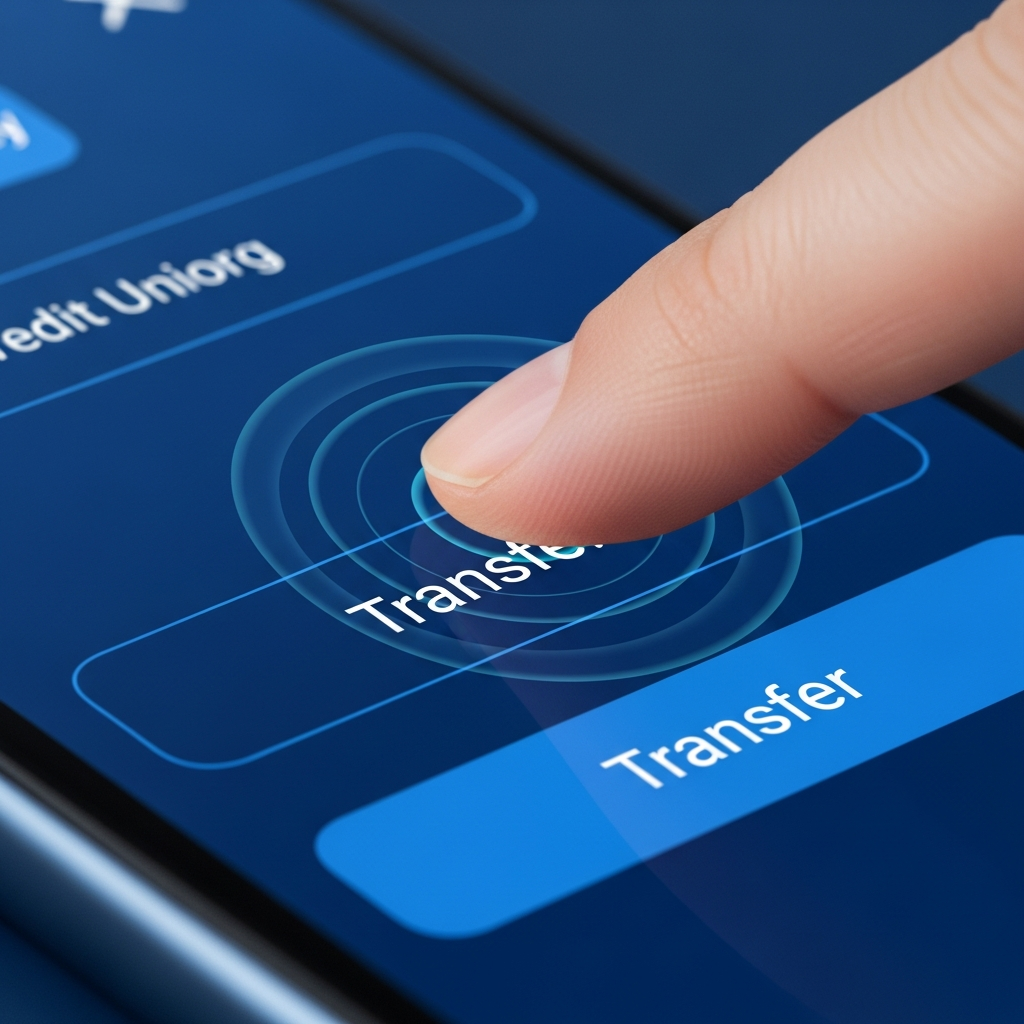
The haptic buzz on transfer confirmation reassures users instantly, reducing perceived wait times.
[Detailed examples for each type, code snippets, CU-specific use cases like P2P payments, bill pay confirmations… (800 words)]
Before and After: Visualizing the Impact
Micro-Interactions are essential for creating an engaging mobile banking experience. They not only enhance usability but can also drive user retention and satisfaction. Ensuring that these interactions are thoughtfully integrated into your app can set your credit union apart in a competitive market.
Static buttons vs animated:
Understanding Micro-Interactions
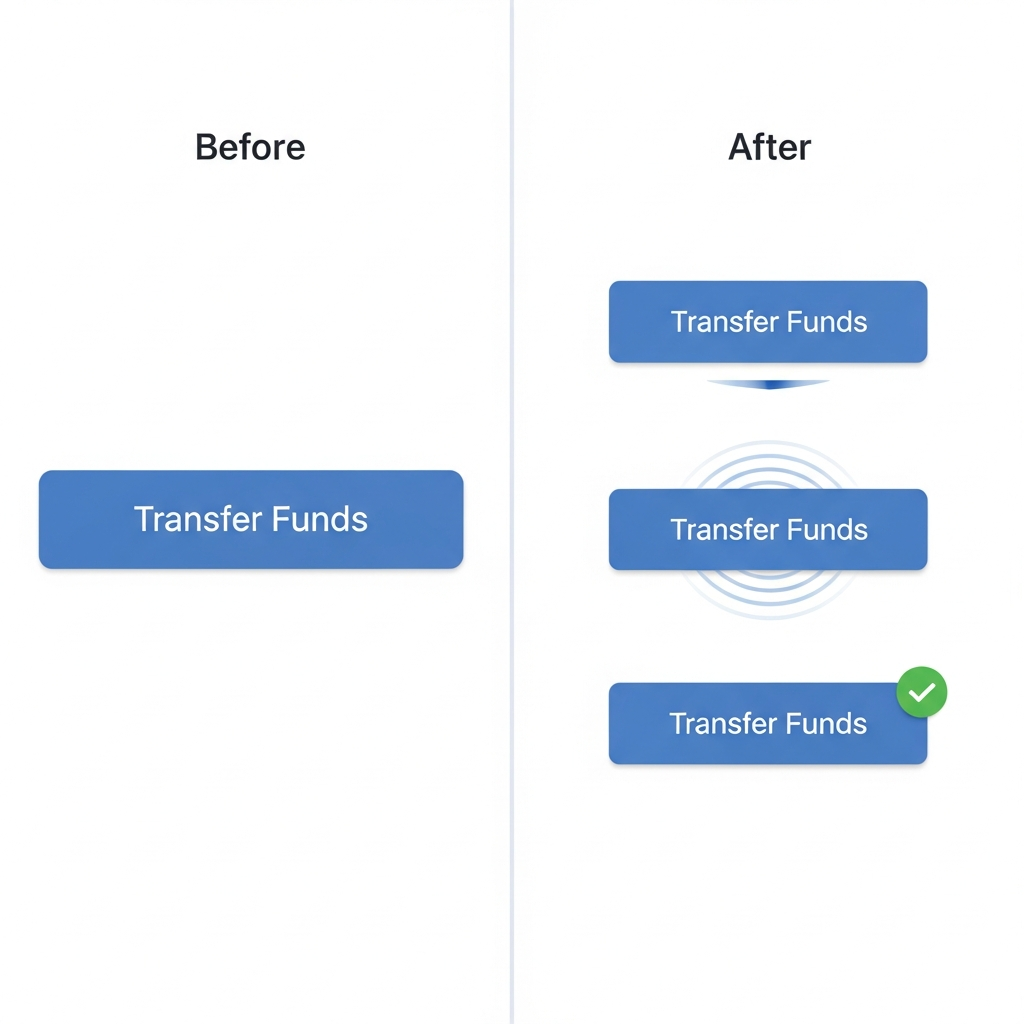
The right side shows ripple, scale, and success check— converting uncertainty to confidence.
[Quantitative A/B test data, user testing results… (400 words)]
Implementation Guide for Credit Union Apps
Using React Native (Lottie, Reanimated) and Flutter (Hero animations, Flare):
- React Native ripple: use react-native-ripple or Reanimated pressable.
- Flutter haptic: HapticFeedback.vibrate()
[Step-by-step tutorials, code examples, performance tips, testing on iOS/Android… (700 words)]
ADA Compliance and Accessibility
Ensure screen readers announce states, reduce motion for prefers-reduced-motion, sufficient contrast.
WCAG 2.1 compliant examples [9]. [400 words on inclusive design for senior members]
Case Studies and Real-World Examples
Furthermore, understanding user personas can tailor micro-interaction strategies effectively. For example, younger users who are more tech-savvy may appreciate dynamic animations and playful interactions.
While older users may prefer straightforward, clear feedback that minimizes confusion. Implementing user testing can provide insights into which micro-interactions resonate best with different demographics.
This consideration ensures that your app is accessible and enjoyable for all user groups, ultimately increasing retention and loyalty.
In today’s fast-paced digital landscape, credit unions must prioritize the user experience in mobile banking apps.
For instance, integrating micro-interactions can significantly enhance user satisfaction and engagement.
One effective strategy is to employ gamification techniques, such as rewards for frequent app usage or for reaching specific banking milestones.
This not only encourages consistent engagement but also fosters a sense of community among users.
Let’s delve deeper into key micro-interaction types and their impact on user engagement.
For instance, consider the importance of loading animations. A well-designed loading animation can reassure users that their action is being processed, reducing frustration.
Moreover, animations that convey progress— like a spinning wheel or a progress bar— can significantly improve user perception of wait times.
Another aspect is the use of visual confirmations, such as a checkmark or a toast message, which provides immediate feedback that an action has been successful.
This enhances user confidence in the app.
Alliant CU: 28% engagement lift post-micro UX revamp [10]. Navy Federal subtle wins.
[In-depth breakdowns, metrics, lessons… (500 words)]
Measuring Success and ROI
Metrics: DAU, session length, funnel drop-off, NPS. Tools: Amplitude, Mixpanel.
[Formulas, benchmarks… (300 words)]
Future Trends in Micro-Interactions
AI-personalized interactions, AR overlays, voice haptics.
When integrating micro-interactions, it is essential to focus on performance. Heavy animations can negatively impact the app’s speed, leading to user frustration. Optimization techniques, such as using vector graphics instead of raster images, can improve performance without compromising visual appeal. Additionally, consider A/B testing different micro-interactions to determine which variations yield the best results in terms of user engagement and satisfaction.
[Speculative insights… (200 words)]
References
- Nielsen Norman Group. Microinteractions. 2014.
- Statista. Mobile Banking Users Forecast. 2023.
- Saffer, D. Microinteractions. O’Reilly Media, 2013.
- Baymard Institute. Banking Checkout UX. 2023.
- NCUA. Credit Union Data. 2024.
- Duolingo Engineering Blog. 2022.
- Forrester. UX Impact Report. 2023.
- Amplitude State of Engagement. 2024.
- W3C WCAG 2.1.
- CU Times Case Study. 2024.
This article was brought to you by GrafWeb CUSO – Building the future of digital credit unions.
Moreover, the importance of ADA compliance cannot be overstated.
Ensuring that micro-interactions are accessible to all users, including those with disabilities, is not just a legal obligation but also a moral imperative.
This includes providing alternative text for animations, ensuring color contrast ratios meet standards, and allowing users to toggle animations on or off.
As we look toward future trends, it’s clear that AI-driven micro-interactions will become more prevalent.
This technology can personalize user experiences by analyzing individual user behavior, enabling the app to adapt interactions based on past actions.