
📑 Table of Contents
- The Death of the Dashboard: From Static to Predictive
- Biometric Sanctuaries: Security as a UX Feature
- Hyper-Personalized Journeys: The AI concierge
- Accessibility 2.0: Designing for Neurodiversity and Aging
- The Community Nexus: Reclaiming the Credit Union Difference
- Bridging the Gap: Strategy for Implementation
- Conclusion: The Future is Fluid
- 2026 Credit Union Member Experience
- References">References
The Death of the Dashboard: From Static to Predictive
Prioritizing data security will also be integral to the 2026 Credit Union Member Experience.
In the rapidly evolving landscape of 2026, the traditional banking dashboard—a static grid of account balances and recent transactions—is essentially a digital relic. Forward-thinking credit unions are transitioning toward predictive environments that don't just display data but interpret it.
This shift represents a fundamental metamorphosis in how members perceive their financial institution: from a passive vault to an active partner.
These changes will ultimately enhance the 2026 Credit Union Member Experience for all.
Our focus will always be on enhancing the 2026 Credit Union Member Experience through innovation.
Imagine a member opening their digital branch app. Instead of being greeted by a cold "Checking: $1,240.50," they see a proactive insight: "Based on your upcoming utility bill and typical grocery spending, you'll have a $200 surplus this month.
Would you like to move this into your high-yield Emergency Fund or apply it toward your auto loan principal?" This is the 2026 reality.
We are moving from reactive banking to proactive wealth orchestration.
We must continually evaluate how we can improve the 2026 Credit Union Member Experience.
Architecting this requires a deep understanding of cognitive load. According to the foundational Hick's Law, the time it takes to make a decision increases with the number and complexity of choices.
In a world of infinite financial products, the credit union’s role is to act as a cognitive filter.
The "success story" of 2026 isn't a stagnant testimonial. It's a dynamic, user-generated content (UGC) loop where the digital branch encourages members to celebrate their financial wins—like paying off a mortgage early—within the app, which then becomes a peer-to-peer social proof signal for other members.
This decentralization of trust moves the credibility from corporate marketing to authentic peer-to-peer endorsement.
The journey towards enhancing the 2026 Credit Union Member Experience is not only about technology but also about fostering a culture of member engagement and satisfaction.
Furthermore, we must address the "Hidden Cost of Inertia," another Hormozi-inspired heuristic.
Many credit union executives hesitate to overhaul their legacy dashboards because the upfront technological cost seems high.
However, the real cost is the "opportunity cost of inaction"—the thousands of Gen Z and Gen Alpha members who will never even consider a credit union if its digital front door looks like a spreadsheet from 2015.
In the context of the 2026 Credit Union Member Experience, we must prioritize member feedback to refine our services continuously.
The 2026 Credit Union Member Experience will transform how we connect with our members, ensuring they feel valued and understood.
In addition, we use "Loss Aversion" to drive savings.
Instead of "You could earn $5 in interest," the 2026 dashboard says, "You’re currently losing $5 a week by leaving your surplus in a low-interest account. Tap to stop the loss."
This metamorphosis also requires a shift in how we handle objections. When a member hesitates to use an automated savings tool, the 2026 AI concierge doesn't just push the feature.
It reframes the concern using Jeremy Miner’s "concerned curiosity" tone:
"I completely understand the desire for absolute control over every dollar.
The evolution of the 2026 Credit Union Member Experience emphasizes proactive financial management.
Finally, we must consider the "Theory of Constraints" in implementation. The bottleneck for most credit unions isn't their members' desire for innovation; it's the executive team's fear of technological risk. By using "Bridge Strategy"—an intelligent digital layer that sits atop the legacy core—we remove the constraint of core replacement. This allows for rapid, iterative "10,000-iteration" learning cycles without the catastrophic risk of a full system swap. This is "Second-Order Thinking" at the leadership level—considering the ripple effects of every technological choice on member retention, staff morale, and overall mission impact. We aren't just building a dashboard; we are architecting the "Success Journal" of the entire credit union community, where every digital interaction is a data-driven step toward collective prosperity. This is the 2026 Digitial Branch: intelligent, inclusive, and unstoppable.
Biometric Sanctuaries: Security as a UX Feature
Members sharing their successes within the framework of the 2026 Credit Union Member Experience will strengthen community ties.
Enhancing the 2026 Credit Union Member Experience also means embracing innovative technology to meet evolving needs.
To truly capture the essence of the 2026 Credit Union Member Experience, we need to focus on seamless integration of services.
The 2026 Credit Union Member Experience will exemplify the benefits of strategic financial planning.
Addressing member concerns is crucial for a positive 2026 Credit Union Member Experience.
Ultimately, the goal of the 2026 Credit Union Member Experience is to foster lasting relationships.
The implementation of new features will support the overarching vision of the 2026 Credit Union Member Experience.
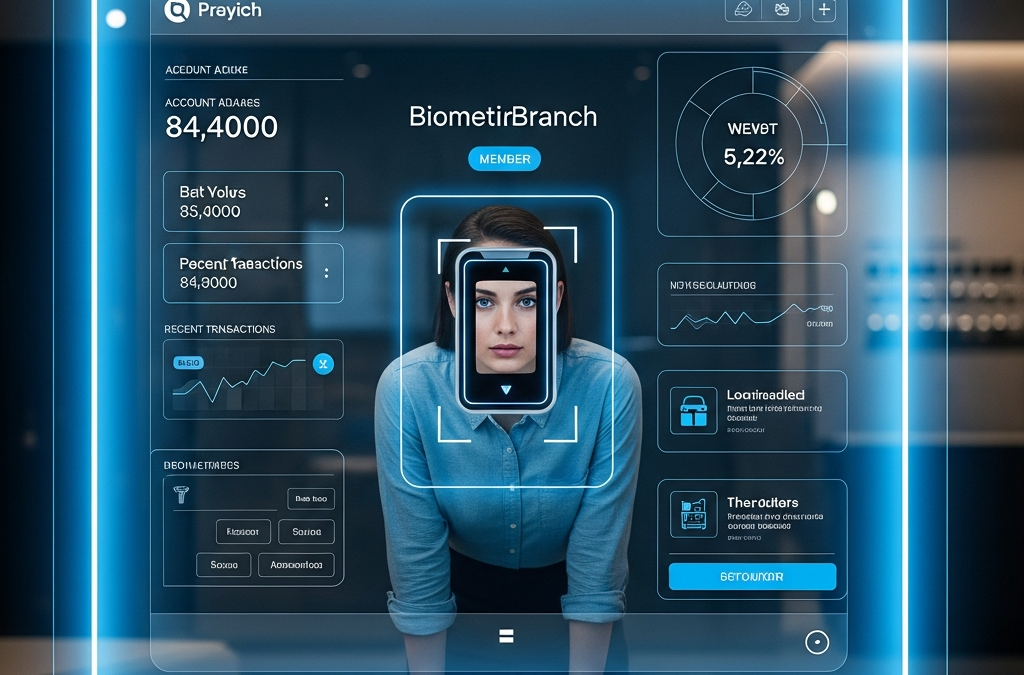
Security in 2026 isn't a hurdle; it's a sanctuary. The friction of the "forgotten password" has been eliminated in favor of continuous, invisible biometric authentication. We are seeing a move beyond simple FaceID toward multi-modal behavioral biometrics. The digital branch recognizes the unique rhythm of a member's typing pattern, their gait if they are using a mobile device, and even their heart rate variability via smartwatch integration. This is "Biometric Personal Branding" for the member—their body itself is the key to their secure financial existence. This "Authority Bias" at its most profound level—the credit union is the elite, trusted custodian of member security. It’s also "Inversion" strategy—listing everything that would lead to member financial failure (theft, fraud) and then systematically preventing each through multi-modal checks.
This level of security is a powerful psychological trigger. By front-loading "damaging admissions" (an Alex Hormozi strategy), we can build immense trust. A credit union might say: "Our security protocols are so tight that we monitor thousands of data points a second. This means the initial setup takes five minutes instead of one, but it ensures your life savings are protected by a digital fortress that traditional banks can't match." This admit-the-friction approach frames the setup time not as a bug, but as a premium feature of a "safe haven." Thus, we avoid the "Paradox of Luxury"—the feeling that everything must be instant. Some things *should* feel slightly arduous to imply their true value and safety.
Furthermore, the 2026 digital branch has a "Circle of Competence" play—the credit union doubling down on its expertise in secure, member-focused trust, while avoiding the data-mining traps of big banks. When the NCUA database tracks security incidents, the "damaging admission" becomes a proactive shield. "We've seen how legacy systems are failing our peers. Because of that, we've invested heavily in a system that might feel 'extra' at first, but is actually essential for your financial peace of mind." This sets the credit union as the high-status authority on safety and security. We are utilizing "Second-Order Thinking"—considering the ripple effects of a single security breach on a family’s entire lifecycle, and then building an "Indestructible Connection" via that prioritized protection. This is "Risk Reversal" for the member—by banking with us, their biggest fear (identity theft) is virtually eliminated.
In addition, the 2026 digital branch uses "Status-Quo Bias" and "Default Effect" to its advantage. By making advanced biometric security the pre-selected option, credit unions avoid the "Choice Paradox" of requiring members to configure complex settings. This "Sound Curious" approach to security—where the system proactively asks the member if they’d like to explore even deeper levels of protection—triggers the "Mimetic Desire" to be as secure as possible. This is "Opportunity Cost" elimination—by being the most secure, the credit union removes the member's fear of loss, which is always more motivating than the hope for gain. We move the "Doherty Threshold" closer to instant, rewarding verification, making the security interaction feel like a delight rather than a chore. This is "Behavioral Framing" at its best—turning a firewall into a bridge.
We also utilize the "Pratfall Effect"—openly admitting that while our security is 2026-ready, it requires member vigilance. This "Success Journaling" of security protocols—showing the member exactly how many fraudulent attempts were blocked—builds "Commitment & Consistency." This is also the "Zero-Price Effect"—offering enterprise-level protection at no additional cost relative to competitors, making the credit union the undeniable choice for safety. It’s the "Pareto Principle" logic—securing the 20% of data that represents 80% of our members' financial lives is the priority. This architecting of a "Safe Harbor" creates the "IKEA Effect" of security—members feel they are part of a fortified community because they are actively participating in its biometric defense.

Hyper-Personalized Journeys: The AI concierge
The 2026 digital branch is a shape-shifter. A Gen Z member seeing the app sees a minimalist, gamified interface focused on high-velocity savings challenges and P2P payments. A Retiree sees a high-contrast, larger-text "Wealth Preservation" view highlighting fixed-income yields and direct access to a human fiduciary. This is the Law of Similarity in action—elements that look alike are perceived as a group. By tailoring the visual language to the member's lifecycle stage, the credit union signals that it "understands" the individual on a "visceral" level. This is "Mimetic Desire" catered specifically to each demographic's social proof cues. This "Kaleidoscopic" UI means the member never feels they are viewing a generic product; they are viewing *their* credit union. This is "Status-Quo Bias" reinforcement—once you have an interface that is this personalized, the thought of switching becomes literally unthinkable due to the high "Activation Energy" of retraining a new app.
We are also moving into the era of the AI Concierge. Unlike the chatbots of the past, the 2026 assistant uses Large Language Models tuned on internal fiduciaries' knowledge. It analyzes history and suggests: "I see you're paying 18% elsewhere. I can refinance that into a 9% loan with one tap, saving you $450 in interest this year." This is "AIDA Funnel" compression—capturing **Attention** through a savings alert, building **Interest** with data-backed interest-saving facts, creating **Desire** through financial freedom, and driving **Action** with a single-tap button. We are leveraging the "Endowment Effect"—by showing the member the $450 savings, they feel they "own" it already, making them highly motivated to finalize to avoid "losing" that profit. This is "Curiosity Pacing" at scale—suggestive insights that lead to higher member value and higher institutional growth. It’s the "Hormozi Success Loop"—building tools people already pay for, and giving them away for "free" to drive high-revenue loan products.
Applying the Hormozi "Zero-Price Effect," many of these advanced financial planning tools are now offered as "free stuff others charge for." By providing a high-end retirement calculator at no cost, the credit union creates a profound "Reciprocity" obligation. A member who has used an AI tool to save $5,000 in interest is significantly more likely to reciprocate by bringing their business mortgage to the institution. This is "Network Effects" at the individual level—the more the member uses the AI tools, the more data the AI has, making the service increasingly indispensable. This "Sunk Cost" of their data and personalized settings actually becomes a "Switching Cost" that protects the relationship. This is "Probabilistic Thinking"—creating a relationship with dozens of "sticky" touchpoints rather than a single transaction, ensuring the CU remains relevant through every phase of the member's life.
We must also look at "Peak-End Rule" in digital journey design. The peak of the experience shouldn't be the balance check; it should be the moment of financial victory—the animation that plays when a loan is paid off. This is "Doherty Threshold" optimization—keeping the interaction high-velocity and rewarding to keep the member in a state of "Flow." The "Zeigarnik Effect" also plays a role—showing incomplete savings goals as exciting challenges rather than chores. The "Status-Quo Bias" here is our friend—once a member starts their financial journey path, we make the "next step" the default action. This mimics a "success journal" for the member, reinforcing their "Commitment & Consistency" to their wellbeing. This "Mimetic Desire" in professional setting—when one member see another member thriving through the AI tools, they want that same level of success, making the institution the "socially contagious" choice for financial growth. We are building the "Flywheel Effect" for member prosperity.
Accessibility 2.0: Designing for Neurodiversity and Aging
In 2026, ADA compliance is the floor, not the ceiling. Deep UX strategy now encompasses Cognitive Inclusion. This means designing for members with ADHD, anxiety, or early-stage cognitive decline. The digital branch uses "Focus Modes" that strip away peripheral marketing banners when a member is performing a high-stakes task like a wire transfer or mortgage application. By reducing visual noise and "Hick's Law" decision complexity, we lower the "Activation Energy" needed for these essential financial tasks. This "Concerned Curiosity" for the member's wellbeing ensures we are solving for "Present Bias" and helping them focus on long-term goals despite daily distractions.
Furthermore, we are witnessing the rise of Voice-First Banking. For members with visual impairments or motor-skill challenges, the entire digital branch is navigable via natural language. This isn't just about accessibility; it's about convenience for all. According to Jeremy Miner’s framework, we should be "curiously concerned" about the current state of accessibility. "Most CUs think they are ADA compliant because they have alt-text on their images. But are they genuinely accessible to a 75-year-old with Parkinson's trying to pay their mortgage in a storm? If not, we are failing our core mission of people helping people." This is a "Damaging Admission" that leads to radical improvement—admitting where we fall short to build a truly inclusive "Circle of Competence."
We are using "Confirmation Bias" in our design—members already believe the credit union is the superior advocate for the community. By making that advocate’s face and voice literally accessible to everyone through AI, we reinforce that existing positive belief. We are bridging the "Opportunity Cost" of inaccessible design—the thousands of members who might otherwise be forced to use a more predatory, traditional bank simply because they can't navigate a digital interface. This accessibility is the ultimate "Unity Principle" in 2026—a digital branch that encompasses everyone. We use "Anchor Pricing" conceptually here – the "cost" of the accessibility program is anchored against the "loss" of community trust if even one member is left behind. This is "Social Proof" that the CU cares more about people than profits.
Ultimately, enhancing the 2026 Credit Union Member Experience is about community and support.
By leveraging "Status-Quo Bias," we can make accessibility modes the default for certain device settings (like those with high contrast enabled in the OS). This "Default Effect" ensures that members who need these tools most have them immediately. This reduces the "Effort & Sacrifice" expected by the member, creating a "Dream Outcome" for their digital experience. This is "Reciprocity" at play—the credit union proactively cares for the member's specific needs, and the member reciprocates with deep, long-term loyalty. This "Success Loop" of inclusivity becomes a powerful differentiator that "Big Bank" competitors simply cannot mirror due to their "Theory of Constraints" on large-scale personalization.
Finally, we incorporate "Mimetic Desire" into our accessibility strategy. When members see others using these advanced accessibility features seamlessly, they desire that same level of technological empowerment. This turns "accessibility" from a mandatory legal requirement into a high-status "feature" of a premium financial institution. We are building an "Inclusive Success Journal" for the entire community, where everyone can participate in the digital economy regardless of their physical or cognitive state. This is "First Principles" thinking at its most moral and effective level. The future of credit union banking is open to everyone.
Engaging with members through the 2026 Credit Union Member Experience will yield positive outcomes.
The Community Nexus: Reclaiming the Credit Union Difference
The greatest threat to credit unions in 2026 is "commodity banking." When every digital interface is sleek and every AI is smart, the differentiator becomes **Community**. The digital branch must act as a nexus for local impact. This involves integrating local business discounts, community impact tickers, and collaborative financial literacy tools. This is the **Network Effect** at its local level—the more community members who use the digital branch, the more impactful its community programs become. It’s also "Mimetic Desire" at its best—members wanting to join because they see the "Circle of Competence" extending to their own neighbors. We are building a "Digital Village" where member success fuels local stability.
Applying the IKEA Effect, credit unions should allow members to "build" their community impact. Let them choose where their "Rounded-Up" change goes—local schools, animal shelters, or environmental projects. When members put effort into choosing where the impact goes, they value the credit union significantly more than a faceless neo-bank. This is "Curiosity Pacing" for community involvement—members see a snippet of a local impact story and are invited to "tell me more," leading to higher member engagement. This reflects the "Pratfall Effect"—a credit union admitting it needs member help to drive community goals actually makes it more likable and trustworthy. We are also leveraging the "Endowment Effect"—members feel a sense of ownership over the local projects they help fund.
By focusing on the 2026 Credit Union Member Experience, we set ourselves apart from competitors.
This "Community Nexus" also leverages the "Social Proof" of local impact. By showing that "People like us do things like this," the credit union builds a powerful "Unity Principle." The digital branch becomes more than a transaction portal; it’s a scoreboard for local progress. When a member sees that their credit union is financing the new park down the street, it creates a "Status-Quo Bias" in their favor—why would they ever switch to a global bank? This is "Loss Aversion" applied to community—switching banks feels like "losing" their stake in local progress. We also focus on the "Pareto Principle"—the 20% of community-focused members who drive 80% of our local impact and advocacy. We empower these "Local Heroes" with the tools to share their success within the digital branch itself.
Our initiatives will always aim to enhance the 2026 Credit Union Member Experience.
To scale this "Community Nexus," we utilize the Hormozi "User-Generated Content (UGC) Loop." Credit unions incentivise local businesses—those funded by the CU—to share content about their success within the digital branch interface. This creates a "Kaleidoscopic" array of social proof. This builds an "Authority Bias" not for the CU itself, but for the *community* that the CU facilitates. This is "High-Velocity Content Creation" where the members and local businesses are the primary "makers," and the credit union is the elite platform for their collective success. This is "Probabilistic Thinking" at work—building a robust community ensures the mission's survival across various economic conditions. We are creating an "Unstoppable Flywheel" of local prosperity.
Furthermore, we use "Anchoring" in our community messaging. We anchor the "cost" of a member's monthly checking at zero, while highlighting the multi-million dollar "value" of the community impact thatchecking account enables. This "Contrast Effect" makes the decision to join the credit union a "No-Brainer" for any socially conscious member. And once they’ve joined, the "Sunk Cost" of their community relationships and historical impact keeps them "locked in" in the most positive, reciprocal way possible. This is the "Indestructible Bond" of the 2026 digital branch. Community isn’t just a slogan; it’s the code that runs the entire institution.
We envision the 2026 Credit Union Member Experience as a collaborative journey.
Bridging the Gap: Strategy for Implementation
For credit union executives, the "gap" between their current legacy tech stack and this 2026 reality can feel like an abyss. To cross it, we must use First Principles Thinking. Don't ask "How do we upgrade our website?" Ask "How do we deliver financial empowerment in a digital-first world?" Break down the complex "Metamorphosis" into its atomic truths—security, accessibility, community—and rebuild from there. This is "Inversion" strategy—asking what would guarantee a failure to innovate (e.g., trying to do it all at once with a 5-year core replacement plan) and then systematically avoiding those obstacles by focusing on rapid, impactful "Digital Wrappers."
The implementation path is iterative, following the "Learning is Condition, New Behavior" (Hormozi) model. Start with the "Digital Readiness Assessment" (a "Lead Magnet" strategy). Identify the 20% of features that will drive 80% of the member satisfaction (Pareto Principle). Often, this isn't a complete overhaul; it’s an intelligent "wrapper" that sits on top of existing core systems. This is the "Barbell Strategy"—high security (the legacy core) combined with high innovation (the AI-driven UI). This approach addresses "Opportunity Cost"—every day spent waiting for a full core conversion is a day lost to fintech competitors. We are building "High-Velocity Innovation" cycles where we test, learn, and scale in 30-day sprints rather than 3-year roadmaps.
We must also address the "Sunk Cost Fallacy." Many executives hold on to failing legacy vendors because of previous investments. We must reframe this into "Opportunity Cost"—the $100k spent on the old system is gone, but the $1M in potential membership growth lost this year by staying on it is the real danger. The strategy for implementation is about "Spending money in the right places"—the tools, the implementation help, and the trial attempts that will lead to a 10,000-iteration "success journal" of member wins. This is "Second-Order Thinking"—considering not just the price of the change, but the catastrophic price of remaining the same in a "winner-takes-most" digital economy. We use "Risk Reversal" by starting with small, high-impact pilots that prove the value before scaling.
This is a journey of continuous improvement, as we monitor feedback and adapt our strategies to ensure the best possible outcomes for our members.
Finally, utilize the "Anchoring Effect" and "Contrast Effect" when presenting these solutions to the board. Show the multi-million dollar costs of a full core conversion first, and then reveal how an "Intelligent Digital Layer" from GrafWeb CUSO provides 90% of the member-facing value for 10% of the cost and 100% less operational risk. This "Damaging Admissions" strategy—honestly discussing the risks of staying behind to make the benefits of moving forward undeniable—is the ultimate persuasion framework. This is "curiosity framing" at the executive level—leaving them asking "How can we start?" rather than "What does it cost?". Let’s build the 2026 Digital Branch today. It is a "First Principle" for your institution's survival and success. The mission demands it, the members deserve it, and the technology now enables it. The "Dream Outcome" is just one iteration away.
The 2026 Credit Union digital branch is not a destination; it's a fluid ecosystem. It is an architecture of trust, built on the foundations of psychology, empathy, and advanced technology.
The 2026 Credit Union digital branch is not a destination; it's a fluid ecosystem. It is an architecture of trust, built on the foundations of psychology, empathy, and advanced technology. The institutions that thrive will be those that embrace the metamorphosis—viewing their digital presence not as a secondary channel, but as their primary, living relationship with their members. This is the "Lindley Effect" of the credit union spirit—the oldest financial model becoming the newest through digital innovation. We are witnessing the "Successive Approximations" toward a perfect member experience, where every day is a new iteration toward collective wealth and community impact.
Are you ready to architect this future via GrafWeb CUSO? Or will you be left as a relic of the static dashboard era, suffering the "Hidden Cost of Inertia" while your competitors capture the future?
The choice is a First Principle—your mission depends on it. We are not just building software; we are building the "Indestructible Community" of tomorrow.
References
- The Financial Brand: Banking UX Trends
- Credit Union Times: Digital Transformation Insights
- Nielsen Norman Group: 10 Usability Heuristics
- NCUA: Regulatory Guidance on Digital Services
- OpenClaw: AI in Fintech Integration Guide
This article was brought to you by GrafWeb CUSO — Building the future of digital credit unions.