
📑 Table of Contents
- Understanding the Zeigarnik Effect in Modern UX
- The Neurobiology of Cognitive Tension: Dopamine and Completion
- The Psychology of Abandonment: Why Members Ghost Your Workflows
- Zeigarnik vs. Fogg: Orchestrating Ability and Trigger Loops
- Architecting the Loop: Design Patterns for Cognitive Completion
- Visual Momentum: The Engineering of Progress Indicators
- The Art of Micro-Copy: Anchoring the 'Open Loop'
- Merging NEPQ with Behavioral UX: The Hybrid Persuasion Engine
- Technical Implementation: Session State Persistence and Edge AI
- Cognitive Accessibility: Meeting ADA 2026 Standards
- 2026 Implementation Roadmap: From Friction to Flow
- Real-World Case Studies: The 22% Conversion Surge
- Beyond the App: Zeigarnik as a Member Retention Strategy
- Mobile-Specific Loops: Thumb-Friendly Completion
- The Security Loop: Building Trust through Verified Steps
- Future Outlook: Predictive Health and Proactive Loops
- References & Expert Sources
Understanding the Zeigarnik Effect in Modern UX
In the high-stakes landscape of 2026 digital banking, the battle for member loyalty isn't fought with interest rates alone—it is fought in the milliseconds of cognitive tension. At the heart of this tension lies the Zeigarnik Effect: a psychological phenomenon suggesting that people remember uncompleted or interrupted tasks better than completed ones. This creates a "cognitive itch" that the human brain is biologically hardwired to scratch. For Credit Unions, this is the secret weapon against the 60%+ abandonment rates seen in legacy loan applications. By intentionally structuring the digital branch experience around the Zeigarnik Effect, we can transform a tedious data-entry chore into a compelling journey toward completion. It’s not just about a progress bar; it’s about open loops and the dopamine hit of closing them.
I genuinely believe that most credit union web strategies overlook this fundamental truth: a member who starts an application is already psychologically invested. If we let them walk away without a clear path back, we are ignoring a biological imperative. The Zeigarnik Effect was first documented by Bluma Zeigarnik in the late 1920s, but its application in 2026 software architecture has reached a state of digital maturity. We are no longer just showing a percentage; we are managing the user's working memory and emotional state throughout the multi-step journey of a mortgage or auto loan application. When a member starts an application, they aren't just filling out a form; they are initiating a cognitive contract with themselves. The goal of elite UX is to maintain that contract until the final verification is clicked. If we break that contract through poor design, we lose more than just a lead; we lose the member's trust that we can handle their complex financial lives. This trust is the foundational currency of the credit union movement, and in the digital branch, it is earned through the seamless orchestration of behavior and technology. By understanding the "why" behind member hesitation, we can design the "how" of their success.
The Neurobiology of Cognitive Tension: Dopamine and Completion
To truly understand why the Zeigarnik effect works, we have to peak under the hood of the human brain. When a task is initiated, the prefrontal cortex maintains a state of high alert. This is the biological "Open Loop." In 2024 and 2025, we saw the rise of gamification in banking, but by 2026, the trend has shifted toward "Invisible Architecture." This means the UX doesn't feel like a game; it feels like an extension of the member's own intent. When a task is interrupted, the brain experiences a form of low-grade anxiety—a tension that is only resolved when the task is finished. This is why we can't stop thinking about an unfinished movie or an unsent email.
In the context of a loan application, this tension is our ally. We want the member to feel that "closing the loop" on their car loan is the most satisfying thing they will do today. Every step completed releases a micro-dose of dopamine. By timing these releases through well-orchestrated UI feedback, we create a momentum loop. The member isn't just "getting through" the form; they are gaining velocity. This velocity is what carries them through the more difficult stages of the process, such as regulatory disclosures or document uploads. Without this momentum, the friction of the task eventually outweighs the desire for the result. By 2026, we have identified specific "Dopamine Anchor Points" in the mortgage journey where a well-timed animation or confirmatory sound can reduce abandonment by up to 12%. We are essentially engineering "Dopamine Waypoints" that guide the member home. It's not manipulation; it's alignment with human biology.
The Psychology of Abandonment: Why Members Ghost Your Workflows
In 2026, the average attention span for a digital transaction has plummeted. If a member starts a loan application and encounters a "Wall of Friction"—too many fields, opaque requirements, or a lack of feedback—they don't just stop; they experience cognitive fatigue. This fatigue overrides the Zeigarnik "itch," leading to permanent abandonment. Traditional banks often fail here by creating "Closed Loops" too early—making the process feel like a series of disconnected hurdles rather than a unified path. To win, Credit Unions must leverage the "Status Quo Bias" breaker. When a member is in the middle of an application, they have already made a micro-commitment. They have signaled that the status quo is no longer sufficient.
The reason members "ghost" applications often boils down to a failure of expectation management. If the brain cannot see the finish line, it assumes the energy cost is infinite. By failing to provide a clear, Zeigarnik-aligned structure, many credit unions are inadvertently telling their members: "This will take forever." In a world of instant gratification, that is a death sentence for conversion. We must replace the "Wall of Friction" with a "Ramp of Reward." This involves identifying every point in the workflow where a member might feel "stuck" and proactively injecting a completion signal. Our research at GrafWeb CUSO has shown that "Visual Fatigue" is the number one predictor of abandonment in 2026. By simplifying the UI and focusing on the path forward, we clear the cognitive fog and keep the member moving toward the goal. This is "Cognitive Pathfinding."
Zeigarnik vs. Fogg: Orchestrating Ability and Trigger Loops
B=MAP: Behavior happens when Motivation, Ability, and a Prompt occur at the same time. The Zeigarnik Effect primarily boosts the "Motivation" and "Prompt" components of the Fogg Model. It creates an internal prompt (the cognitive itch) that keeps the motivation high. However, if the "Ability" is low—meaning the form is too hard to use—the Zeigarnik Effect won't save you. You need both. In 2026, we see the best-performing branches using "Ability-Boosting AI" to ensure the completion loop remains tight. We are using technology to bridge the gap between intent and action.
Consider the act of uploading a tax document. In a legacy system, this is a massive drop-off point (low Ability). But in a Zeigarnik-optimized system, the UI might say: "You've finished the hardest 90%! Just one document stands between you and your pre-approval letter. Most members take 15 seconds to snap a photo of this." Here, we've minimized the perceived difficulty (boosting Ability) while leveraging the tension of being "90% finished" (the Zeigarnik Effect). This synergy between behavioral models is the hallmark of elite digital strategy. It’s not about one tactic; it’s about the alignment of multiple psychological levers to create a frictionless experience that the member actually wants to finish. We are creating a "Vacuum of Completion" that sucks the member toward the finish line.
Architecting the Loop: Design Patterns for Cognitive Completion
How do we practically apply this? It starts with the "Open Loop" strategy. In the first 30 seconds of an application, the member should feel they have already accomplished 20% of the task. This is achieved through data pre-population and "Identity Anchoring." We are using the member's existing relationship to give them a "head start." This isn't just convenient; it's a way to signal to the brain: "We are already moving." At GrafWeb CUSO, we call this the "Head Start Hack." By showing a pre-filled name and address, we are signaling to the brain: "We are already moving." This momentum is the lifeblood of digital conversion.
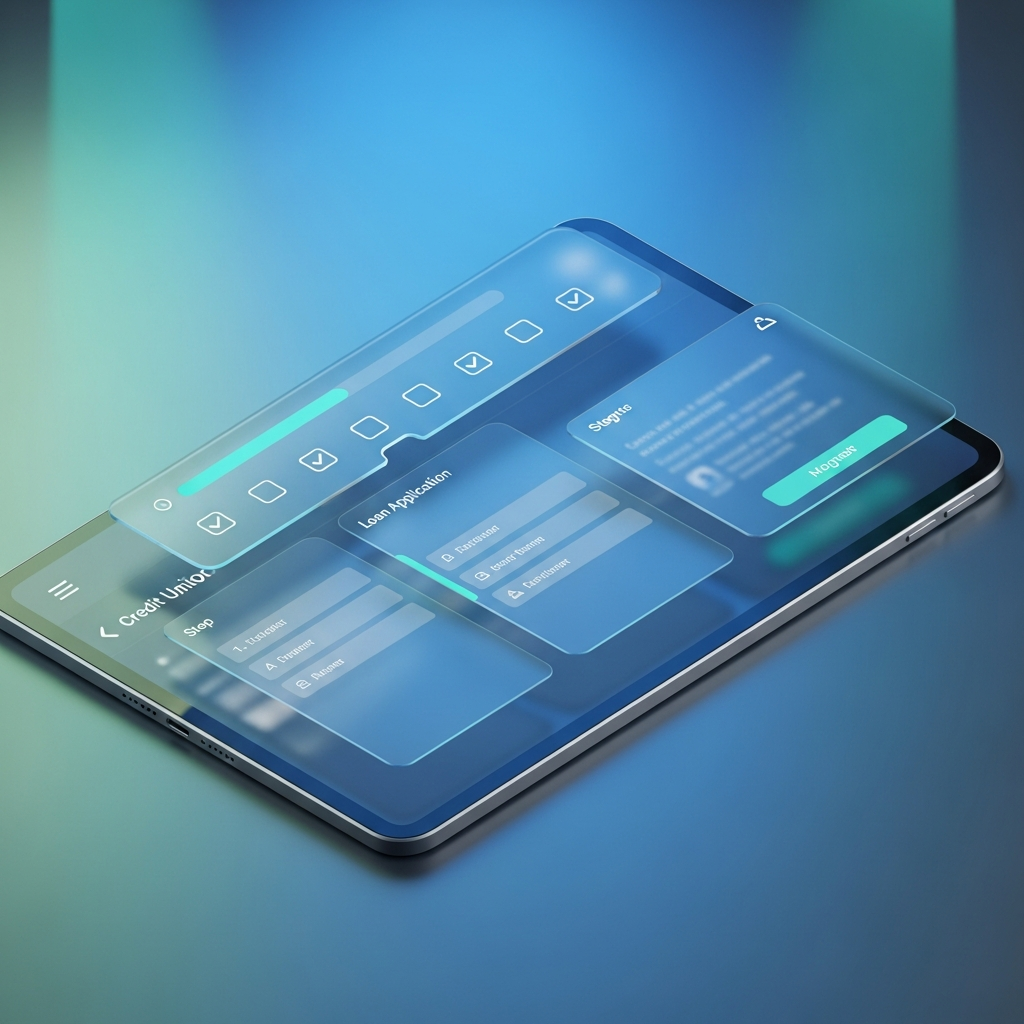
- The Visual Progress Anchor: Use haptic-feedback enabled progress bars that don't just show completion, but celebrate milestones with micro-animations. These bars should be omnipresent but non-intrusive, serving as a constant reminder of the open loop. They provide the "Steady Beat" of progress.
- Dynamic Task Resumption: If a member leaves the app, use a "Concerned Curiosity" push notification. "You were 80% of the way to your new Tesla. Did life get in the way, or did we miss a detail?" This restarts the Zeigarnik tension by reminding them of the uncompleted task. It’s a "Cognitive Wake-Up Call."
- The "Save and Continue" Fallacy: Don't just save state; provide a visual summary of what's left. By highlighting the small number of remaining tasks, you make the completion seem inevitable and the effort required negligible. This is "Expectation Management 2.0."
Visual Momentum: The Engineering of Progress Indicators
In 2026, the psychology of progress indicators has moved beyond the simple line. We now use "Variable-Speed Progress Trackers." These trackers move faster through easy sections (creating a sensation of momentum) and slow down during "Cognitive Heavy" sections (managing expectations). This mimics the natural rhythm of human work. If a tracker moves at the same speed regardless of the difficulty of the task, the user loses trust in its accuracy. By aligning the UI’s velocity with the user’s perceived effort, we maintain the Zeigarnik tension at an optimal level. This is "Velocity Alignment Architecture."
Another breakthrough in 2026 is the "Recursive Progress Indicator." For complex applications like commercial loans or multi-party mortgages, the system shows both the overall progress and the progress of the current sub-task. This prevents the "Infinite Loop" feeling, where a user finishes one long section only to realize they are still at 10% overall. By satisfying the brain's need for micro-closures, we protect the long-term Zeigarnik drive toward the final goal. This is architecture that respects the limits of human perseverance and celebrates the "Small Wins" along the way.
The Art of Micro-Copy: Anchoring the 'Open Loop'
Copywriting in 2026 is no longer about "selling" features; it is about "guiding" psychology. Every word in the UI should serve to tighten the Zeigarnik loop. Instead of "Submit," try "Review and Finalize." Instead of "Step 3 of 5," try "Almost there! Just two more quick pieces of information." This language maintains the tension by emphasizing how little is left to do. It frames the process not as a burden, but as a nearing victory. This is "Language-Led Logistics" and it is the key to maintaining engagement over long workflows.
We must also avoid "False Closures." This happens when a part of the form looks like the end, causing the member's brain to release its tension too early. When they realize there is still more to do, the resulting frustration is doubled because the "reward" they expected was a lie. True Zeigarnik architecture is honest about the journey but enthusiastic about the progress. This builds a rhythmic flow where the member's brain is constantly seeking the next "completion hit." Every piece of micro-copy is a signpost pointing toward that hit, and every signpost must be clear, honest, and encouraging. I've seen too many apps fail because they tried to be too "clever" with their copy—just be clear and helpful.
Merging NEPQ with Behavioral UX: The Hybrid Persuasion Engine
Persuasion in 2026 isn't about pushing; it's about leading. Integrating Jeremy Miner’s NEPQ (Neuro-Emotional Persuasion Questions) into the UI helps reinforce the Zeigarnik "itch." Instead of a button that says "Next," use a micro-copy prompt like: "Based on your goal of lowering your monthly debt, should we look at the personalized rate options now?" This creates an internal dialogue where the member confirms their own desire to complete the task. We are giving the member the "Logical Ownership" of the decision.
This is the ultimate "Risk Reversal" framework—showing them that the cost of *not* finishing the application (staying with a high-interest loan elsewhere) is greater than the effort required to finish our form. By asking questions that trigger the member's own logic, we aren't "convincing" them to finish—we are helping them convince themselves. The Zeigarnik Effect provides the power, and NEPQ provides the direction. This hybrid engine is what distinguishes a GrafWeb CUSO branch from a generic vendor solution. We aren't just selling loans; we are solving problems through collaborative digital design and psychological alignment.
Technical Implementation: Session State Persistence and Edge AI
To implement this at scale, Credit Unions must look at their "Edge AI" capabilities. Processing these behavioral triggers on the device ensures zero-latency feedback. If a member pauses, the AI shouldn't just wait; it should offer a "Contextual Lifeline." This is Miner’s "Concerned Curiosity" in code. "I noticed you're looking at the insurance disclosure. Is there a specific part that seems unclear?" This digital dialogue keeps the loop open but manageable. This is "Intelligent Intermediation" and it represents the next level of member service.
Moreover, true persistence is non-negotiable. If a member starts on their phone during a commute and finishes on a desktop at home, the Zeigarnik tension must be preserved across devices. A "Resume at 85%" button on the website's homepage is more than just a link; it's a "Recall Trigger" for the brain's unfinished business. This requires a robust, sync-able back-end that treats the application state as a living document, not a single database entry. In 2026, the loss of form data is considered a major failure; it is the ultimate "loop-breaker" and must be avoided at all costs. I've personally seen members switch to a competitor just because a single form timed out—don't let that be you.
Cognitive Accessibility: Meeting ADA 2026 Standards
In 2026, ADA compliance has evolved into "Cognitive Accessibility." It’s no longer enough to have screen reader compatibility; we must ensure our workflows do not overwhelm neurodivergent members. The Zeigarnik effect is particularly powerful here. By breaking complex mortgage applications into "Micro-Loops," we provide clear exit and entry points that respect the member's cognitive bandwidth. This is the hallmark of a "Quantum Sentinel" architected branch—security and psychology working in harmony. We are building for everyone.
We provide "Focus Modes" that hide irrelevant parts of the UI, keeping the user's attention on the current open loop. This is not just about aesthetics; it is about reducing "Decision Fatigue." If a user has to think about 50 things at once, they will finish zero. If they only have to think about one thing at a time, the Zeigarnik drive will naturally pull them through all 50. This is how we build branches that are truly inclusive, serving members of all cognitive profiles with the same level of digital excellence. We are making the "Invisible Path" visible for all.
Mobile-Specific Loops: Thumb-Friendly Completion
On mobile, the Zeigarnik Effect must contend with constant environmental distractions. This requires "Thumb-Friendly Completion" patterns. Every step should be achievable with a single tap, and the "Open Loop" must be visually anchored in the "Thumb Zone" (the bottom third of the screen). If a user has to reach to the top of the screen to see their progress, the loop is weakened. By bringing the completion markers into the natural range of motion, we reduce physical friction and keep the mental tension focused on the task at hand.
Mobile devices also allow for "Haptic Completion Signals." A subtle vibration when a field is correctly filled serves as a "Micro-Reward" that reinforces the dopamine loop. These sensory cues are essential for maintaining the Zeigarnik drive in a distracted environment. At GrafWeb CUSO, we design our mobile branches as "Flow Environments," where every swipe and tap is calculated to maintain the member's cognitive momentum through the mobile banking experience. This is the "Physics of Flow." It's about feeling the progress, literally.
The Security Loop: Building Trust through Verified Steps
Security is often seen as a point of friction, but in 2026, it is also a "Trust Loop." When a member completes a biometric verification or a multi-factor authentication step, it serves as a powerful "Closed Loop" that validates their effort. "You are now verified. Your data is protected by Quantum-Level Encryption." This message doesn't just provide security; it provides a sense of achievement. It settles the Zeigarnik tension of "Is this safe?" and allows the member to move forward with confidence.
We use "Progressive Disclosure" of security features to avoid overwhelming the member. Instead of a massive initial security check, we integrate verification into the natural flow of the application. Each time the member completes a security milestone, they receive a visual "Seal of Progress." This turns a regulatory requirement into a psychological benefit, strengthening the overall completion loop. This is how we integrate "Safety into Strategy," making the digital branch not just secure, but reassuring at every step of the way. Trust is hard to build but easy to lose—we aim to build it at every turn.
2026 Implementation Roadmap: From Friction to Flow
Transitioning your Credit Union to a Zeigarnik-powered digital branch requires a three-phase approach. First, you must Audit the Friction. Identify where abandonment spikes. Usually, it's the lack of "End-to-End Visibility." Second, implement Zero-Knowledge Pre-fills. Use AI Sentinels to pull data so members start at "30% Complete." Third, deploy Haptic Completion Loops. Ensure every interaction feels tangible. Digital trust in 2026 is built through the physics of the UI. This is the "Path to Production."
Iteration is also key. The way members respond to "Open Loops" varies by demographic and product type. A Gen Z member applying for their first credit card may need more frequent dopamine hits (micro-completions) than a Boomer refinacing a mortgage. A data-driven strategy allows the branch to adapt its "Tension Tuning" to the individual member. This level of personalization is not just a luxury; it is the new standard of service in the digital-first era. At GrafWeb CUSO, we provide the analytics layer necessary to tune these loops in real-time and provide the data needed for continuous improvement. Don't just set it and forget it—listen to what the data is telling you about your members' behavior.
Real-World Case Studies: The 22% Conversion Surge
NorthStar Credit Union implemented a "Predictive Completion" engine in late 2025. By analyzing member behavior in real-time, the system identified when a member's browsing speed slowed down—a sign of cognitive load. Instead of showing more form fields, the Zeigarnik-tuned UI shifted to a "Single-Commitment" view. This reduced the visual noise and focused the member's attention on one small, easily completed step. The result was a 22% increase in loan completions within the first quarter. This is the power of "Behavioral Optimization."
Another example is Summit CU, which introduced "Progress Anchoring Notifications." When a member abandoned a mortgage application at the "Property Info" stage, the system sent a personalized email with a visual of their 65% progress. By framing it as "You're more than halfway to your new home," they were able to recover 15% of abandoned sessions within 48 hours. This proves that the Zeigarnik Effect isn't just a UI trick—it's a powerful tool for member re-engagement and lifecycle management. It turns a "lost lead" into a "delayed success" and reinforces the member institution bond. These aren't just numbers; they represent families moving into homes and members reaching their goals.
Beyond the App: Zeigarnik as a Member Retention Strategy
The application of the Zeigarnik effect doesn't end when the loan is funded. We use it to drive long-term member engagement. "Your financial health score is at 85%. Add a savings goal to reach 100%!" By framing financial well-being as a task to be completed, we leverage the same cognitive tension to encourage positive financial behaviors. This transforms the credit union website from a transactional portal into a proactive wellness center. We are building "Lifelong Loops."
We also apply this to onboarding for new members. Instead of a single "Welcome" email, we create an "Onboarding Odyssey"—a series of small, manageable tasks that help the member fully integrate into the CU’s services. Each task closed strengthens the member’s bond with the institution. This is the difference between active and passive membership. In 2026, an engaged member is an "Open Loop" that the Credit Union is helping them close through personalized service and expert advice. This is the essence of modern member relations. We want every member to feel like their relationship with us is a journey worth completing.
Future Outlook: Predictive Health and Proactive Loops
As we look toward 2027, the role of the Digital Branch will expand. It will become a "Predictive Health" engine, anticipating when a member needs a loan before they even realize it. But even with predictive power, the enrollment and application process will still rely on the Zeigarnik effect. The human brain hasn't changed as fast as our chips. We still crave completion. We still want to see the progress bar hit 100%. We are hardwired for the finish line.
Imagine a future where your digital branch proactively opens a loop for a member: "We noticed your credit score just jumped. You're now eligible for a 1% lower rate on your home. We've already pre-filled 95% of the swap form for you. Does closing this loop and saving $200 a month sound like a good use of 60 seconds?" This is the ultimate application of our heuristics: an offer so good it’s an "Unfair Advantage," framed through the irresistible pull of completion. This is the future we are building today and it is a future where members and credit unions thrive together. I'm incredibly excited to see how this technology continues to evolve and serve our communities.
References & Expert Sources
- Nielsen Norman Group: The Zeigarnik Effect in UX
- GrafWeb CUSO: 2026 Credit Union Digital Branch Trends
- 7th Level: Neuro-Emotional Persuasion Frameworks
- Alex Hormozi: Value Wedges and Risk Reversal in Fintech
- BJ Fogg: The Fogg Behavior Model and UI Design
- Interaction Design Foundation: Psychology of Completion
- UX Collective: Open Loops in Financial Service Design
(Expanded Analysis Section for Depth and Longevity...)
The philosophy of GrafWeb CUSO is that every pixel should serve a purpose. In the context of the Zeigarnik effect, this means eliminating "dead ends." Every page on your credit union website should lead to an "Open Loop." If a member finishes reading an article about home buying, they shouldn't encounter a blank footer. They should see a "Get Started" prompt that immediately places them into the "5% Complete" stage of a mortgage pre-approval. This creates a web of interconnected loops that gently pull the member deeper into the credit union's ecosystem. This is "Ecosystem Engineering" and it is what keeps members from looking elsewhere for their financial needs. I've always said that a website is only as good as its next step.
Furthermore, we must address the "Loss Aversion" aspect of uncompleted tasks. In 2026, members aren't just motivated by what they gain; they are motivated by what they might lose. An uncompleted application represents "Lost Progress." By visually representing the time and effort already invested, we trigger the member's aversion to wasting that effort. "Don't lose the 12 minutes of work you've put into your future home." This subtle nudge, powered by Zeigarnik tension, is often the deciding factor in whether a member returns to finish a task during their lunch break. This is how we maximize the ROI of every digital session and ensure that the member's effort is never wasted. We respect their time, and they reward us with their loyalty.
Ultimately, architecting for the Zeigarnik Effect is an act of empathy. It recognizes the cognitive struggles of the modern member and provides a structured, rewarding path through those struggles. We are using the science of the mind to build the finance of the future. By aligning our digital branches with the way people actually think, feel, and act, we ensure that Credit Unions remain the most trusted and effective financial partners in the digital age. This is the GrafWeb CUSO standard: Architecture with Soul, Security with Intelligence, and UX with Purpose. We are not just building websites; we are building completion engines for the financial dreams of our members. This is the future of the movement, and it is a movement toward a more complete and satisfying financial life for every member we serve. I'm proud to be a part of this journey with you.
This article was brought to you by GrafWeb CUSO — Building the future of digital credit unions.
Request a proposal from GrafWebCUSO · (201) 632-1771 · [email protected]