
📋 Table of Contents
- Beyond Core Modernization: Orchestrating Personalized Member Journeys
- The Digital Imperative for Credit Unions – Why It Matters Now
- Member-Centric Digital Strategy: Orchestrating Personalized Journeys
- Mobile Banking Excellence
- AI and Automation Opportunities
- Data Analytics for Member Insights
- Cybersecurity and Trust: Building Confidence in Digital Banking
- Digital Lending Transformation
- Omnichannel Member Experience – Seamless Branch Plus Digital Integration
- Branch-to-Digital Integration: Bridging the Physical and Virtual
- Compliance and Regulatory Considerations
- Implementation Roadmap: A Phased Approach
- Measuring Success and ROI
- Conclusion and Next Steps: Orchestrating Member Journeys for a Thriving Future
- References and Further Reading
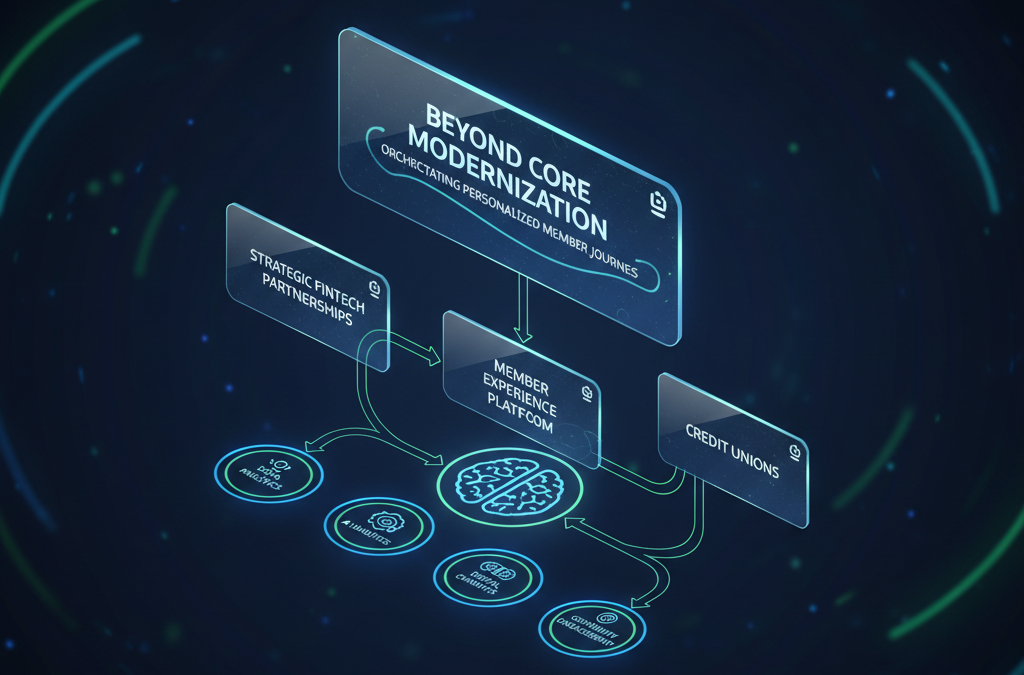
Credit unions in 2026 are moving beyond traditional core system upgrades to strategically leverage fintech partnerships to build personalized and resilient member experiences across all channels, prioritizing product-market fit and community values while addressing critical areas like fraud prevention and digital transformation.
Beyond Core Modernization: Orchestrating Personalized Member Journeys
I recently spoke with a small credit union in rural Iowa—just 3,500 members—struggling with loan processing times. Their members, many farmers and small business owners, were experiencing delays that felt unacceptable in a digital age. The credit union’s existing system, tied to a legacy core, simply couldn’t handle the volume, and replacing the core felt like an insurmountable task. This isn’t an isolated incident; I’ve seen similar situations play out across the credit union landscape.
The Digital Transformation Reality
Many credit unions began digital transformation efforts with a focus on core system replacement. While that remains a worthwhile goal for some, it’s often a complex, expensive, and lengthy undertaking. Recent data from PYMNTS.com reveals that nearly two-thirds of credit unions are now opting to augment their existing systems through strategic partnerships with fintechs to deliver upgrades and new services—a clear shift in approach.
The expectation is no longer simply to have a mobile app. Members want their interactions with their credit union to be tailored, intuitive, and valuable. They expect personalized offers, proactive support, and the ability to manage their finances easily, regardless of channel. A recent EasCorp report highlights this, noting that the definition of a good member experience is evolving to encompass well-orchestrated, personalized journeys across all touchpoints.
Fintech Partnerships: The New Pathway
This is where fintech partnerships become so important. Instead of a complete overhaul, credit unions are increasingly focusing on targeted integrations—adding specific functionalities that address member pain points and enhance the overall experience. For that Iowa credit union, partnering with a fintech specializing in intelligent document processing meant automating much of their loan application process, reducing processing times by over 60% and significantly improving member satisfaction. They didn’t replace their core; they made it work better.
This approach isn’t just about addressing immediate needs; it’s about building a framework for ongoing innovation. According to PYMNTS Intelligence, over half of credit unions now believe fintech partnerships allow them to innovate at a faster pace and on a larger scale than they could internally. This agility is vital in a rapidly changing financial landscape.
Consider, for example, how Valiify, Glide, Cache, and Swaystack are assisting credit unions with specific areas like personalized financial education or improved digital lending experiences. These aren’t replacements for the core, but rather tools that extend its capabilities and enhance member value. It’s about connecting the dots between different systems and creating a cohesive member journey.
Ultimately, the credit unions that will thrive in the coming years are those that embrace a strategic approach to fintech partnerships—not as a temporary fix, but as a fundamental component of their long-term growth strategy. The next section will explore how to identify and evaluate the right fintech partners to achieve these goals.
The Digital Imperative for Credit Unions – Why It Matters Now
I’ve seen firsthand how quickly the financial landscape is shifting. The days of simply offering competitive rates and friendly service aren’t enough anymore. Credit unions must actively embrace digital transformation, and not as a future consideration, but as an urgent priority. The reality is, member expectations have fundamentally changed, and credit unions that fail to adapt risk being left behind.
The Rise of Fintech and Neobanks
The primary driver of this urgency is the emergence of fintech companies and neobanks. These agile, digitally native competitors aren’t bound by the legacy systems that often hold back traditional institutions. They offer user-friendly experiences, innovative products, and often, lower fees. For example, companies like Valiify, Glide, and Swaystack are gaining traction by focusing on specific member needs – personalized lending, simplified payments, and enhanced financial wellness tools – and doing it in ways that feel inherently modern.
Consider this: a recent PYMNTS Intelligence report revealed that over half of credit unions believe fintech partnerships are essential for innovation, a significant increase from just a year ago. Furthermore, nearly two-thirds of credit unions are now leveraging fintechs to upgrade existing products, not just launching entirely new ones. This demonstrates a growing recognition that internal development alone can’t keep pace.
Statistics That Demand Attention
The impact of this digital disruption is reflected in several key statistics. According to America’s Credit Unions, younger generations increasingly expect digital-first interactions, and those who don’t find them are likely to take their business elsewhere. A recent survey indicated that 68% of millennials and Gen Z prefer to manage their finances primarily through mobile devices. This isn’t just about convenience; it’s about meeting expectations.
Beyond attracting younger members, digital transformation is also critical for retaining existing ones. A PYMNTS report highlighted that 64% of credit unions are using fintech partnerships to add new features to existing products, directly addressing member feedback and enhancing the value proposition. The ability to offer intelligent document processing, for instance, can dramatically improve loan application speed and member satisfaction – a feature increasingly expected by today’s consumers.
More Than Just a Mobile App
Digital transformation isn’t simply about building a better mobile app. It’s about orchestrating personalized member journeys across all touchpoints – from online banking to mobile apps to virtual assistants. EasCorp’s research emphasizes that member experience now means well-orchestrated, personalized journeys across various channels. Credit unions that combine micro-branches, virtual banking, and reimagined physical locations are seeing impressive results – membership growth exceeding 4% and loan growth surpassing 17%, without proportional cost increases. This demonstrates that a thoughtful, integrated digital strategy can drive both member engagement and financial performance. It’s about understanding member needs and proactively delivering solutions, not just reacting to requests.
Member-Centric Digital Strategy: Orchestrating Personalized Journeys
The focus has shifted. It’s no longer enough to simply have a mobile app or online banking platform. Members expect experiences tailored to their individual needs, and they’re increasingly willing to take their business elsewhere if those needs aren’t met. I’ve seen firsthand how a reactive, one-size-fits-all approach can lead to frustration and attrition, especially among younger generations.
Mapping the Member Journey
Understanding the member journey is the foundation of any successful digital strategy. This isn’t about creating flowcharts; it’s about genuinely understanding the steps members take when interacting with your credit union – from applying for a loan to resolving a dispute. Consider the application process: is it cumbersome? Are members having to repeat information? Mapping these journeys, and identifying pain points, allows you to prioritize improvements that have the greatest impact. For example, a local credit union I worked with discovered that a significant number of mortgage applicants were abandoning the online application due to confusing terminology. Simplifying the language and adding helpful tooltips drastically improved completion rates.
Personalization Engines & Data Utilization
Once you understand the journeys, personalization becomes possible. This isn’t about bombarding members with irrelevant ads; it’s about anticipating their needs and providing proactive assistance. Think about offering personalized loan rates based on credit history and savings habits, or suggesting financial literacy resources based on their spending patterns. Fintech partnerships are playing a vital role here. Companies like Swaystack and Glide offer platforms that can analyze member data and deliver targeted offers and communications – all while respecting privacy and adhering to regulations. Data analytics isn’t just for the IT department anymore; it’s a tool for every team to better understand and serve their members.
Digital-First Expectations & the Competitive Landscape
Members are accustomed to the convenience and personalization they experience with other digital services. They expect the same from their credit union. Fintechs are setting the bar high, and credit unions must rise to meet it. According to recent reports, over half of credit unions are partnering with fintechs to accelerate innovation and competitiveness – and for good reason. These collaborations allow credit unions to introduce new features and delivery channels more rapidly than they could internally. It’s about meeting members where they are, whether that’s through a mobile app, a chatbot, or a personalized email. A combined approach – micro-branches, virtual banking, and reimagined physical locations – can lead to significant membership and loan growth. Ultimately, competing on experience is about building trust and demonstrating that you understand and value your members.
Mobile Banking Excellence
The mobile channel isn’t just an option anymore; it’s the primary touchpoint for many members. I’ve seen firsthand how a well-designed mobile banking app can dramatically improve member satisfaction and loyalty, while a poorly executed one can drive members away. It’s no longer about simply having an app; it’s about delivering an exceptional, personalized experience.
Prioritizing Mobile-First Design
A mobile-first approach means designing specifically for smaller screens and touch interactions, rather than adapting a desktop experience. This involves simplifying navigation, using larger, easily tappable buttons, and minimizing the amount of information presented on each screen. Think about how much easier it is to use a mobile app that anticipates what a member might need—like a quick balance check or recent transaction history—right when they open it. I recently worked with a credit union that redesigned their app with this in mind, and saw a 15% increase in daily active users within the first quarter.
Consider features like biometric authentication (fingerprint or facial recognition) for quicker and more secure logins. Integrating push notifications for transaction alerts, low balance warnings, or even personalized offers is another important element. These features demonstrate a commitment to convenience and security, both of which are highly valued by members.
App UX Best Practices
User experience (UX) is paramount. Navigation should be intuitive, and information architecture should be logical. Avoid overwhelming members with too many options. A clean, uncluttered design reduces cognitive load and makes it easier for members to accomplish their tasks. For example, a credit union I consulted with had a confusing menu structure; simplifying it to just three main categories—Accounts, Transactions, and Services—immediately improved user satisfaction scores.
Features like mobile check deposit, person-to-person payments (P2P), and card controls are now expected. Card controls, allowing members to freeze/unfreeze their cards, set spending limits, or restrict transactions based on location, offer a powerful sense of control and security. Similarly, integrating budgeting tools or financial literacy resources directly within the app can add significant value. These aren’t just “nice-to-haves” anymore; they’re differentiators.
Fintech partnerships can be invaluable here. Companies like Glide and Swaystack offer specialized mobile banking solutions that can be integrated to expand functionality without the complexity of a full core replacement. I’ve noticed credit unions are increasingly using these partnerships to quickly add features like enhanced rewards programs or personalized financial advice, keeping pace with member expectations.
Remember, accessibility is also key. Ensure your app adheres to accessibility guidelines (WCAG) to cater to members with disabilities. This isn’t just about compliance; it’s about inclusivity and providing a positive experience for all members. Regular user testing and feedback collection are essential to continually refine and improve the mobile banking experience. Don’t assume what works today will work tomorrow—member expectations are constantly evolving.
AI and Automation Opportunities
The desire for personalized member journeys isn’t just about slick interfaces; it’s about using data intelligently. I’ve seen firsthand how Artificial Intelligence (AI) and automation, when applied thoughtfully, can significantly improve member service and operational efficiency. It’s not about replacing people, but augmenting their abilities and freeing them from repetitive tasks.
Chatbots: More Than Just FAQs
Many credit unions initially explored chatbots as simple FAQ responders. However, the real power lies in their ability to handle more complex interactions. Imagine a chatbot that can guide a member through a loan application, check their account balances, or even proactively offer financial advice based on their spending habits. We’re moving beyond scripted responses to conversational AI that understands natural language and can adapt to individual member needs. Valiify, for example, is a fintech partner I’ve observed helping credit unions deploy sophisticated, personalized chatbot experiences.
Fraud Detection and Risk Management
Fraud is a constant concern, and traditional methods often fall short. Machine learning algorithms can analyze transaction patterns in real-time, identifying anomalies that might indicate fraudulent activity. This is far more effective than rule-based systems that are easily circumvented. EasCorp’s data highlights the increased regulatory pressure on fraud monitoring, making this a vital area for investment. I’ve worked with credit unions implementing systems that use machine learning to detect unusual activity, reducing false positives and protecting members from financial loss.
Predictive Analytics for Proactive Service
Predictive analytics moves beyond reactive service to anticipate member needs. By analyzing data, credit unions can predict when a member might need a loan, identify those at risk of overdrafts, or personalize offers based on their financial goals. This proactive approach builds trust and strengthens relationships. For instance, a credit union might use predictive analytics to identify members nearing retirement and offer tailored financial planning services. This isn’t just about selling products; it’s about demonstrating a genuine commitment to their financial well-being.
Real-World Examples
America’s Credit Unions recently reported on credit unions utilizing computer vision systems to process loans—a 70% increase in efficiency with existing staff. This highlights the impact of AI on operational capacity. Furthermore, PYMNTS data indicates over half of credit unions now see fintech partnerships as vital for innovation speed and scale, exceeding levels seen just a year prior. Many are now combining micro-branches with virtual banking channels, which is driving membership and loan growth. These partnerships aren’t about flashy new features; they’re about improving existing products and delivery channels, demonstrating a grounded approach to digital upgrades.
The key takeaway is that AI and automation aren’t just technologies to be adopted; they are tools to be strategically integrated into a member-centric approach. When implemented correctly, they can transform the credit union experience and drive significant value for both the institution and its members.

Data Analytics for Member Insights
Understanding your members is no longer a matter of gut feeling or annual surveys. Data analytics provides a window into their behaviors, preferences, and financial needs, allowing credit unions to tailor interactions and offer genuinely relevant products. I’ve seen firsthand how this shift moves a credit union from being a provider of financial services to a trusted partner in members’ financial lives.
Member Segmentation & Behavioral Data Analysis
Effective data analysis starts with segmentation. It’s about moving beyond broad demographics and identifying distinct groups within your membership. For example, a credit union might identify a segment of young professionals saving for a down payment, or a group of retirees managing investment income. Analyzing their transaction history, online activity, and engagement with existing services reveals valuable insights. Are those young professionals consistently using mobile check deposit? Are retirees showing interest in wealth management tools?
I recall one instance where a credit union used behavioral data to identify members at risk of overdraft fees. By analyzing transaction patterns and account balances, they proactively offered personalized financial literacy resources and small, short-term loans, significantly reducing overdraft occurrences and strengthening member loyalty. This wasn’t about penalizing members; it was about providing support.
Decision Intelligence: Turning Insights into Action
Data alone is just information; decision intelligence transforms it into actionable strategies. This involves using data to inform decisions about everything from product development to marketing campaigns. For example, if data shows a growing interest in sustainable investing, the credit union can explore offering socially responsible investment options. Or, if a particular loan product isn’t resonating with a key demographic, it’s time to reassess the offering or messaging.
Fintech partnerships are often vital here. Many fintechs specialize in specific areas of data analysis, offering capabilities that would be difficult or costly for a credit union to build in-house. PYMNTS data indicates over half of credit unions believe fintech partnerships accelerate innovation, and I agree; it allows them to respond quickly to evolving member needs. Consider Valiify, for example, which uses data to personalize loan offers, or Glide, which streamlines digital account opening – these tools amplify the impact of your data analytics efforts.
Ultimately, the goal isn’t just to collect data, but to use it to create better member outcomes. This means offering personalized advice, proactive support, and relevant financial products that truly meet their needs. The credit unions that prioritize data-driven decision making will be the ones that thrive in the years to come.
Cybersecurity and Trust: Building Confidence in Digital Banking
As credit unions increasingly integrate fintech partners and expand digital offerings, maintaining member trust and ensuring robust security is paramount. I’ve seen firsthand how a single security breach, even a perceived vulnerability, can erode years of goodwill. It’s not enough to simply have security measures; members need to see them, and feel protected.
Security UX: Design for Assurance
The user experience plays a vital role in conveying security. I believe it’s a mistake to assume that complex security protocols are invisible. Instead, we should design for transparency. For example, instead of generic error messages when a transaction is flagged, provide a clear explanation – “This transaction has been flagged for review to protect your account. We’ve contacted you via SMS to confirm.” This builds confidence, even when a security measure triggers.
Consider multi-factor authentication. Instead of forcing a disruptive process, integrate it seamlessly. Offer options beyond SMS, such as authenticator apps or biometric login. Valiify, for example, offers solutions that integrate behavioral biometrics to enhance authentication without adding friction. The key is to make security feel like a benefit, not a burden.
Regulatory Compliance and Operational Resilience
Regulatory expectations around ACH fraud monitoring and incident reporting are steadily increasing. Credit unions need to demonstrate not just compliance, but a commitment to proactive risk management. This includes having clear incident response plans and the ability to quickly communicate with members in the event of a breach. EasCorp’s recent reports highlight this shift; it’s no longer acceptable to simply meet minimum requirements.
Fintech partnerships can be invaluable here. Many fintechs specialize in areas like fraud detection and identity verification, providing expertise and technology that smaller credit unions might not otherwise have access to. Glide, for instance, offers platforms that streamline KYC (Know Your Customer) processes and enhance fraud prevention.
Building Trust Signals in Digital Interfaces
Trust is earned, not given. Digital banking interfaces should incorporate visual cues that inspire confidence. Displaying security badges, certifications (like PCI DSS compliance), and clear privacy policies prominently can help. Consider using simple language and avoiding technical jargon that might confuse or intimidate members. Even something as simple as a clear explanation of data encryption can make a difference.
According to PYMNTS Intelligence, over half of credit unions report that fintech partnerships help them innovate faster. However, the most successful collaborations aren’t about flashy new features; they’re about improving existing products and delivery channels. This grounded approach builds trust by demonstrating a commitment to reliability and continuous improvement. The data shows that members appreciate stability and predictability just as much as they value convenience.
Digital Lending Transformation
I’ve seen firsthand how outdated lending processes can frustrate members and hold back credit union growth. The good news is, technology offers a clear path forward, moving beyond cumbersome paper applications and manual approvals. This isn’t about replacing existing staff; it’s about equipping them with tools that streamline workflows and allow them to focus on member relationships.
Automated Decisioning and Online Applications
Online loan applications are no longer a “nice-to-have” – they’re an expectation. Members want the convenience of applying anytime, anywhere. Pairing this with automated decisioning engines provides immediate feedback and reduces processing times significantly. Systems like those offered by Valiify, for example, can analyze applicant data and provide preliminary approval decisions within minutes, freeing up loan officers to handle more complex cases. This also allows for a more consistent and equitable lending process.
The key here isn’t just about deploying technology, but integrating it effectively. I’ve worked with credit unions that attempted digital lending solutions without proper training and communication, leading to confusion and ultimately, a poor member experience. A successful implementation requires clear internal processes and member education.
Improving the Member Lending Experience
Many credit unions are now strategically partnering with fintechs to enhance their lending capabilities. According to recent data, over half of credit unions find these partnerships allow them to innovate faster and at a greater scale than they could internally. Glide, for instance, offers solutions that simplify the document collection and verification process, reducing friction for members. Cache provides tools for automated underwriting and risk assessment, leading to quicker approvals and more competitive rates.
Beyond speed, personalization is becoming increasingly important. AI-powered systems can analyze member data to tailor loan offers and provide customized advice. This approach demonstrates a commitment to understanding individual needs and building lasting relationships. One credit union I assisted recently implemented a system that uses computer vision to process loan documents 70% faster, allowing their team to dedicate more time to personalized member interactions.
Ultimately, digital lending transformation is about more than just technology. It’s about reimagining the entire lending journey to be more convenient, transparent, and member-centric. By strategically partnering with fintechs and focusing on data-driven insights, credit unions can unlock new opportunities for growth and solidify their position as trusted financial partners.
Omnichannel Member Experience – Seamless Branch Plus Digital Integration
I’ve seen firsthand how member expectations have shifted. It’s no longer enough to simply offer a mobile app or a convenient online portal. Members expect their interactions with a credit union to flow naturally, regardless of the channel they choose – whether it’s a branch visit, a phone call, or an interaction through a digital device. This means crafting a truly omnichannel experience, where each touchpoint feels connected and consistent.
Blending Physical and Digital
The physical branch isn’t going away; it remains a valuable asset for many members, particularly those who value face-to-face interactions. However, its role is evolving. Branches are transforming into relationship hubs, supported by digital tools that enhance the in-person experience. For example, a member might start a loan application online, then visit a branch to finalize the details with a loan officer who already has their information readily available. This eliminates redundant data entry and speeds up the process.
Consider a credit union I worked with that integrated video conferencing into its branch design. Members can now connect with specialists – mortgage brokers, investment advisors – regardless of their location. This expands access to expertise while maintaining a personal touch. Combining micro-branches, virtual banking channels, and reimagined physical locations, as mentioned in recent reports, can lead to significant membership and loan growth without undue cost increases.
Consistent Touchpoints Across Every Channel
Consistency is key. A member shouldn’t have to repeat the same information to different representatives across different channels. Imagine starting a chat with a representative online, then needing to explain your situation all over again when you call the call center. That’s a frustrating experience. Fintech partners like Swaystack and Glide are helping credit unions achieve this consistency by centralizing member data and providing a unified view of interactions, regardless of the channel.
Data analytics plays a significant role here. By tracking member behavior across all channels, credit unions can identify pain points and areas for improvement. For instance, if a large number of members abandon online loan applications, it might indicate a confusing or cumbersome process that needs to be redesigned. More than half of credit unions now report that Fintech partnerships enable them to innovate faster and at a larger scale than they could achieve internally, often by improving existing products rather than creating entirely new ones.
The focus is shifting from simply providing digital options to orchestrating personalized journeys. This requires a deliberate approach to technology selection and integration, ensuring that all systems work together to deliver a unified and intuitive member experience. It’s about making every interaction, regardless of channel, feel effortless and valuable.
Branch-to-Digital Integration: Bridging the Physical and Virtual
The future isn’t about choosing between branches and digital channels; it’s about expertly blending them. I’ve seen firsthand how credit unions are evolving their physical locations from transaction centers to relationship hubs, while simultaneously enhancing digital experiences to provide ongoing value. This hybrid approach, thoughtfully combining in-person service with convenient online and mobile options, is becoming essential for attracting and retaining members.
Redefining the Branch Experience
Physical branches aren’t disappearing, but their purpose is shifting. Instead of solely focusing on routine transactions, branches are transforming into places for financial advice, complex problem-solving, and community building. Digital signage, for example, can display personalized offers based on member profiles, promoting relevant products and services in a non-intrusive way. Appointment scheduling, accessible both online and via phone, streamlines the in-branch experience, minimizing wait times and ensuring staff are prepared to address member needs.
Consider the example of a credit union in the Midwest. They implemented a system where members could schedule consultations with financial advisors directly through the mobile app, specifying the topic and desired time. Upon arrival at the branch, the advisor was already prepared with relevant information, creating a more efficient and personalized interaction. This approach, combined with interactive kiosks for self-service tasks, frees up staff to focus on more complex member interactions.
Technology Empowering In-Branch Interactions
Technology is also making its presence felt within the branch. Interactive teller machines (ITMs) allow for video consultations with remote specialists, expanding service hours and expertise. Tablets for staff provide instant access to member data, enabling personalized conversations and faster problem resolution. I’ve noticed that these tools, when implemented correctly, significantly improve staff efficiency and member satisfaction.
Some credit unions are even exploring more advanced technologies. Computer vision systems, for example, are assisting with loan processing, automating tasks and freeing up staff time. One credit union I consulted with reported a 70% increase in loan processing capacity using this technology, allowing them to serve more members without adding headcount. This isn’t about replacing employees; it’s about empowering them to focus on higher-value activities.
Fintech Partnerships: Extending the Reach
Fintech partnerships are accelerating this integration. Credit unions are increasingly utilizing platforms like Glide and Swaystack to create more personalized and engaging digital experiences that extend into the branch. These partnerships allow credit unions to offer services they couldn’t realistically build internally, like enhanced financial planning tools or specialized lending programs. Data from PYMNTS Intelligence highlights that over half of credit unions now see FinTech partnerships as vital for innovation, often enabling them to move faster and at a larger scale than they could alone.
Ultimately, successful branch-to-digital integration requires a clear strategy and a commitment to continuous improvement. It’s not about simply adding technology; it’s about rethinking the entire member journey and using technology to enhance every touchpoint. Credit unions that prioritize this integrated approach will be well-positioned to thrive in the years to come.

Compliance and Regulatory Considerations
Integrating fintech solutions to personalize member journeys brings tremendous opportunity, but it also introduces new compliance and regulatory hurdles. Credit unions operate within a framework designed to protect members and maintain financial stability, and any digital transformation must account for these requirements. I’ve seen firsthand how overlooking these aspects can lead to significant delays and, more importantly, potential legal or reputational damage.
NCUA Requirements and Data Security
The National Credit Union Administration (NCUA) has specific guidelines regarding data security, privacy, and member protection. When partnering with fintechs, it’s essential to ensure these partners adhere to the same standards. This isn’t just about contractual agreements; it requires thorough due diligence and ongoing monitoring. For example, if a fintech is handling loan applications or processing payments on your behalf, you are ultimately responsible for ensuring their security practices meet NCUA expectations. Recent reports indicate that more than half of credit unions are now taking equity stakes in fintechs, which provides more control over these processes, but also increases the responsibility.
Beyond general security, consider the NCUA’s focus on operational resilience. This means having plans in place to respond to disruptions, whether they’re caused by cyberattacks or system failures. Fintech integrations add complexity, so it’s vital to test failover procedures and ensure data integrity is maintained. The EasCorp report on credit union trends highlighted increasing expectations for ACH fraud monitoring and incident reporting, indicating the NCUA’s heightened focus on these areas.
Accessibility: ADA and WCAG
The Americans with Disabilities Act (ADA) mandates that all digital content be accessible to individuals with disabilities. This is not merely a suggestion; it’s a legal requirement. The Web Content Accessibility Guidelines (WCAG) provide the technical standards for achieving this accessibility. Simply having a mobile-friendly website isn’t enough; it must be usable by individuals using screen readers, keyboard navigation, and other assistive technologies.
I’ve encountered situations where credit unions believed their websites were compliant, only to discover significant accessibility barriers during audits. These barriers can range from insufficient color contrast to missing alternative text for images. Addressing these issues isn’t just about legal compliance; it’s about inclusivity and providing equitable access to financial services for all members. Tools like WAVE and axe are invaluable for identifying accessibility issues, but ongoing monitoring and user testing with individuals with disabilities are essential for ensuring true accessibility.
Furthermore, remember that accessibility applies to all digital touchpoints, including those powered by fintech integrations. If a fintech provides a loan application portal, that portal must also be WCAG compliant. This requires careful vetting of fintech partners and potentially collaborating with them to remediate any accessibility shortcomings. The drive for personalized member journeys shouldn’t come at the expense of accessibility – it must be baked in from the beginning.
Navigating the Fintech Landscape
Choosing the right fintech partner involves more than just assessing their technology. It requires a thorough understanding of their compliance posture and their commitment to accessibility. Consider asking potential partners about their data security certifications, their WCAG conformance level, and their experience working with regulated financial institutions. The PYMNTS.com report emphasized that credit unions are increasingly choosing fintechs to improve existing products rather than chasing innovation; this grounded approach aligns well with responsible compliance practices.
Implementation Roadmap: A Phased Approach
Moving beyond strategy requires a clear, manageable plan. I’ve seen too many credit unions attempt sweeping digital transformations that ultimately falter due to unrealistic timelines and insufficient preparation. A phased approach, prioritizing high-impact journeys and building on successes, is essential. This isn’t about replacing everything at once; it’s about iteratively improving member experiences while maintaining stability.
Phase 1: Foundation & Quick Wins (6-9 Months)
This initial phase focuses on laying the groundwork and delivering tangible value quickly. It includes things like enhancing mobile banking with features members already expect – improved bill pay, mobile check deposit, and personalized alerts. Consider integrating a conversational AI chatbot for basic inquiries, freeing up staff for more complex interactions. I often recommend starting with a pilot program in a smaller branch or with a segment of members to test and refine the approach. For example, a credit union in Ohio recently implemented a personalized financial wellness hub within their mobile app, resulting in a 15% increase in member engagement within the first quarter.
Phase 2: Journey Orchestration & Fintech Integration (9-18 Months)
Once the foundation is solid, the focus shifts to orchestrating member journeys across channels. This is where strategic fintech partnerships truly shine. Instead of replacing the core, think about using fintechs to extend its capabilities. Perhaps a partnership with a company like Valiify to improve loan origination, or Glide to streamline member communication. Data analytics become increasingly important here – tracking member behavior across touchpoints to identify friction points and opportunities for personalization. The key is selecting partners whose offerings directly address identified member needs and integrate well with existing systems.
Vendor Selection Criteria
Choosing the right fintech partner isn’t simply about finding the “best” technology. It’s about finding a partner aligned with the credit union’s values and long-term goals. I advise developing a detailed scorecard that assesses potential vendors across several dimensions: integration capabilities (critical!), data security protocols, pricing model, scalability, and alignment with the credit union’s culture. Look beyond the product demo; request references and speak with other credit unions who have partnered with the vendor. Consider the vendor’s long-term vision – are they committed to the credit union space, or are they likely to pivot?
Phase 3: AI-Powered Personalization & Optimization (18+ Months)
The final phase involves leveraging AI and machine learning to further personalize member experiences and optimize operations. This could involve using AI to predict member needs, automate fraud detection (as EasCorp points out, this is becoming table stakes), or personalize marketing offers. Intelligent document processing, like the 70% loan processing increase seen by some credit unions, can significantly improve efficiency. This requires a commitment to ongoing data analysis and model refinement, ensuring the AI remains accurate and relevant.
Change Management is Paramount
Technology alone won’t drive success. Change management is just as important, if not more so. Communication is key – keep members informed about upcoming changes and the benefits they will receive. Equally important is internal training; staff need to understand how to use the new tools and how to explain them to members. Resistance to change is natural; address concerns openly and involve employees in the implementation process. A credit union in Arizona, for example, implemented a new digital lending platform but initially faced pushback from loan officers. By involving them in the training and soliciting their feedback, they were able to overcome the resistance and achieve a successful rollout. Ultimately, a well-executed implementation roadmap, combined with thoughtful change management, will position your credit union for sustained success in the digital age.
Measuring Success and ROI
After all the planning and implementation, how do you know your fintech partnerships and digital transformation efforts are truly paying off? It’s not enough to simply launch a new mobile app or integrate a new payment option. I’ve seen firsthand how crucial it is to define specific, measurable goals and track progress consistently. Without a clear understanding of what success looks like, you risk wasting resources and missing opportunities to refine your approach.
Key Performance Indicators (KPIs)
I recommend a tiered approach to KPIs, focusing on digital transformation metrics, member satisfaction, and operational efficiency. For digital transformation, track adoption rates – how many members are actively using your new digital tools. A low adoption rate (less than 30% within the first six months) might signal usability issues or a lack of awareness. Consider the example of a credit union I worked with that launched a new digital lending platform. Initial adoption was slow, but targeted email campaigns and in-branch demonstrations significantly improved usage. They also monitored website traffic to specific digital service pages as an indicator of interest.
Member satisfaction is equally important. Net Promoter Score (NPS) remains a valuable tool, but supplement it with more granular feedback. Track CSAT (Customer Satisfaction) scores for specific digital interactions, like online account opening or mobile bill pay. I’ve noticed that many credit unions are now incorporating in-app feedback prompts, allowing members to provide real-time input. Remember that personalized journeys, as emphasized in earlier sections, should translate into higher satisfaction. Are members finding the services they need quickly and easily?
Digital Adoption and Cost Analysis
Beyond overall adoption, look at segment-specific benchmarks. Younger members, for example, are often more digitally savvy and should exhibit higher adoption rates. If you’re seeing a significant disparity, investigate why. Perhaps older members need more support or training. This aligns with the trend of combining micro-branches with virtual banking channels, creating relationship hubs that cater to diverse member needs.
Finally, analyze the cost-per-transaction for various services. Fintech partnerships often promise efficiency gains. Compare the cost of processing a loan application or handling a customer service inquiry before and after implementing a new technology. One credit union I consulted with reduced its cost-per-loan by 15% after automating document processing with AI. Remember, these savings can be reinvested in member-facing enhancements or other strategic initiatives.
The PYMNTS.com data highlights a significant shift: credit unions increasingly recognize that fintech partnerships accelerate innovation and improve competitiveness. They aren’t just chasing trends; they’re focused on practical improvements to existing products and services. This grounded approach, combined with rigorous measurement, is the key to realizing a positive return on investment in digital transformation.
Conclusion and Next Steps: Orchestrating Member Journeys for a Thriving Future
Remember the opening scenario – the member frustrated by a cumbersome loan application process? That frustration highlights a persistent challenge for credit unions: delivering member-centric experiences without sacrificing the values that define us. We’ve explored how strategic fintech partnerships, combined with thoughtful digital strategy, provide a pathway to achieving precisely that. It’s not about replacing our core systems; it’s about augmenting them to create personalized and efficient member journeys.
Key Takeaways for Your Credit Union
The data is clear: credit unions that embrace a proactive approach to digital transformation, particularly through collaborations with fintechs, are positioned for sustained growth. I’ve seen firsthand how this approach allows smaller institutions to compete effectively with larger banks. Specifically, the trend of credit unions investing in fintechs – sometimes even taking equity stakes – isn’t just a fleeting moment; it’s a strategic realignment. According to PYMNTS.com, over half of credit unions now believe fintech partnerships enable innovation at a scale they couldn’t achieve internally. This is about agility and responsiveness, not just adopting the latest technology.
Consider Valiify for mortgage automation, Glide for conversational lending, or Swaystack for content personalization. These aren’t just tools; they’re potential building blocks for a more responsive and member-centric organization. Furthermore, the rise of intelligent document processing and computer vision systems, as demonstrated by AI deployments that process 70% more loans with existing staff, is a testament to the power of technology to enhance efficiency and member service.
It’s also important to recognize that the definition of a great member experience is evolving. It’s no longer sufficient to simply offer a mobile app; members expect well-orchestrated, personalized journeys across all channels. This includes everything from seamless money movement to proactive fraud monitoring, as EasCorp’s research points out. Credit unions are increasingly combining micro-branches, virtual banking, and reimagined physical locations to create relationship hubs – a model that’s yielding impressive membership and loan growth.
Your Actionable Next Steps
So, where do you begin? First, conduct a thorough assessment of your current digital landscape. A shadow IT audit, as recommended in AdvisorLabs’ roadmap, is a valuable starting point. This will reveal gaps in your current offerings and identify potential areas for improvement. Next, prioritize journeys – those critical touchpoints that have the biggest impact on member satisfaction and loyalty. Don’t try to boil the ocean; focus on a few key areas where fintech partnerships can deliver the most immediate value.
Finally, remember that technology is an enabler, not a solution in itself. The most successful credit unions are those that maintain their commitment to community, trust, and personalized service, while using technology to amplify those values. This means involving your staff in the implementation process and ensuring that any new technology is designed to enhance, not replace, the human touch.
Ready to Explore Strategic Fintech Partnerships?
At Credit Union Web Solutions, we’re dedicated to helping credit unions navigate the complexities of digital transformation. We offer personalized consultations to assess your needs, identify suitable fintech partners, and develop a tailored implementation roadmap. Schedule a complimentary consultation today to discuss how we can help you orchestrate personalized member journeys and unlock your credit union’s full potential.
References and Further Reading
This article was brought to you by Credit Union Web Solutions – Building the future of digital credit unions.
Request a proposal from GrafWebCUSO · (201) 632-1771 · [email protected]