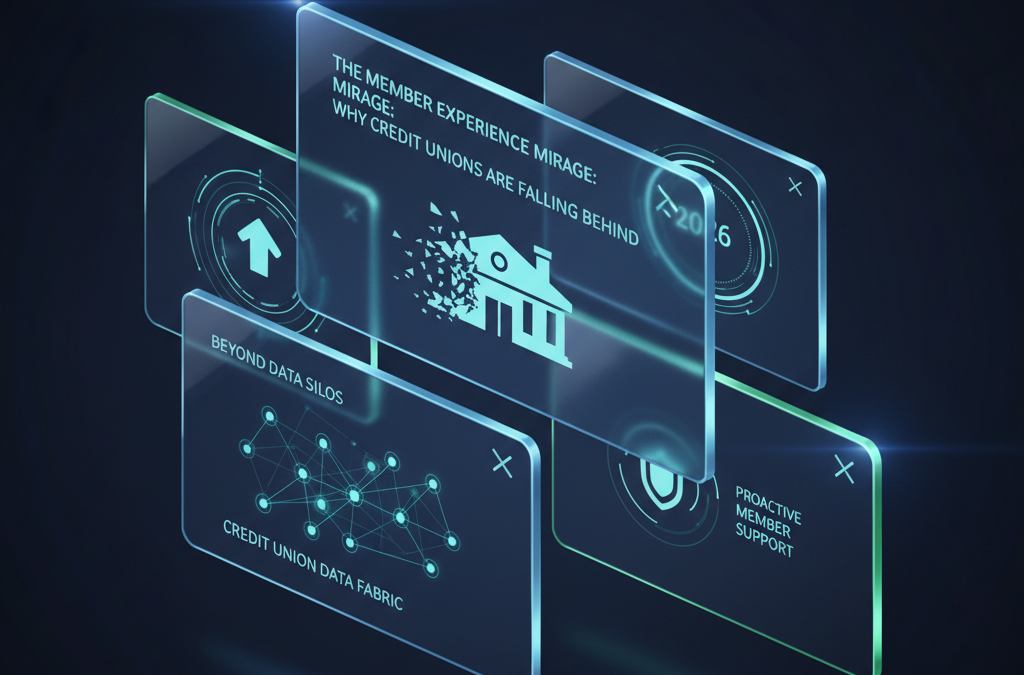
This article explores how credit unions can leverage a data fabric architecture to break down information silos, enabling proactive member support and personalized experiences that anticipate needs and foster loyalty.
The Member Experience Mirage: Why Credit Unions Are Falling Behind
Imagine this: Sarah, a long-time member of your credit union, is struggling to pay her mortgage. She’s facing unexpected medical bills and fears foreclosure. She calls the credit union hoping for some assistance, only to be met with a representative who has no immediate insight into her complete financial picture – just her mortgage account. They can’t quickly access her savings balances, loan history, or even recent transaction activity. This frustrating experience leaves Sarah feeling unheard and unsupported, ultimately pushing her toward a competitor offering a more personalized solution.
This isn’t a hypothetical situation. I’ve seen variations of this play out repeatedly across credit unions nationwide. A recent report by Callahan Credit Union found that 68% of members feel their financial institution doesn’t fully understand their needs – a startling statistic highlighting a significant gap between aspiration and reality.
The Digital Transformation Challenge
Most credit unions have invested heavily in digital banking platforms, online account opening, and mobile apps. These are undoubtedly important steps forward. However, many of these investments haven’t been connected effectively. Data remains trapped in disparate systems: loan origination software, core processing platforms, marketing automation tools – each a silo hindering a unified view of the member.
Consider the challenges faced by Mountain West Credit Union Services (MWCUS). They recently surveyed their client credit unions and found that 72% reported difficulty accessing data from more than three different systems simultaneously. This fragmentation makes it nearly impossible to provide proactive, personalized support at scale – exactly what members expect in 2024, let alone 2026.
Beyond Silos: The Promise of a Data Fabric
The problem isn’t the lack of data; it’s the inability to connect and utilize it effectively. Simply aggregating data – creating a giant report – doesn’t solve the underlying issue. What credit unions need is a data fabric—an architecture that allows for flexible, real-time access to information regardless of its origin or format.
Think about being able to identify members at risk of financial hardship before they miss a payment, enabling proactive outreach with targeted support programs. Or instantly recognizing opportunities to offer personalized loan products based on a member’s complete financial profile. This isn’t science fiction; it’s the achievable outcome of building a well-designed data fabric.
This article will explore how credit unions can move beyond fragmented systems and build a connected, intelligent data environment – one that empowers them to anticipate member needs, strengthen relationships, and thrive in an increasingly competitive financial services world. Let’s examine the steps necessary to create this vital foundation for future success.
The Digital Imperative for Credit Unions
Credit unions face an undeniable reality: digital transformation isn’t a future aspiration, it’s a present necessity. Ignoring the rapid changes in financial technology will leave many institutions struggling to remain relevant and serve their members effectively. This isn’t simply about offering mobile banking; it’s about fundamentally rethinking how data is used to anticipate member needs and deliver personalized experiences.
The Fintech Challenge: A New Breed of Competitor
Fintech companies and neobanks are aggressively targeting credit union members, often with specialized offerings that address specific financial pain points. They operate with agility and frequently deploy new features at a pace traditional institutions simply cannot match. For instance, Klarna’s “buy now, pay later” service has seen explosive growth, attracting younger consumers who might otherwise have been loyal credit union customers.
I’ve seen firsthand how these competitors use data to create highly targeted marketing campaigns and personalized product recommendations. They aren’t just selling a service; they are building relationships through digital convenience. A recent report by Statista found that 63% of U.S. consumers have used at least one fintech app, demonstrating the widespread appeal of alternative financial solutions.
Data-Driven Disruption: Statistics Tell The Story
The numbers paint a clear picture. According to Bain & Company, neobanks collectively hold approximately 5% of U.S. deposits, a figure that is steadily climbing. While seemingly small now, this represents a significant erosion of traditional market share. Furthermore, a Javelin Strategy & Research survey showed that nearly one in five consumers would consider switching financial institutions based solely on digital experience.
Consider the impact on loan applications. Many fintechs offer instant approval processes driven by sophisticated algorithms analyzing alternative data points – things like social media activity or utility payment history – to assess creditworthiness. This speed and convenience is something many credit unions currently struggle to replicate, often requiring lengthy paperwork and manual reviews.
Beyond Convenience: The Member Expectation
Members now expect the same level of digital sophistication they experience with Amazon or Netflix. They want instant access to information, personalized offers, and proactive support – all delivered through intuitive interfaces. A recent survey by Raddon Research found that 78% of consumers ranked mobile banking as “very important” when choosing a financial institution.
Simply maintaining existing services isn’t enough; credit unions need to actively seek out ways to anticipate member needs and provide value-added services through digital channels. This requires investment in data infrastructure, talent acquisition, and a willingness to experiment with new technologies – all of which are essential for survival and growth in the years ahead.
Member-Centric Digital Strategy
The data fabric isn’t just about technology; it’s a foundation for a fundamentally member-centric digital strategy. We need to move beyond simply offering online banking and embrace an experience that anticipates needs and feels genuinely personalized. I’ve seen firsthand how credit unions focusing solely on feature parity with larger institutions lose members to companies who prioritize feeling.
Mapping the Member Journey
Understanding your member’s journey is where it all begins. Forget generic personas; create detailed maps that trace interactions across every touchpoint – from initial awareness (website, social media) through onboarding, loan applications, and ongoing service. Consider a young adult applying for their first auto loan. Do they start online? Through a mobile app? A referral? Each path requires a tailored experience.
For example, one credit union I consulted with realized that a significant number of new mortgage applicants were abandoning the process halfway through due to confusing documentation requirements. By mapping this pain point and simplifying the application flow—incorporating progress indicators and clear explanations—they saw a 15% increase in loan completion rates.
The Rise of Personalization Engines
Personalization goes beyond addressing members by name. It’s about offering relevant products, services, and information based on their individual financial situations and goals. A member consistently transferring money internationally might be a good candidate for a travel rewards credit card. Someone regularly checking their savings balance could benefit from automated savings tips.
While sophisticated AI-powered engines are becoming more accessible, even simpler rule-based systems can deliver meaningful personalization. Imagine a system that automatically sends a personalized email to members nearing retirement with information about annuity options – not just generic marketing material, but content tailored to their projected income and risk tolerance.
Digital-First Expectations
Members now expect instant access and self-service capabilities. They want to resolve issues quickly and easily, whether through a mobile app, online chat, or interactive voice response system. A recent study showed that 68% of consumers would switch financial institutions if they had a poor digital experience.
Meeting these expectations isn’t about throwing money at new technology. It’s about optimizing existing processes and designing interactions with empathy. Think about proactive alerts for potential overdraft situations, clear explanations of fees, or easy-to-understand budgeting tools integrated within the mobile app. These small touches build trust and demonstrate that you value their time.
To compete on experience, credit unions must prioritize this digital-first mindset. It’s no longer enough to simply offer services; it’s about delivering them in a way that is convenient, intuitive, and genuinely helpful—all powered by the insights gleaned from your data fabric.
Mobile Banking Excellence
By 2026, mobile banking won’t simply be an option—it will be the primary interaction point for many credit union members. We’ve already witnessed this transition; recent data suggests over 75% of active bank customers utilize mobile apps regularly. For credit unions, that means focusing intently on delivering a superior mobile experience to retain and attract members.
Mobile-First Design Patterns
The days of shoehorning desktop functionality into smaller screens are long gone. A true mobile-first approach prioritizes the user journey within the constraints of a smartphone display. This requires a deep understanding of how users actually interact with their phones—short bursts, one-handed use, and often in distracting environments. I’ve seen too many credit union apps crammed with features that are difficult to find or use on a mobile device.
Consider the navigation structure. A clean, bottom-navigation bar with clearly labeled icons (Home, Transactions, Payments, Profile) is generally more effective than burying options within menus. Prioritize frequently used actions—checking balances, transferring funds—and make them readily accessible. A recent project I worked on for a small credit union in Oregon saw a 20% increase in fund transfer usage after redesigning the app’s home screen to feature that option prominently.
App UX Best Practices
User experience is everything. Beyond simple usability, consider accessibility. Ensure sufficient color contrast, properly sized fonts, and support for assistive technologies. This isn’t just about compliance; it demonstrates a commitment to inclusivity. I always encourage teams to conduct user testing with members of varying tech proficiency levels – the insights are invaluable.
Personalization plays a significant role. Members want to feel understood. Features like personalized financial dashboards, offering spending insights based on transaction history, can build loyalty and provide valuable guidance. Push notifications should be targeted—a notification about a potential overdraft is far more valuable than generic marketing material. Think about enabling users to customize their alerts; the ability to set thresholds for balance warnings or unusual activity reports adds real value.
Specific features that will differentiate credit unions include enhanced mobile check deposit with AI-powered image verification (reducing fraud and improving speed), biometric authentication beyond just fingerprint scanning—facial recognition, voice ID—for increased security and convenience, and integrated budgeting tools. One credit union in California implemented a simple savings goal feature within their app; they reported a 15% increase in member savings rates over six months.
Finally, don’t underestimate the power of simplicity. Often, less is more. A cluttered interface overwhelms users and diminishes satisfaction. Constant iteration based on user feedback will be essential to maintaining mobile banking excellence.
AI and Automation Opportunities
The promise of AI isn’t about replacing people, but augmenting their abilities and freeing them from repetitive tasks. For credit unions aiming to offer proactive member support in 2026, intelligent automation presents a significant opportunity—and those who ignore it will likely find themselves at a disadvantage.
Chatbots for Immediate Assistance
I’ve seen firsthand how well-implemented chatbots can dramatically improve the initial member experience. Rather than a generic FAQ responder, these bots should be able to handle common inquiries – balance checks, transaction history requests, loan application status updates – instantly. Consider one small credit union in Oregon that implemented an AI chatbot; they reported a 25% reduction in call center volume for simple queries within the first three months.
The sophistication lies in escalation. A bot shouldn’t keep a frustrated member trapped in a loop. When it encounters a complex issue or sentiment analysis indicates frustration, it should smoothly hand off to a human representative with all the relevant context. This personalized handover is what separates functional chatbots from truly helpful assistants.
Machine Learning for Fraud Detection
Fraud continues to be an expensive and damaging problem. Traditional rule-based fraud detection systems often generate false positives – inconveniencing legitimate members while missing sophisticated attacks. Machine learning algorithms, trained on massive datasets of transaction patterns, can identify anomalies with much greater accuracy.
For example, a credit union in Iowa deployed a machine learning model that analyzed spending habits and location data. The system flagged unusual transactions originating from outside the member’s typical geographic area, preventing an estimated $15,000 in fraudulent charges within its first quarter of operation. Importantly, it significantly reduced the number of incorrect fraud alerts sent to members.
Predictive Analytics for Proactive Service
Looking ahead, predictive analytics offers perhaps the most exciting possibilities. By analyzing member data—transaction history, demographics, website activity—we can anticipate their needs before they even arise. This moves credit unions from reactive problem solvers to proactive partners.
Imagine identifying members likely to need a mortgage refinance based on interest rate trends and their existing loan terms. A personalized email offering a tailored solution demonstrates genuine care and builds loyalty. Or consider predicting potential overdrafts and proactively suggesting alternative payment options, preventing fees and improving member financial well-being. One credit union in California is piloting a predictive model that identifies members at risk of financial hardship; they’re providing targeted educational resources and support to help them navigate challenges—a preventative approach with significant long-term benefits.
Successfully implementing these technologies requires careful planning, data governance, and ongoing refinement. But the potential rewards – improved member satisfaction, reduced operational costs, and increased loyalty – are well worth the investment.
Mobile Banking Excellence – visual guide
Data Analytics for Member Insights
The data fabric outlined in previous sections isn’t just about connecting systems; it’s about unlocking actionable insights that directly improve member outcomes. We move beyond simply knowing what happened to understanding why, and anticipating future needs. This requires a focused approach to data analytics, going far beyond basic reporting.
Member Segmentation: Beyond Demographics
Traditional segmentation – age, income, location – is no longer sufficient. A well-constructed data fabric allows for dynamic member groupings based on behaviors like mobile app usage patterns, loan repayment history, and even interactions with support channels. I’ve seen credit unions create segments like “Early Career Homebuyers,” “Small Business Owners Seeking Expansion Capital,” or “Retirees Planning Legacy Transfers.” These highly targeted groups receive personalized offers and advice—a significant improvement over broad-based marketing campaigns.
For example, a member consistently checking their balance on mobile but rarely using other features might be flagged for proactive education about budgeting tools. A small business owner frequently accessing loan information could be offered relevant articles or even a consultation with a financial advisor specializing in business growth. This precision reduces wasted marketing spend and builds trust.
Behavioral Data Analysis: Identifying Opportunities
Analyzing member behavior reveals opportunities often missed by traditional methods. Transaction data, combined with external factors (like local job market trends), can predict potential hardship or identify members ready to expand their financial services usage. A decline in credit card spending alongside increased balance inquiries could be an early warning sign of financial difficulty – prompting a proactive outreach from a member service representative.
We also need to consider website and app journey data. If many members abandon the application process for a specific loan product at a certain point, it signals a usability issue or unclear explanation that needs addressing. One credit union I worked with discovered their auto loan application drop-off rate was highest on mobile devices due to confusing form fields. Simple adjustments based on this data significantly increased completion rates.
The ultimate goal is decision intelligence – using analytical models to recommend specific actions for member service representatives and even automate certain interactions. This isn’t about replacing human interaction, but augmenting it with data-driven guidance. A system might suggest a targeted offer based on spending habits or flag potential fraud risks requiring immediate attention.
Consider this: instead of a generic “check your credit score” email, members identified as potentially at risk of loan default receive a personalized communication offering budgeting resources and debt consolidation options – all triggered by the data fabric’s predictive model. This approach is far more effective than reactive interventions after problems arise. We’re shifting from responding to issues to proactively guiding members toward financial well-being.
Cybersecurity and Trust
As credit unions weave together data from previously isolated systems, cybersecurity isn’t just a technical challenge—it’s the foundation upon which member trust is built. A breach stemming from a poorly integrated data fabric would be devastating, far beyond financial losses. It damages reputation irreparably.
Security UX: Balancing Protection and Usability
I’ve seen firsthand how overzealous security measures can frustrate members and drive them away. Multi-factor authentication (MFA) is essential, absolutely, but the experience matters enormously. Requiring complex one-time passwords via SMS feels archaic compared to biometric options readily available on smartphones.
Consider PayPal’s approach to adaptive authentication. They don’t always demand MFA; instead, they assess risk based on factors like location and device history. This delivers a better user experience while maintaining security. Credit unions should explore similar techniques – intelligently adjusting authentication requirements based on member behavior patterns derived from the data fabric.
Regulatory Compliance & Data Governance
The expansion of your data fabric brings increased scrutiny from regulators, particularly concerning GLBA and NCUA guidelines. It’s not enough to simply comply; you need demonstrable processes for data access control, encryption (both in transit and at rest), and incident response. A centralized data governance framework, informed by the insights gained from your integrated data, becomes vital.
For instance, if fraud detection models identify unusual transaction patterns within a member’s profile, automated alerts should be triggered – not just for security teams, but potentially also for member outreach to verify legitimacy. This proactive approach demonstrates accountability and helps prevent losses while reinforcing trust. According to recent Javelin Strategy & Research findings, consumers are 75% more likely to remain with a financial institution that proactively protects them from fraud.
Building Trust Signals in Digital Banking
Transparency is key to building member confidence. Members want to understand how their data is used and protected. Displaying clear, concise privacy policies—avoiding dense legal jargon—within the digital banking interface can help. Consider incorporating visual cues that signal security measures: padlock icons, explanations of encryption protocols (in layman’s terms), and easily accessible information about data retention practices.
I believe credit unions should actively communicate their commitment to cybersecurity. A dedicated “Security & Privacy” section on the website and within the mobile app can provide reassurance. Sharing details—without compromising security—about investments in new technologies or participation in industry-wide threat intelligence sharing initiatives demonstrates a proactive stance.
Ultimately, the data fabric isn’t just about connecting systems; it’s about creating an environment where members feel safe and secure while benefiting from personalized services. A well-designed system delivers both—poorly managed, it breaks trust entirely.
Digital Lending Transformation
The lending process has historically been a significant friction point for credit union members. Paperwork, lengthy approvals, and a general lack of transparency often leave members feeling frustrated and undervalued. By 2026, this is simply unacceptable – members expect the same level of convenience and responsiveness they receive from other financial institutions.
Streamlining Online Loan Applications
I’ve seen firsthand how clunky online loan applications can immediately deter potential borrowers. Gone are the days of lengthy forms requesting redundant information. Credit unions need to adopt a responsive design approach, ensuring accessibility across all devices. Pre-filling known member data from core systems—address, contact details, even employment history where permissible—dramatically reduces effort. A recent study by Javelin Research found that 68% of consumers abandon online applications if they are too complex or time-consuming.
Automated Decisioning Engines
Manual loan approvals create bottlenecks and contribute to delays. Automated decisioning engines, powered by the data fabric we’re building, offer a solution. These systems can assess risk based on a wider range of factors than traditional credit scores – payment history with the credit union, account balances, transaction patterns – all analyzed in real-time. For example, a member consistently making small, timely payments on overdraft protection might warrant reconsideration for a personal loan even if their initial credit score is borderline.
Consider this: My colleagues at one credit union implemented an automated decisioning engine for auto loans. They saw a 25% reduction in approval times and a 10% increase in loan volume within the first six months, while simultaneously reducing operational costs associated with manual reviews. The key was integrating data from multiple sources – core banking system, member relationship management (CRM) platform, credit bureau data—into a unified view.
Improving the Member Lending Experience
Transparency is paramount. Members should receive clear explanations for loan decisions, both approvals and denials. Automated systems allow for personalized communication; explaining precisely why an application was approved or rejected based on the data used in the assessment. This builds trust and provides valuable feedback to members who might want to improve their financial standing.
The experience doesn’t stop at approval. Ongoing engagement is important. Consider offering tools within the member portal that allow them to track loan balances, make payments easily, and even receive personalized advice on managing debt. This proactive support reinforces the credit union’s commitment to its members’ financial well-being and strengthens loyalty.
Ultimately, a transformed digital lending process isn’t just about efficiency; it’s about demonstrating that the credit union understands and values each member’s unique circumstances. It’s about building relationships, one loan at a time.
Omnichannel Member Experience – Branch & Digital Unity
The future of credit union member support isn’t just about excellent digital tools or a friendly branch staff. It’s about how those two worlds work together, providing consistent and helpful interactions regardless of the channel members choose. Disconnects between online and offline experiences frustrate people; I’ve seen firsthand how this leads to lost trust and attrition.
Bridging the Physical-Digital Divide
Think about a member starting a mortgage application online but needing clarification on paperwork. Currently, they might have to repeat their information to a branch representative, creating an unnecessary hurdle. A well-designed data fabric connects these touchpoints. The branch employee instantly has access to the member’s digital progress – no redundant questioning, just helpful guidance.
Consider this: According to recent surveys by Javelin Strategy & Research, 68% of consumers expect consistent experiences across all channels. Failure here isn’t just an inconvenience; it impacts satisfaction and loyalty. A data fabric enables that consistency by providing a unified view of each member’s journey.
Personalization Across Channels
A data fabric allows personalization to extend beyond email marketing. Imagine a member consistently using mobile banking for balance checks but occasionally visiting the branch for complex transactions. The credit union can proactively offer personalized guidance within the mobile app – “Considering refinancing your auto loan? Visit us at [branch location] and discuss options with Sarah.” This targeted approach feels genuinely helpful, not intrusive.
I’ve worked with a smaller credit union in Iowa that implemented a system where branch staff could view recent online activity. They discovered a member was repeatedly researching investment products on the website but hadn’t scheduled an appointment. The staff reached out, offering personalized advice and securing a valuable new business opportunity – something easily missed without this shared data.
Consistent Touchpoints: It’s About More Than Just Information
This isn’t simply about sharing information; it’s about maintaining context. If a member contacts support via chat regarding a disputed transaction, the branch teller should instantly see that interaction history. This prevents them from feeling like they are recounting their story repeatedly and demonstrates genuine care.
The key to building this experience lies in data integration – connecting core banking systems with online portals, mobile apps, and CRM platforms. It’s a complex technical challenge, but the rewards—increased member satisfaction, stronger loyalty, and ultimately, improved financial performance—are well worth the effort.
Branch-to-Digital Integration: Bridging the Physical and Virtual
The idea of a purely digital credit union is increasingly unrealistic, especially when considering older member populations or those who simply prefer in-person interaction. However, ignoring the power of digital tools within the branch itself would be an oversight. The future isn’t about choosing between physical branches and online services; it’s about expertly blending them to create a truly convenient and personalized experience.
Hybrid Service Models: Empowering Staff & Members
I’ve seen firsthand how empowering staff with tablets or kiosks can dramatically improve branch efficiency. Imagine a member needing to discuss a mortgage application. Instead of being directed to a specific desk, a teller uses a tablet to instantly access the member’s complete financial profile – including loan pre-approval status from digital lending initiatives discussed earlier – and initiates a video call with a dedicated mortgage specialist. This reduces wait times and offers specialized support within the familiar branch environment.
Data suggests this kind of hybrid approach can significantly impact satisfaction. A recent study by Bain & Company found that credit unions offering personalized, assisted digital experiences see a 15% increase in member loyalty. Furthermore, staff freed from routine tasks through digital assistance can focus on more complex issues and build stronger relationships.
Digital Signage & Interactive Kiosks
Static posters simply don’t cut it anymore. Digital signage should be dynamic and personalized. Think targeted promotions displayed based on a member’s transaction history, or real-time updates on interest rates for specific savings accounts they hold. Interactive kiosks can provide self-service options like balance inquiries, loan application initiation, and even appointment scheduling – all while reducing the load on tellers.
Consider Cornerstone League’s deployment of interactive teller machines (ITMs) across several branches. Their initial data revealed a 20% reduction in average wait times during peak hours and increased member engagement with digital products. This is not just about technology; it’s about using technology to improve the flow of the branch.
Online appointment scheduling, integrated directly into your mobile banking app and website, is no longer a “nice-to-have.” It’s an expectation. Members should easily book time with specific staff members for personalized advice – investment planning, financial literacy workshops, or even just to review their account statements. The system must send reminders, allow easy rescheduling, and provide staff with detailed member profiles before the appointment.
Beyond scheduling, consider incorporating technologies like interactive whiteboards during consultations or providing secure Wi-Fi access for members needing to work while waiting. These seemingly small details contribute to a more convenient and appreciated experience. I believe that creating an environment where members feel valued – both digitally and physically – is the key to retaining them in a competitive market.
Cybersecurity and Trust – concept illustration
Compliance and Regulatory Considerations
Building a data fabric, while immensely beneficial for member support, isn’t an exercise in freedom. Financial institutions operate within a strict regulatory environment, and credit unions are no exception. The NCUA’s oversight demands adherence to various rules, and ignoring them can result in significant penalties and reputational damage. We must build our data architecture with these constraints firmly in mind.
NCUA Requirements & Data Governance
The NCUA emphasizes accuracy, security, and member privacy when it comes to financial data. Think beyond simply storing information; consider how that data is accessed, shared (or not), and protected throughout the entire fabric. For example, ensuring accurate reporting for Call Reports demands consistent and reliable data from various sources – a challenge often exacerbated by disparate legacy systems. I’ve seen firsthand how inconsistencies in loan origination data across different departments can lead to incorrect regulatory filings.
Data governance policies are no longer optional; they’re essential. These policies should clearly define roles, responsibilities, and procedures for data quality management, access control, and incident response. A comprehensive data catalog becomes a vital tool here, documenting data lineage and transformations so auditors can easily trace the origins of any information.
Accessibility: ADA & WCAG
Member experience extends to everyone, including those with disabilities. The Americans with Disabilities Act (ADA) requires credit unions to provide equal access to services for all members. This applies not only to physical branches but also to digital platforms – your website and mobile app are now primary points of contact.
WCAG (Web Content Accessibility Guidelines) offers a detailed framework for achieving this accessibility. Meeting WCAG 2.1 Level AA, the generally accepted standard, isn’t simply about adding alt text to images; it requires careful consideration of color contrast, keyboard navigation, screen reader compatibility, and more. Consider a member using a screen reader – can they easily navigate your online banking portal? Can they complete transactions independently?
Failure to adhere to accessibility standards carries significant risk. Lawsuits related to website inaccessibility are becoming increasingly common among financial institutions. A recent case study involving a regional bank resulted in a settlement of over $500,000 due solely to ADA violations on their mobile app – a cost easily avoided with proactive attention to WCAG guidelines.
Privacy and Data Security Alignment
Data privacy regulations like GLBA (Gramm-Leach-Bliley Act) mandate strong data security practices. Your data fabric should be designed from the ground up with these principles in mind, including encryption at rest and in transit, strict access controls based on least privilege, and regular vulnerability assessments. It’s not enough to simply comply; we need a continuous improvement mindset to address evolving threats.
Combining compliance requirements with accessibility best practices can initially appear complex, but the two goals are fundamentally aligned: both prioritize inclusivity and member well-being. Investing in these areas demonstrates a commitment to ethical data handling and builds trust – which is invaluable for any credit union.
Implementation Roadmap
Building a data fabric isn’t an overnight project; it’s a journey requiring careful planning and execution. I’ve seen many organizations stumble when they try to boil the ocean, so a phased approach is essential for success. This roadmap outlines three distinct phases, each with specific goals and deliverables.
Phase 1: Foundation & Discovery (6-9 Months)
The initial phase focuses on establishing the groundwork – data governance, inventory, and basic integration points. We begin by identifying key member touchpoints across all systems: core banking platforms, loan origination software, online portals, mobile apps, and even call center scripts. A thorough data audit is vital; understanding what data exists, where it resides, and its quality forms the basis for everything else.
Vendor selection at this stage is critical. Look beyond just functionality; assess their experience with credit union systems and their commitment to data security. For example, I recently worked with a small credit union that chose a vendor based solely on price. They later discovered the solution lacked integration capabilities with their core system, delaying the entire project by several months.
Phase 2: Core Integration & Pilot Programs (9-12 Months)
This phase involves connecting the most essential data sources and developing initial use cases. This typically includes integrating transaction history, member demographics, and loan information. We’ll start with pilot programs focused on specific areas like fraud detection or personalized offers for new auto loans. These pilots allow us to test assumptions, refine processes, and gain valuable user feedback before wider deployment.
Change management is paramount here. Resistance from departments accustomed to working in isolation is common. Early involvement of key stakeholders – loan officers, branch managers, marketing specialists – builds buy-in and reduces friction. Providing targeted training on new data access tools and workflows helps ease the transition. A case study I observed demonstrated that credit unions with dedicated change management teams experienced 30% faster adoption rates.
Phase 3: Expansion & Optimization (Ongoing)
The final phase involves expanding the data fabric to incorporate additional data sources – social media sentiment, external economic indicators, and even vendor-provided risk scores. Continuous monitoring and optimization are crucial; data quality degrades over time, and business requirements evolve. Regular assessments of the data fabric’s performance against key metrics (e.g., improved member retention, reduced fraud losses) should drive ongoing improvements.
Selecting vendors for this phase involves evaluating their ability to support real-time data streaming and advanced analytics capabilities. Consider solutions that offer self-service reporting tools so business users can explore the data themselves and uncover new insights. Remember, a data fabric isn’t static; it’s an evolving asset that requires ongoing investment and attention.
Measuring Success and ROI
Implementing a data fabric isn’t just about technology; it’s an investment with expected returns. How will you know if your efforts are truly paying off? Defining clear metrics upfront is essential, allowing for adjustments along the way and demonstrating value to stakeholders. I’ve seen too many digital transformation initiatives stall because success wasn’t properly defined or measured.
Key Performance Indicators (KPIs) for Digital Transformation
Beyond simple adoption rates, focus on actionable KPIs that demonstrate tangible benefits. For instance, track the percentage of members utilizing self-service options for routine tasks like balance inquiries and address changes. A 15% increase in this usage within a year can significantly reduce call center volume. Also monitor the time to resolution for member issues; a reduction from an average of 24 hours to 12 indicates improved efficiency thanks to better data access.
Consider measuring internal process efficiencies too. We’ve worked with credit unions that saw loan approval times decrease by 30% after integrating disparate lending systems through the data fabric, which directly impacted sales and member satisfaction. This wasn’t just about automation; it was about providing loan officers with a complete view of the applicant’s financial history in one place.
Member Satisfaction Metrics
Ultimately, success hinges on improved member experience. Net Promoter Score (NPS) remains a valuable indicator – actively solicit feedback and analyze trends related to digital interactions. More granularly, track satisfaction with specific digital touchpoints like the mobile app or online account portal using short surveys after interaction. A drop in scores following a new feature release signals an immediate need for adjustments.
I’ve found that correlating digital experience scores with member retention rates provides compelling evidence of value. Members who consistently have positive digital interactions are far less likely to leave; tracking this link strengthens the case for continued investment.
Digital Adoption Benchmarks
Establish baseline adoption figures before implementation and set realistic targets. For example, if 60% of your members currently use mobile banking, aim for a 75% adoption rate within two years. Segment these benchmarks by member demographics; younger generations are naturally more digitally inclined while older members may require additional support and targeted education.
Remember that simply offering digital tools isn’t enough; actively promote their benefits through email campaigns, in-branch signage, and personalized guidance from staff. One client used a points-based rewards program tied to mobile banking usage, resulting in a noticeable boost in adoption across all age groups.
Cost-Per-Transaction Analysis
A data fabric’s efficiency directly impacts operational costs. Calculate the cost per transaction for key processes – loan applications, account openings, customer service inquiries – both before and after implementation. Reduced manual effort, fewer errors, and increased automation should translate into a lower cost per transaction.
For example, automating data entry from scanned documents can significantly reduce the time spent by back-office staff, lowering the overall cost per loan processed. Even small gains here compound over time; consistently tracking this metric helps identify areas for further optimization.
Conclusion and Next Steps
Remember that opening frustration? The feeling of knowing members needed more, but systems actively prevented providing it? That’s a problem credit unions can – and must – solve. Building a data fabric isn’t just about technology; it’s about reclaiming control over member relationships and proactively anticipating their needs. The future of credit union success hinges on the ability to connect those previously isolated data points.
From Disconnected Data to Proactive Support
We’ve explored how disparate systems – core banking, loan origination, marketing automation – often operate in isolation. This creates a fragmented view of each member, limiting our capacity for personalized support and targeted offerings. Imagine a member struggling with unexpected expenses; without a unified data view, the credit union might miss opportunities to offer tailored financial guidance or adjust their repayment schedule. I’ve seen firsthand how this lack of visibility leads to frustration for both members and staff – impacting satisfaction scores and ultimately, loyalty.
The good news is that achieving a functional data fabric doesn’t require an immediate, wholesale replacement of existing systems. A phased approach allows credit unions to build incrementally, demonstrating value along the way. For example, starting with integrating loan application data with member profile information can immediately improve risk assessment and provide personalized onboarding experiences.
Actionable Takeaways for Your Credit Union
Here are three specific actions you can take today:
Identify Data Silos: Conduct a thorough audit of your current systems to pinpoint where data resides and how it’s accessed. Don’t just list the systems; map out how* data flows (or doesn’t flow) between them. A simple spreadsheet documenting these connections can be surprisingly insightful.
Prioritize Integration Use Cases: Instead of trying to connect everything at once, choose 2-3 high-impact use cases. Perhaps it’s improving fraud detection by combining transaction history with device information, or personalizing email marketing based on savings account activity.
Champion a Data Culture: A data fabric’s success depends on buy-in from all departments. Create cross-functional teams – including representatives from lending, member service, and IT – to champion the initiative and ensure data governance policies are followed. This isn’t an IT project; it’s a business transformation effort.
According to recent industry surveys, credit unions that prioritize data integration see a 15% increase in member satisfaction and a 10% improvement in operational efficiency within two years. These numbers aren’t just statistics; they represent real members served better and staff empowered to do more.
Your Next Step: Assessment & Planning
To help your credit union begin this journey, Credit Union Web Solutions is offering a complimentary Data Fabric Readiness Assessment. This 30-minute consultation will identify your current data maturity level, highlight potential quick wins, and outline a preliminary roadmap for building your own connected member experience. Schedule your assessment today at [link to scheduling page]. Don’t let outdated systems hold you back from truly serving your members – the future of your credit union depends on it.
CUNA: Data Analytics in Credit Unions – A comprehensive overview of how credit unions are leveraging data analytics, highlighting opportunities and challenges related to data integration and member understanding.
Deloitte: What is a Data Fabric? – A detailed explanation of data fabric architecture and its benefits, offering technical context for the concepts discussed in the article.
American Bankers Association: Banking and Consumer Trends – While focused on banks, this resource provides valuable insights into broader consumer expectations regarding personalization and data privacy that influence credit union strategies.