
📑 Table of Contents
In the competitive landscape of financial services, credit unions are increasingly turning to advanced technologies to enhance member experiences. Predictive digital branching stands at the forefront of this transformation, leveraging AI and machine learning to guide users through personalized digital journeys. Unlike traditional static navigation, predictive branching dynamically adapts paths based on real-time user behavior, preferences, and historical data, significantly reducing drop-off rates and boosting conversions. This technology not only helps in retaining existing members but also attracts new ones by offering tailored services that resonate with their financial needs and goals.
Understanding Predictive Digital Branching
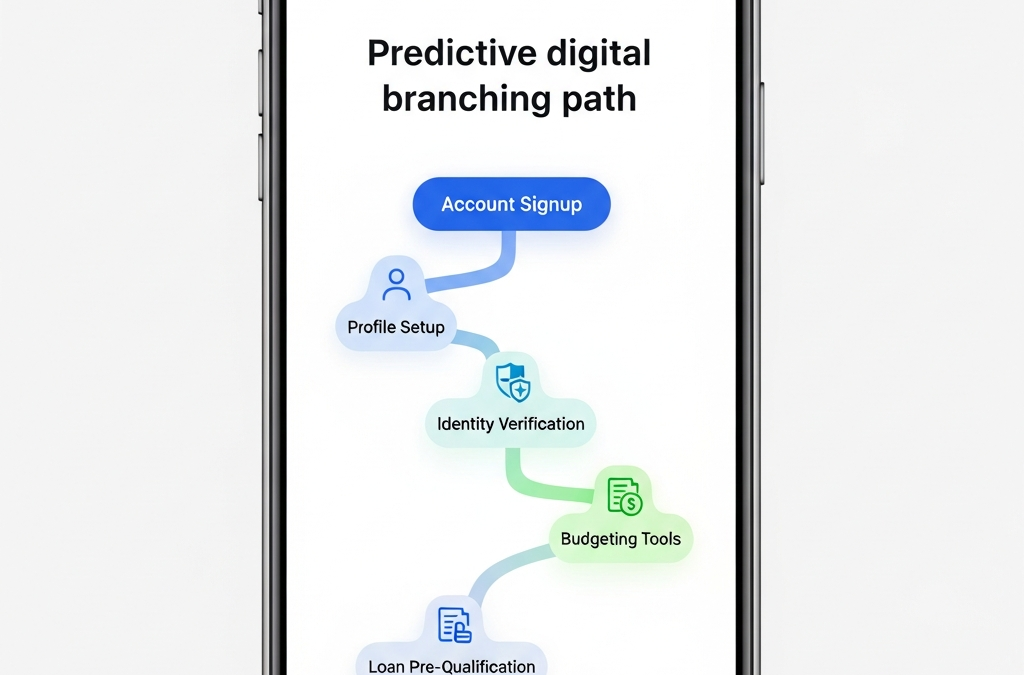
Predictive digital branching analyzes user interactions from the moment they land on your credit union's digital platform. By examining factors such as device type, session history, geolocation, and even time of day, the system anticipates the member's next likely action. For instance, a member checking their balance during evening hours might be seamlessly directed toward budgeting tools or loan pre-qualification options rather than generic account overviews. This targeted approach helps in creating a more engaging and intuitive experience, ultimately leading to higher satisfaction and loyalty among members.
This approach not only streamlines the user experience but also aligns with credit union values of member-centric service. Early adopters have reported up to 40% improvements in funnel completion rates, turning casual browsers into loyal, engaged members. Credit unions that embrace predictive digital branching are not just enhancing their service offerings; they are setting a new standard for member engagement within the financial sector, showcasing how technology can be harnessed to foster stronger relationships.
Proven Strategies to Minimize Drop-Offs in Digital Funnels
Additionally, investing in user education about how to effectively utilize these digital tools can further minimize drop-off rates. Hosting webinars or creating tutorial videos that explain the benefits and features of predictive digital branching can empower members to engage more fully with the services offered. This not only enhances user satisfaction but also encourages members to explore additional services they may not have considered otherwise.
High drop-off rates plague many credit union digital banking funnels, particularly at key friction points like account opening and loan applications. Predictive branching addresses this by intervening proactively. By identifying where users typically lose interest or abandon processes, credit unions can make data-driven adjustments to keep users on track. This ensures that members receive timely support and information, reducing frustration and enhancing the likelihood of successful transactions.
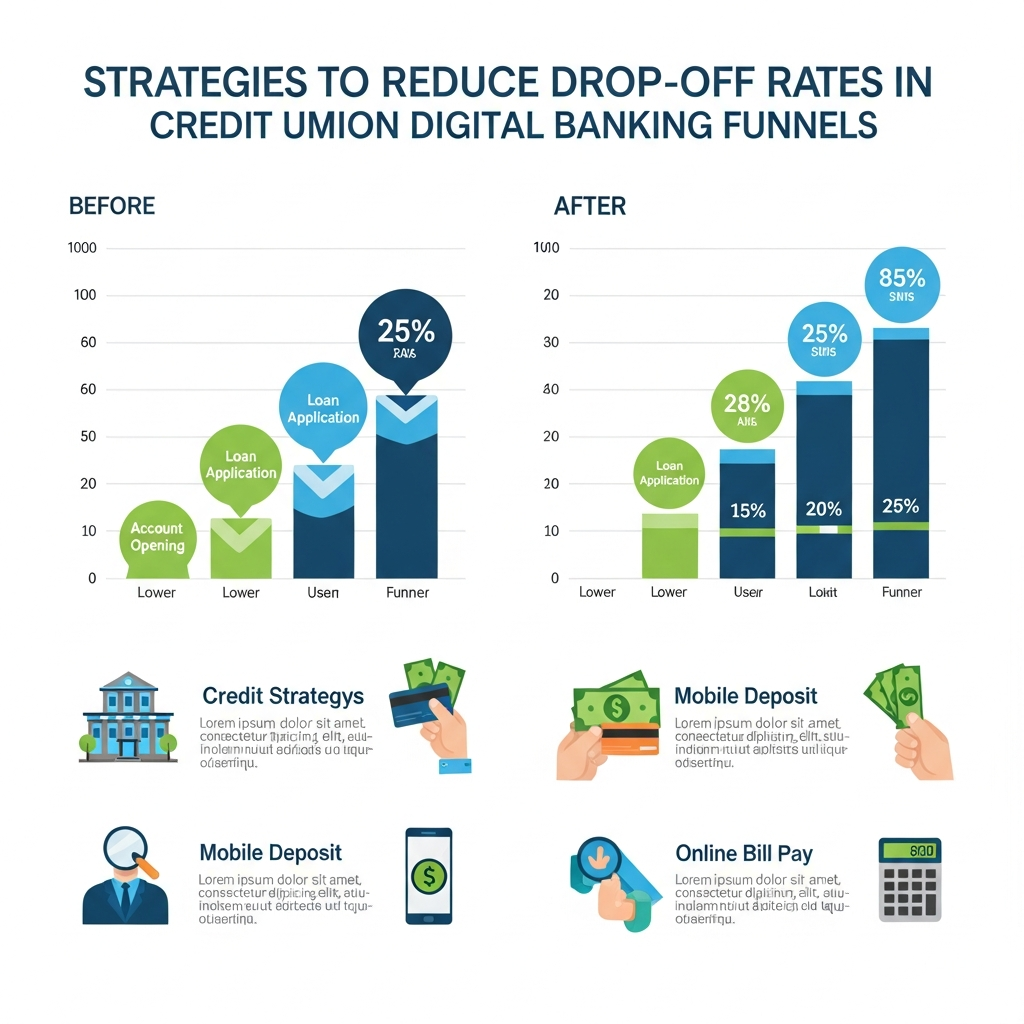
Key tactics include:
Moreover, implementing a feedback loop allows credit unions to continuously refine their strategies based on member interactions and preferences. Engaging with members through surveys or direct feedback opportunities can provide invaluable insights into the effectiveness of predictive branching strategies. This ongoing dialogue not only helps in improving the digital experience but also strengthens the bond between the credit union and its members.
- Contextual Nudges: Real-time prompts based on user momentum, such as "Complete your profile in 30 seconds to unlock personalized rates."
- Progressive Profiling: Gradually collect information to avoid overwhelming forms.
- Behavioral Retargeting: If a user abandons a loan app, re-engage with tailored incentives on return visits.
- Mobile-First Optimization: Ensure branching paths are thumb-friendly and load instantly.
Leveraging Predictive Analytics Dashboards
To implement effective predictive digital branching, credit unions need robust analytics. Modern dashboards provide actionable insights into user behavior patterns, enabling data-driven refinements.

Furthermore, credit unions can leverage social media platforms to communicate real-time changes or updates regarding their digital services. By promoting predictive digital branching initiatives through these channels, they can reach a wider audience and drive more traffic to their digital platforms. This multi-channel approach ensures that members are always informed and feel connected to their credit union, regardless of where they access services.
Moreover, leveraging A/B testing within these analytics dashboards allows credit unions to experiment with different predictive branching scenarios and visualize their impacts on user behavior in real time. This iterative process is crucial for fine-tuning services to meet the evolving demands of members, ensuring that credit unions stay relevant and responsive to their needs.
These tools visualize drop-off hotspots, conversion funnels, and branching recommendations. For example, heatmaps reveal where users hesitate, while AI forecasts suggest optimal path variants. Integrating with platforms like Google Analytics or custom CDP solutions ensures seamless deployment. By analyzing this data, credit unions can pinpoint exactly where improvements are needed, allowing for targeted interventions that enhance user engagement and satisfaction.
Implementation Best Practices for Credit Unions
Start with a pilot on high-traffic funnels like new account signup. Partner with UX specialists experienced in financial services to customize models. Ensure compliance with data privacy regulations like CCPA and GLBA by anonymizing inputs.
As credit unions embark on their journey of implementing predictive digital branching, it is vital to foster a culture that embraces innovation and change. Encouraging staff to be proactive in suggesting improvements and sharing insights can lead to a more dynamic and effective implementation process. By empowering employees at all levels, credit unions can create a more responsive and agile organization that is better equipped to serve its members.
- Conduct A/B testing on branching variants.
- Monitor KPIs: completion rates, time-to-conversion, NPS.
- Iterate based on member feedback loops.
This article was brought to you by GrafWeb CUSO – Building the future of digital credit unions through innovative solutions like Predictive Digital Branching that enhance member engagement and satisfaction.