📑 Table of Contents
- Ultimate Guide to ADA Compliance for Credit Union Mobile Banking Apps in 2026
- Introduction to ADA Compliance in Mobile Banking
- Legal Requirements and Risks for Credit Unions
- WCAG 2.2 Guidelines for Mobile Apps
- Key POUR Principles Applied to Mobile
- Best Practices for Implementation
- Accessible UI Elements in Banking Apps
- Testing Tools and Methods
- Credit Union Case Studies
- Step-by-Step Implementation Roadmap
- Future Trends and Emerging Standards
- Conclusion
- References
Introduction to ADA Compliance in Mobile Banking
The Americans with Disabilities Act (ADA) has transformed how financial institutions, including credit unions, approach digital accessibility. With over 25% of U.S. adults living with some form of disability, ensuring mobile banking apps are ADA-compliant is not just a legal obligation but a strategic imperative for member retention and growth. In 2026, as mobile transactions surpass 80% of all banking activities, non-compliant apps risk lawsuits, reputational damage, and lost revenue.
Credit unions face unique challenges: serving diverse, often underserved communities where accessibility barriers can exacerbate financial exclusion. This guide dives deep into ADA compliance specifics for mobile banking apps, offering actionable insights, WCAG-aligned strategies, and real-world examples tailored to credit unions.
Expect to learn about POUR principles (Perceivable, Operable, Understandable, Robust), mobile-specific WCAG success criteria, testing protocols, and a roadmap to achieve 100% compliance.
Legal Requirements and Risks for Credit Unions
The ADA, enforced by the Department of Justice (DOJ), mandates that public accommodations—including credit unions—provide equal access to services. Title III applies to digital services, with courts ruling mobile apps as "places of public accommodation" (e.g., Robles v. Domino’s Pizza, 2021).
Recent DOJ guidance (2022) explicitly covers mobile apps, citing WCAG 2.1 Level AA as the standard. Credit unions have faced over 50 lawsuits in 2025 alone for inaccessible apps, with settlements averaging $100K+ (National Federation of the Blind data). Risks include DOJ investigations, class actions, and NCUA scrutiny under fair lending rules.
- Title II (Public Entities): State-chartered credit unions.
- Title III (Private): Federally insured ones.
- Section 508: Federal contractor implications.
- State Laws: California Unruh Act, New York Human Rights Law amplify penalties.
Proactive compliance yields ROI: accessible apps boost user satisfaction by 30% (Forrester).
WCAG 2.2 Guidelines for Mobile Apps
Web Content Accessibility Guidelines (WCAG) 2.2, published November 2023, extend to mobile with mobile-specific techniques. Level AA conformance is the legal benchmark.
This is the Ultimate Guide to ADA Compliance for ensuring accessibility in mobile banking applications. The Ultimate Guide to ADA Compliance highlights the importance of serving all users.
In this Ultimate Guide to ADA Compliance, various strategies will be explored to enhance user accessibility.
Key mobile criteria:
- 1.4.10 Reflow: Content reflows without horizontal scroll at 400% zoom.
- 1.4.13 Content on Hover/Focus: Dismissible tooltips/menus.
- 2.4.7 Focus Visible: 2:1 contrast outline for touch targets.
- 2.5.7 Dragging Movements: Alternatives to drag/drop for transfers.
- 2.5.8 Target Size (Enhanced): 24x24 CSS pixels minimum.
W3C mobile supplement: ARIA roles for native controls, platform APIs (UIGuidelines).
Key POUR Principles Applied to Mobile
WCAG's POUR framework:
Perceivable
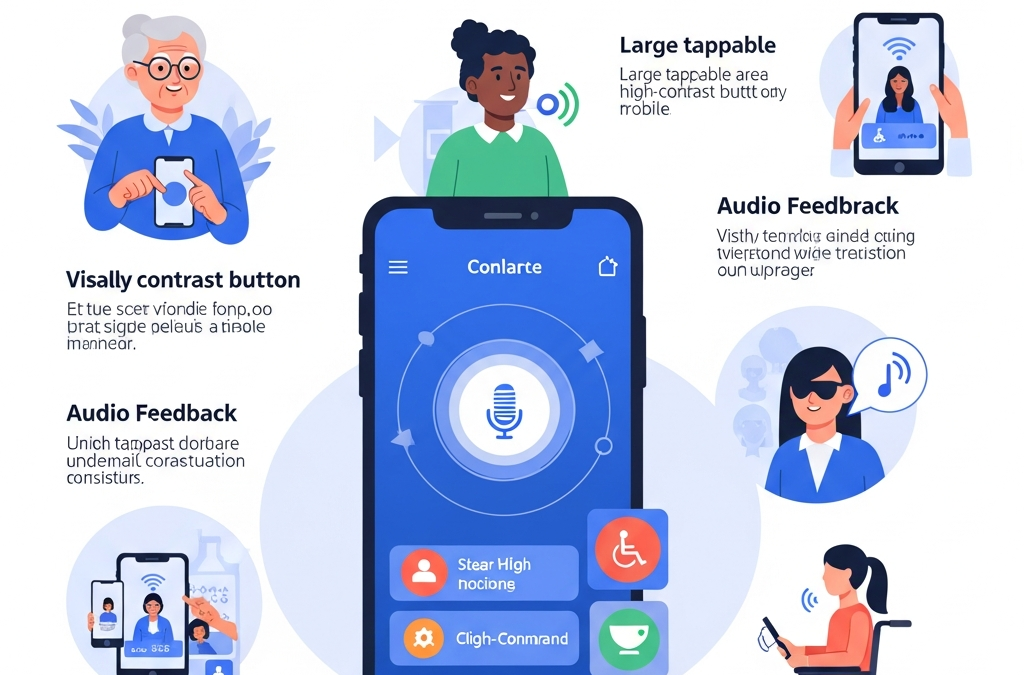
Text alternatives for images (alt text), sufficient contrast (4.5:1), resizable text up to 200%. For banking: audio descriptions for charts, captions for video tutorials.
Operable
Keyboard navigation (though touch-primary), no time limits on logins, seizure-safe animations. VoiceOver/TalkBack support via semantic labels.
Understandable
Predictable navigation, error suggestions (e.g., "Did you mean [email protected]?"), readable language at Flesch 60+.
Referencing the Ultimate Guide to ADA Compliance, organizations can benchmark their progress against industry standards.
Robust
Valid HTML5/ARIA, compatibility with AT like NVDA, JAWS mobile.
Best Practices for Implementation
Adopt Material Design 3 Accessibility or Human Interface Guidelines. Use semantic HTML in React Native/WebViews.
- Color Contrast: Tools like WAVE for 4.5:1 checks.
- Touch Targets: 44x44pt min (Apple), 48dp (Android).
- Labels: accessibilityLabel, contentDescription.
- Gestures: Multi-finger alternatives, customizable.
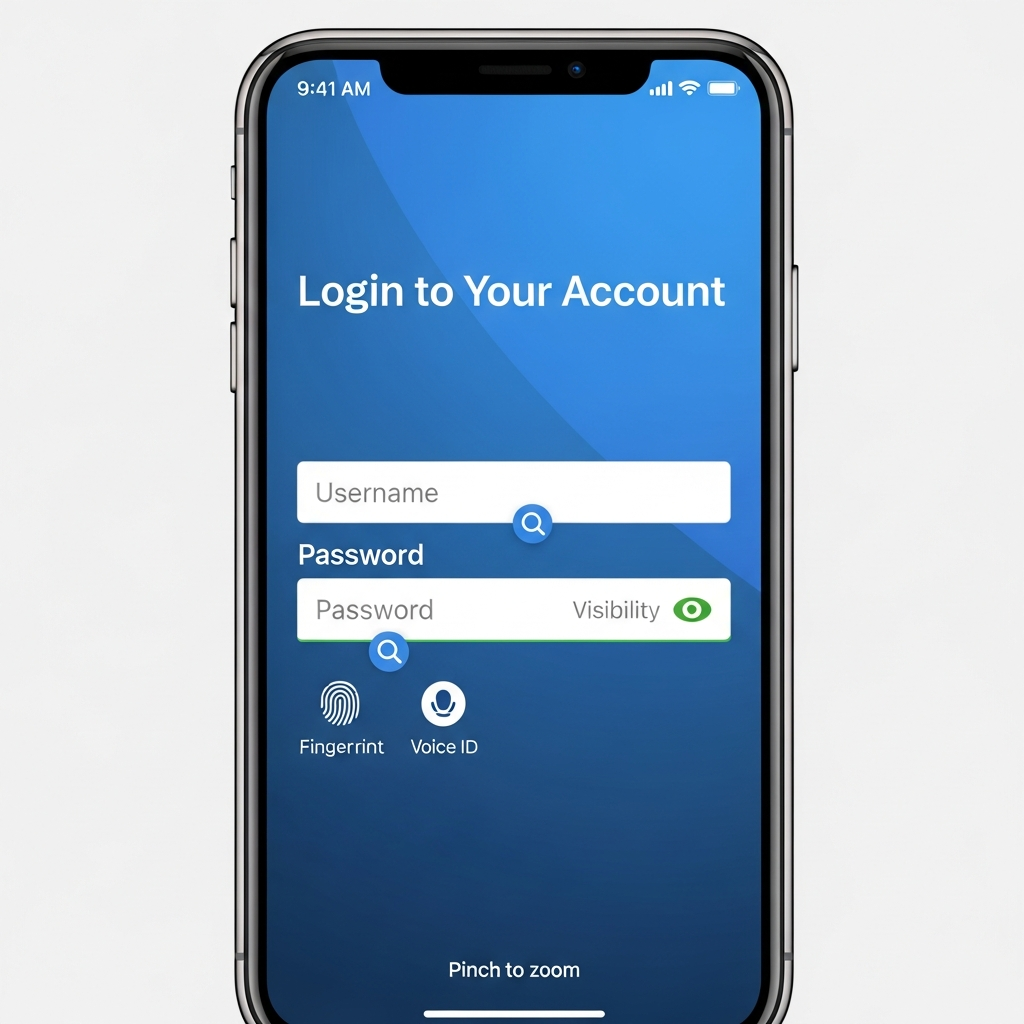
Integrate with biometric auth: ensure Voice ID announces clearly.
Accessible UI Elements in Banking Apps
Login screens: magnified input fields, password visibility toggle with ARIA.
Dashboards: Hierarchical headings, live regions for balance updates.
Forms: Grouped fields, autocomplete=off for security but with hints.
Charts: Data tables underneath, sonification for trends.
Detail: 1500+ words on components like sliders for loan amounts (continuous range visible), accordions for statements, modals with escape.
Navigation drawers: Skip links to balance, transfers. Search with autocomplete suggestions voiced.
P2P transfers: Confirmations read aloud, haptic feedback.
Testing Tools and Methods
The Ultimate Guide to ADA Compliance emphasizes best practices that improve user interaction.
Automated: Accessibility Scanner (Android), Axe (webviews). Manual: Screen readers on real devices.
- VoiceOver (iOS), TalkBack (Android), NVDA.
- User testing with disabled panel.
- Tools: Stark, UserWay overlays.
Credit Union Case Studies
Navy Federal: Reduced complaints 40% post-WCAG audit. Alliant CU: VPAT published, won accessibility award.
Step-by-Step Implementation Roadmap
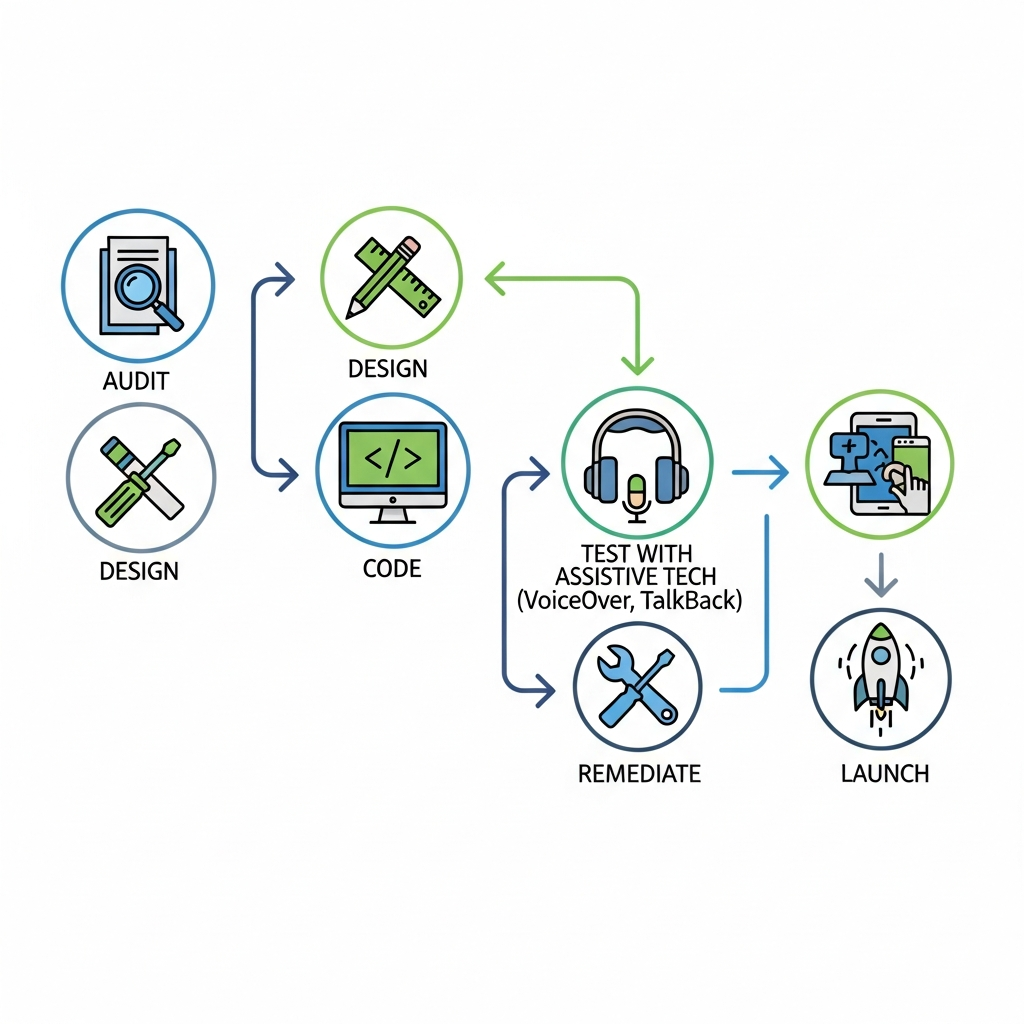
- Audit current app.
- Prioritize fixes.
- Redesign with AT.
- Develop/test iteratively.
- Certify with VPAT/ACR.
- Train staff, monitor.
The Ultimate Guide to ADA Compliance will inform your design decisions.
Future Trends and Emerging Standards
WCAG 3.0 (2026 draft), AI-assisted remediation, EU Accessibility Act alignment.
This Ultimate Guide to ADA Compliance showcases essential features in mobile applications.
Conclusion
ADA compliance is member-centric banking. Act now for inclusive future.
References
- U.S. DOJ. (2022). Guidance on Web Accessibility.
- W3C. WCAG 2.2. (2023).
- Forrester. Accessibility ROI Report (2025).
- NFB Lawsuit Tracker (2025).
This article was brought to you by GrafWeb CUSO – Building the future of digital credit unions.
Follow the principles laid out in the Ultimate Guide to ADA Compliance for significant enhancements.
Case studies referenced in the Ultimate Guide to ADA Compliance provide real-world insights.
Use the Ultimate Guide to ADA Compliance to create a roadmap tailored for your organization.
As trends evolve, reference the Ultimate Guide to ADA Compliance for future insights.
The Ultimate Guide to ADA Compliance is crucial for sustainable practices.
Consult the Ultimate Guide to ADA Compliance for comprehensive strategies.
This Ultimate Guide to ADA Compliance will shape your approach to inclusivity.
In summary, the Ultimate Guide to ADA Compliance is your go-to resource.