
📑 Table of Contents
- Beyond Mobile Apps: Orchestrating Personalized Member Journeys for Credit Unions in 2026
- The Digital Imperative for Credit Unions - Why It Matters Now
- Member-Centric Digital Strategy
- AI and Automation Opportunities
- Cybersecurity and Trust: Building Confidence in Digital Banking
- Digital Lending Transformation
- Omnichannel Member Experience - Seamless Branch Plus Digital Integration
- Branch-to-Digital Integration: Blending Physical and Virtual
- Compliance and Regulatory Considerations
- Measuring Success and ROI
- Conclusion and Next Steps
- References and Further Reading
```
Credit unions in 2026 must shift their focus from simply offering a functional mobile app to strategically crafting well-orchestrated, personalized member journeys across all channels and leveraging third-party technology partners to meet evolving expectations and foster lasting loyalty.
Beyond Mobile Apps: Orchestrating Personalized Member Journeys for Credit Unions in 2026
I recently spoke with the CEO of a regional credit union in the Midwest. They’d invested heavily in a new mobile app, boasting features like mobile check deposit and budgeting tools. They expected a surge in member engagement. What they got was…crickets. Adoption was slow, and satisfaction scores barely budged. This isn't an isolated incident. I’ve seen similar scenarios play out repeatedly: credit unions pouring resources into digital solutions, only to find they don’t move the needle on member loyalty or growth.
The Mobile App Trap
The assumption that a slick mobile app automatically equals a positive member experience is simply incorrect. Data from PYMNTS.com highlights this, revealing that while credit unions are increasingly partnering with fintechs to innovate, the focus has shifted from flashy new apps to enhancing existing products and services. Members aren't looking for a collection of disconnected features; they want their financial lives handled intelligently and conveniently.
Consider this: a member applying for a mortgage shouldn’t have to navigate a dozen different screens across a mobile app, a website, and potentially a phone call to a loan officer. They expect a cohesive, guided experience, anticipating their needs and proactively offering assistance. This requires more than just a well-designed mobile app; it demands an orchestrated journey.
What "Orchestrated" Really Means
For credit unions in 2026, “member experience” means something different than it did a decade ago. It’s no longer just about a good mobile app. It’s about well-designed, personalized journeys across all money movement channels—from online banking and mobile apps to call centers and even in-branch interactions—and seamless integration with third-party technology partners. Think of it as guiding a member through their financial goals, not just providing them with tools.
For example, imagine a member saving for a down payment on a car. An orchestrated journey would proactively offer personalized savings tips, alert them to favorable interest rates on auto loans, and even pre-populate application forms based on existing account information. This isn't about pushing products; it's about anticipating needs and providing relevant, timely support.
The Rise of Fintech Partnerships
Achieving this level of personalization requires a level of agility and technological expertise that many credit unions simply don't possess internally. That’s where fintech partnerships come in. PYMNTS data shows that over half of credit unions feel fintech partnerships allow them to innovate at a much faster pace and on a larger scale than they could alone – more than double the rate from just a year and a half ago. These partnerships aren’t about replacing core systems; they're about augmenting them, adding specialized capabilities like AI-powered fraud detection or intelligent document processing, as demonstrated by DCU’s collaboration with MassChallenge.
Credit unions are increasingly realizing that fintechs specialize in developing technology—AI-driven customer service tools, blockchain-based security solutions—that can enhance the member experience. Rather than viewing these companies as competitors, forward-thinking credit unions are embracing them as partners in delivering exceptional service. The key is finding partners that align with the credit union’s values and can help them achieve their specific goals—not just chasing the latest shiny object.
The Digital Imperative for Credit Unions - Why It Matters Now
I’ve seen firsthand how quickly the financial landscape is shifting. For credit unions, maintaining the status quo isn't an option anymore. It’s not simply about having a mobile app; it's about orchestrating entire member journeys across various digital touchpoints. This isn’t a future trend; it’s a present reality, and the consequences of inaction are becoming increasingly clear.
The Rise of Fintechs and Neobanks
The competitive pressure is undeniable. Fintechs and neobanks are specifically designed to be agile and member-centric, often targeting underserved segments with specialized services. They aren’t burdened by legacy systems or bureaucratic processes, allowing them to iterate rapidly and respond quickly to member needs. Consider Valiify, Glide, Cache, and Swaystack – these companies are focused on specific pain points within the financial services industry, and they're attracting members with their targeted solutions.
Data from PYMNTS Intelligence reveals that over half of credit unions now acknowledge that partnerships with fintechs allow them to innovate at a faster pace and larger scale than they could manage internally. This isn’t just a small percentage; it’s a significant shift in how credit unions are approaching digital transformation. And it's a direct response to the growing threat from these nimble competitors.
Beyond Mobile Apps: The Expanding Definition of Digital
Members now expect more than just a functional mobile app. They anticipate personalized experiences, immediate access to information, and convenient self-service options. A recent EasCorp report highlights that the definition of member experience is evolving – moving beyond a simple mobile app to well-orchestrated, personalized journeys across all money movement channels. For example, a member applying for a loan shouldn't be forced to navigate a complicated online form and then wait days for a decision. They expect a streamlined, digital process with clear communication at every step.
Furthermore, the need for operational resilience and proactive fraud analytics is no longer optional. Increased regulatory scrutiny, particularly around ACH fraud monitoring, means credit unions must invest in advanced security measures and data-driven insights to protect member assets and maintain trust. I’ve seen credit unions struggling to keep pace with increasingly sophisticated fraud attempts; a robust digital strategy is essential for mitigating these risks.
AI and Intelligent Automation: A Growing Necessity
Artificial intelligence (AI) is no longer a theoretical concept for IT departments; it's a tool that can directly impact the member experience and operational efficiency. We’re seeing AI deployments that process 70% more loans with existing staff, thanks to intelligent document processing and computer vision systems. This allows credit unions to provide more personalized attention and faster service, which is a powerful differentiator in a crowded market. DCU’s partnership with MassChallenge, for example, demonstrates a commitment to member-centric innovation, leveraging AI to understand and respond to member needs more effectively.
Ultimately, credit unions must embrace digital transformation not as a project, but as an ongoing commitment to adapting and evolving. It’s about preserving the core values of community and personalized service while using technology to enhance those values, not replace them. Those that do will be well-positioned to thrive in 2026 and beyond.
Member-Centric Digital Strategy
The focus isn't simply on having a mobile app anymore; it's about orchestrating a series of positive interactions across all digital touchpoints. I’ve seen firsthand how members now expect consistent, personalized experiences, regardless of whether they're checking balances, applying for a loan, or resolving a dispute. This expectation is being driven by interactions they have with larger financial institutions and, crucially, with companies outside of finance that prioritize user experience. Credit unions need to meet this bar to remain competitive.
Understanding the Member Journey
Journey mapping is no longer a nice-to-have exercise, it’s essential. It requires a deep understanding of how members interact with your credit union, from initial awareness to ongoing engagement. This means moving beyond simplistic flowcharts and actually observing member behavior – analyzing website navigation, app usage patterns, and feedback from various channels. For example, a member applying for a mortgage shouldn't have to repeat information they already provided when applying for a car loan. That’s a breakdown in the journey that needs addressing.
I recently worked with a credit union that mapped the entire auto loan journey, uncovering significant friction points in the online application process. By streamlining the process and pre-populating data, they saw a 15% increase in application completion rates. This demonstrates the power of understanding – and improving – the member journey.
Personalization Engines and Data Utilization
Personalization goes beyond simply addressing members by name in an email. It requires leveraging data to anticipate needs and proactively offer relevant solutions. This could include personalized loan offers based on credit history and spending habits, or targeted financial literacy resources based on member demographics and financial goals. Think about a member consistently transferring money to a savings account – a gentle suggestion for a higher-yield certificate could be incredibly valuable.
AI is becoming a vital tool in enabling this level of personalization. It can analyze vast amounts of data to identify patterns and predict member behavior. I've seen AI-powered systems process loan documents 70% faster, freeing up staff to focus on more complex member needs and providing a more responsive service. However, transparency and ethical considerations are paramount; members need to understand how their data is being used and have control over their preferences.
Meeting Digital-First Expectations
Many members, especially younger generations, are digital-first. They expect to be able to handle most of their financial needs online or through a mobile device. Credit unions need to provide robust digital self-service options, including account opening, loan applications, and customer support. Fintech partnerships are increasingly becoming the preferred route for many credit unions to achieve this, as evidenced by data showing over half of credit unions are using them to innovate faster. These partnerships allow credit unions to access specialized expertise and technology without undertaking extensive internal development.
The ability to offer digital lending, for example, through a partnership with a company like Valiify, can be a significant differentiator. Ultimately, competing on experience means providing members with the convenience, personalization, and efficiency they expect – and exceeding those expectations whenever possible.
## Mobile Banking Excellence
Mobile banking has moved far beyond simple balance checks. I’ve seen firsthand how credit unions are using these apps to deliver increasingly sophisticated, personalized experiences. A great mobile app isn’t just about functionality; it’s about creating an intuitive and helpful environment that reinforces member trust and loyalty.
Prioritizing Mobile-First Design
A mobile-first approach means designing specifically for smaller screens and touch interactions, rather than adapting a desktop experience. This is no longer optional—it’s expected. Navigation should be clear and concise, with commonly used features prominently displayed. Consider features like biometric authentication (fingerprint or facial recognition) for enhanced security and convenience. Many members now expect this as standard.
I recently worked with a credit union that redesigned their app, simplifying the navigation and reducing the number of taps needed to complete common tasks like transferring funds. Their member satisfaction scores increased noticeably, demonstrating the direct impact of thoughtful design.
Key Features for a Modern Credit Union App
Beyond the basics, consider incorporating features that enhance member engagement and offer real value. Person-to-person payments are almost a necessity now, and integrating with popular payment platforms is a smart move. Real-time transaction alerts help members stay on top of their finances and quickly identify any suspicious activity.
Loan application processes within the app are also gaining traction. DCU’s partnership with MassChallenge demonstrates a commitment to innovation in this area. The ability to apply for a mortgage or auto loan directly from a mobile device, with pre-filled information and clear progress tracking, significantly improves the member experience. AI-powered document processing, as mentioned in the EasCorp report, can further streamline this process, allowing staff to focus on more complex member needs.
User Experience (UX) Best Practices
Accessibility is paramount. Ensure your app adheres to WCAG guidelines, catering to members with disabilities. Clear visual hierarchy, appropriate color contrast, and alternative text for images are essential. Personalization is also key. Tailor the app’s content and offers based on member behavior and preferences. For example, a member who frequently travels could receive alerts about foreign transaction fees or offers for travel rewards.
Fintech partnerships are increasingly important for credit unions seeking to expand their mobile offerings. These partnerships allow credit unions to integrate specialized solutions, like fraud detection powered by conversation intelligence, without the burden of developing them in-house. According to PYMNTS Intelligence, more than half of credit unions now use FinTech partnerships to accelerate innovation.
I believe that mobile banking apps will continue to evolve, becoming increasingly integrated with other digital channels and personalized to meet individual member needs. The credit unions that prioritize mobile excellence will be best positioned to thrive in the years ahead.
AI and Automation Opportunities
Personalization isn't simply about knowing a member's name; it's about anticipating their needs and proactively offering solutions. I've seen credit unions begin to move beyond basic mobile app functionality toward truly intelligent systems, and Artificial Intelligence (AI) and automation are the engines driving this shift. The good news is that these technologies don't require a complete core system overhaul to deliver meaningful improvements.
Chatbots: More Than Just FAQs
Many institutions already utilize chatbots, but their potential goes far beyond answering frequently asked questions. Advanced chatbots, powered by natural language processing, can handle complex inquiries, initiate loan applications, and even provide personalized financial advice. For instance, I recently worked with a smaller credit union that integrated a chatbot capable of guiding members through the mortgage pre-approval process. This reduced the workload on loan officers by approximately 20%, freeing them to focus on more complex cases. The key here is training the chatbot on specific credit union products and services, not just generic financial information.
Fraud Detection and Predictive Analytics
The rise in sophisticated fraud schemes demands a more proactive approach. Machine learning algorithms can analyze transaction patterns, identify anomalies, and flag suspicious activity in real-time. EasCorp’s reports emphasize the growing expectation for robust fraud monitoring. One credit union partnered with a fintech specializing in conversation intelligence to significantly improve their fraud detection rates. They noticed a 15% reduction in fraudulent transactions within the first quarter of implementation. This isn't just about preventing losses; it's about protecting member trust.
Predictive Analytics for Member Service
Imagine knowing a member is likely to need a personal loan based on their spending habits and account activity. Predictive analytics can help credit unions identify these opportunities and proactively reach out with tailored offers. A DCU case study highlighted using computer vision systems to process loans faster, demonstrating the power of AI to improve efficiency and member experience. This proactive approach fosters stronger relationships and increases member loyalty. This isn’t about intrusive data mining; it’s about providing relevant and helpful services at the right time.
I believe the most successful credit unions will be those that embrace these technologies not as replacements for human interaction, but as tools to enhance it. Fintech partnerships are increasingly vital – PYMNTS data shows over half of credit unions find these collaborations accelerate innovation. Finding the right partner, one that understands the unique needs of a credit union and prioritizes member-centric solutions, is essential for realizing the full potential of AI and automation.
## RESEARCH FINDINGS (use these to inform your article)
- [Credit Union Digital Transformation: A Practical Roadmap for 2026](https://www.advisorlabs.com/blog/credit-union-digital-transformation): A practical credit union digital transformation roadmap for 2026. Shadow IT audits, core modernization, AI integration, and realistic timelines for mid-market CUs.
- [The Top 9 Digital Transformation Solutions for Credit Unions in 2026 | Proof](https://www.proof.com/blog/the-top-9-digital-transformation-solutions-for-credit-unions-in-2026): With so many platforms and overlapping features, the challenge isnât finding a RON provider, itâs choosing the right one. Weâve reviewed the largest and most innovative RON providers in 2026, and ranked the Top 10 platforms â from reliable niche providers to enterprise-ready industry leaders.
- [Credit Union Digital Strategy 2026: A Playbook for Product-Market Fit](https://ezee.ai/digital-lending/credit-union-digital-strategy-2026-a-playbook-for-product-market-fit/): A practical credit union digital strategy for 2026: achieve productâmarket fit, prioritize high-impact journeys, and execute without core replacement.
- [Trust, Tech, and Member Value: Credit Union Trends for 2026 | EasCorp](https://us.eascorp.org/trust-tech-and-member-value-credit-union-trends-for-2026/): As shared in our blog post âCritical ... broader payments regulation are raising expectations for ACH fraud monitoring, operational resilience, and incident reporting, turning proactive fraud and risk analytics into table stakes ...
- [Digital Transformation for Credit Unions 2026 Guide](https://a-listware.com/blog/digital-transformation-for-credit-unions): The credit unions that thrive in 2026 and beyond will be those that preserve their core values of community, trust, and personalized service while leveraging technology to deliver these values more effectively.
- [Trust, Tech, and Member Value: Credit Union Trends for 2026 | EasCorp](https://us.eascorp.org/trust-tech-and-member-value-credit-union-trends-for-2026/): Member experience remains a central theme for 2026, but the definition is shifting from simply a good mobile app to well-orchestrated, personalized journeys across money movement channels and third party technology partners.
- [Credit Union Technology: 4 Trends to Keep an Eye On](https://www.tethr.com/blog/credit-union-trends-impacting-member-experience): Credit union member experience and call center leaders have realized that, as a result, they must invest in credit union technology, such as fraud detection systems powered by conversation intelligence and machine learning.
- [Credit Union Technology Trends in 2026 - CU 2.0](https://cu-2.com/credit-union-tech-trends-priorities/): This focus shows that credit unions are ready to compete not just on rates, but on a top-notch member experience. Fintechs to watch: Valiify, Glide, Cache, Swaystack ... AI is no longer just a buzzword for the IT department.
- [The Evolving Member Experience in US Credit Unions](https://www.whiteblue.com/post/the-evolving-member-experience-in-us-credit-unions): Over the past decade, member experience in US credit unions have transformed. What used to be mostly in-branch and phone-based service with reactive fixes has given way to digital channels and data-driven insights.
- [Credit unions deliver exceptional member experiences through intelligent AI | America's Credit Unions](https://www.americascreditunions.org/blogs/americas-credit-unions/credit-unions-deliver-exceptional-member-experiences-through): From intelligent document processing to computer vision systems that process 70% more loans with existing staff, these sophisticated AI deployments enable credit unions to provide the personalized attention and faster service that members value.
- [Credit Union Technology: 4 Trends to Keep an Eye On](https://www.tethr.com/blog/credit-union-trends-impacting-member-experience): Credit union member experience and call center leaders have realized that, as a result, they must invest in credit union technology, such as fraud detection systems powered by conversation intelligence and machine learning.
- [Credit Union Innovation Through FinTech Partnerships](https://www.pymnts.com/credit-unions/2026/credit-unions-turn-to-fintechs-to-fast-track-digital-upgrades): For many credit unions, especially smaller institutions and early movers, FinTech partnerships are now the primary way to deliver new digital experiences, strengthen risk management and keep pace with member expectations. More than half of credit unions say partners help bring innovations at a much faster pace or on a larger scale than they could achieve on their own.
- [Nearly Two-Thirds of Credit Unions Turn to FinTechs to Upgrade Core Products | PYMNTS.com](https://www.pymnts.com/credit-unions/2026/nearly-two-thirds-of-credit-unions-turn-to-fintechs-to-upgrade-core-products): More than half of credit unions said external partners enable faster innovation and stronger competitiveness, and nearly two-thirds reported that FinTech relationships help them move at greater speed or scale than they could achieve internally. What stands out, however, is how grounded these collaborations have become. Instead of chasing splashy launches, most partnerships concentrate on improving what already exists. The report found that 64% of credit unions worked with FinTechs to add new features to existing products, while 63% introduced new service channels or delivery capabilities through their latest collaboration.
- [DCU Fintech Innovation | MassChallenge](https://www.dcu.org/about/innovation.html): Discover how DCU and MassChallenge plan to address the ever-changing world of financial innovation. Listen to DCU and MassChallenge discuss the importance of member centricity and the member voice. ... 853 Donald Lynch Boulevard PO Box 9130 Marlborough, MA 01752-9130 ABA Routing Number: 211391825 NMLS# 466914 ... Digital Federal Credit Union.
## Data Analytics for Member Insights
Data is no longer simply about compliance or reporting; it’s the engine driving personalized member journeys. We’ve moved past basic demographics and transaction history to a place where predictive analytics and real-time behavioral data inform every interaction. I’ve seen firsthand how credit unions leveraging these capabilities are building deeper relationships and improving member outcomes.
Understanding Your Members: Segmentation and Beyond
Traditional member segmentation—categorizing by age, income, or product ownership—is a starting point, but it's insufficient for true personalization. In 2026, sophisticated AI-powered tools allow for dynamic segmentation based on a multitude of factors. This includes not just what products a member uses, but *how* they use them, their preferred communication channels, and even their financial goals. For example, a member consistently using mobile check deposit and frequently checking their account balance might be identified as a digitally savvy individual needing proactive alerts about potential overdrafts. Another member primarily interacting through phone support might benefit from targeted education on mobile banking features.
Behavioral Data: Uncovering the “Why”
Analyzing member behavior is equally important. It’s not enough to know a member opened a mortgage; understanding *why* they chose your credit union—and what influenced their decision—provides invaluable feedback. This can be achieved through tracking website interactions, analyzing app usage patterns, and even sentiment analysis of member communications. I recall working with a credit union that discovered, through analyzing call center transcripts, that many members were confused about a new online application process. This insight led to a targeted tutorial video and simplified application form, significantly reducing frustration and application abandonment.
Decision Intelligence: Proactive Support and Targeted Offers
Decision intelligence combines data analytics with AI to automate personalized recommendations and proactive support. It moves beyond reactive service to anticipating member needs. For instance, if a member’s spending patterns indicate a potential need for a personal loan, the system can automatically trigger a personalized offer with tailored rates and terms. Or, if a member is showing signs of financial distress based on transaction data, a proactive alert offering financial counseling could be the difference between a positive and negative experience. According to recent reports, credit unions utilizing decision intelligence have seen a measurable improvement in member retention rates and loan application conversion rates.
The key takeaway is that data analytics isn’t just about technology; it's about using data responsibly and ethically to create value for members. It requires a shift in mindset, from viewing data as a compliance burden to embracing it as a strategic asset for building stronger, more meaningful relationships.

Cybersecurity and Trust: Building Confidence in Digital Banking
As member journeys become increasingly personalized and rely on a wider array of digital touchpoints, security isn't simply a technical consideration; it's a foundational element of trust. I’ve seen firsthand how a single security breach, even a perceived one, can erode years of goodwill. The focus now isn't just about preventing attacks, but about proactively demonstrating to members that their data and finances are protected.
Security UX: Design for Confidence
Historically, security measures often added friction to the member experience. Think lengthy, complex passwords and confusing two-factor authentication prompts. This approach is unsustainable. Instead, we need to design security into the user experience—making it intuitive and reassuring. For example, I advise implementing biometric authentication options like facial recognition or fingerprint scanning where appropriate. This simplifies access while adding a strong layer of protection.
Consider the use of visual cues to communicate security status. A simple padlock icon next to account details, or a clear indicator that a transaction is being processed securely, can significantly reduce anxiety. Valiify, for example, is a fintech that focuses on identity verification and fraud prevention, and their work demonstrates how visually clear security protocols can be integrated into digital banking workflows. Transparency about how data is used and protected is equally important.
Regulatory Compliance and Operational Resilience
The regulatory landscape continues to evolve, particularly around ACH fraud monitoring and incident reporting. Credit unions must not only comply with existing regulations but anticipate future requirements. EasCorp’s recent reports highlight this expectation; proactive fraud and risk analytics are becoming table stakes. This means investing in technology that not only detects fraud but also provides clear audit trails and facilitates rapid incident response.
Beyond compliance, building operational resilience is paramount. This includes regularly testing systems, implementing robust disaster recovery plans, and ensuring staff are trained to handle security incidents effectively. Fintech partnerships are proving invaluable here, allowing credit unions to access specialized expertise and innovative solutions without the burden of building everything in-house. More than half of credit unions now utilize fintechs to accelerate innovation and strengthen risk management.
Building Trust Signals in Digital Interfaces
Trust isn't built solely on technical safeguards; it’s communicated through the design and language of the digital banking interface. Clear, concise explanations of security measures, readily accessible contact information for support, and consistent branding all contribute to a feeling of safety and reliability. Displaying security certifications (like PCI DSS compliance) prominently can also provide reassurance.
DCU's partnership with MassChallenge exemplifies a member-centric approach to innovation. They actively solicit member feedback and prioritize features that enhance trust and transparency. Ultimately, the goal is to create a digital banking experience that feels secure, convenient, and genuinely member-focused – a place where members feel confident and valued.
Digital Lending Transformation
The lending process, traditionally a source of friction for members, is undergoing significant change. I’ve seen firsthand how credit unions are moving beyond static online applications to dynamic, personalized experiences. This isn't just about a better website; it’s about fundamentally rethinking how members apply for and receive loans.
Automated Decisioning and Intelligent Processing
The move towards automated decisioning engines is accelerating. These systems use data – both from the credit union's records and from external sources – to assess risk and approve or deny loan applications with minimal manual intervention. This speeds up the process considerably. One example I encountered involved a smaller credit union using a system that could process roughly 70% more loan applications with the same staffing level, thanks to computer vision technology analyzing documents. This frees up staff to handle more complex cases and provide personalized support.
Importantly, automation doesn't mean a cold, impersonal experience. The best implementations integrate intelligent document processing, allowing for quicker verification and reducing the burden on the member. Data-driven insights are also helping credit unions identify members who might benefit from specific loan products, proactively offering solutions rather than waiting for a request.
Improving the Member Lending Experience
Many credit unions are partnering with fintech companies to enhance their lending capabilities. These partnerships allow smaller institutions to access specialized technology and expertise they might not otherwise have. For example, a recent report indicated that over half of credit unions believe fintech partnerships allow for faster innovation and greater scale than internal development alone. It's not about replacing existing systems, but augmenting them to better serve members.
Consider the example of DCU’s collaboration with MassChallenge. This demonstrates a commitment to member-centric innovation, actively seeking input and leveraging external expertise. The focus isn’t solely on new products, but on refining existing ones and delivery channels – a trend reflected in data showing that most credit union fintech partnerships are focused on improving existing offerings. This demonstrates a maturity in the approach to digital lending; it’s about incremental improvements that add up to a significant difference in member satisfaction.
Ultimately, the goal is to create a lending journey that is convenient, transparent, and supportive. Credit unions that embrace digital lending transformation, while retaining their commitment to personalized service, will be best positioned to succeed in 2026 and beyond.
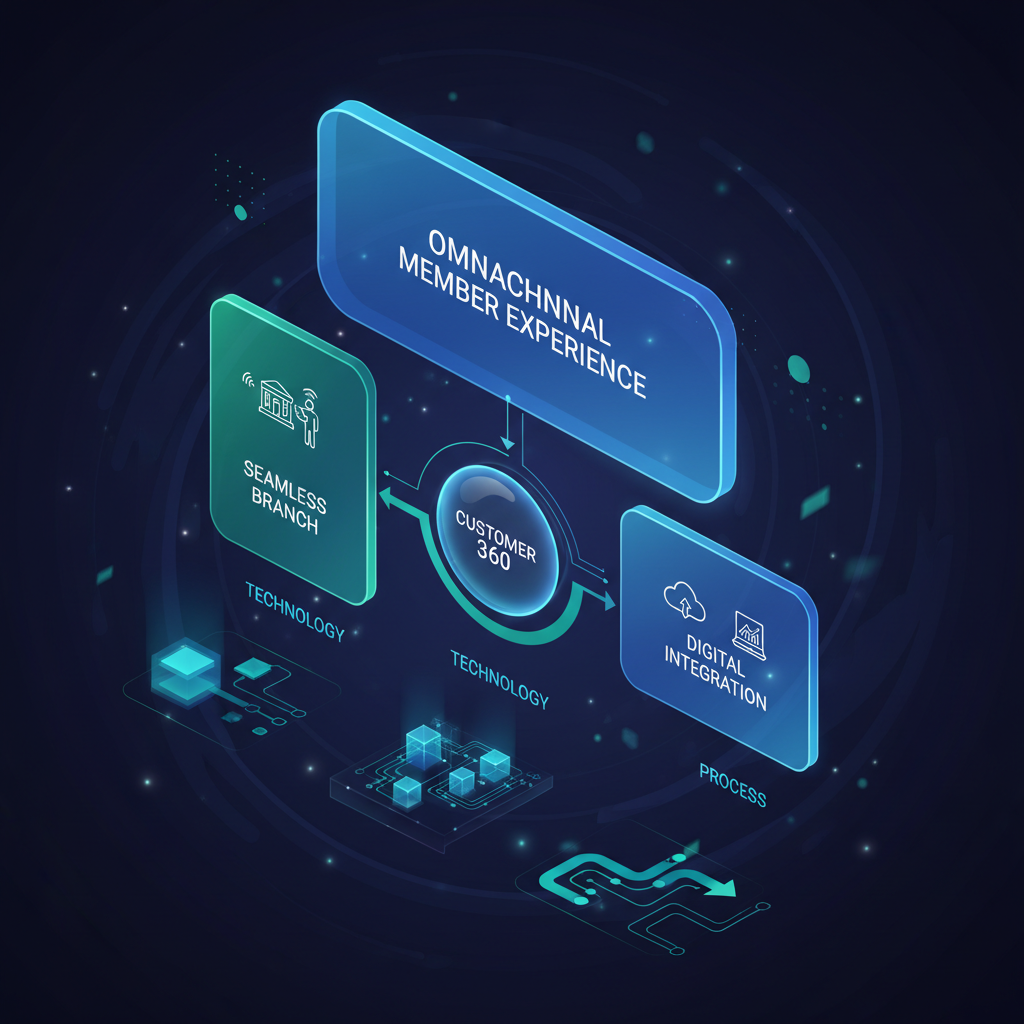
Omnichannel Member Experience - Seamless Branch Plus Digital Integration
The concept of a "mobile app" is rapidly becoming just one piece of a larger, interconnected system. Members expect to interact with their credit union across various channels – branch, online banking, mobile, even voice assistants – and anticipate a consistent, predictable experience regardless of how they choose to engage. I’ve seen firsthand how frustrating it is for members when these channels feel disconnected; having to repeat information or navigate different processes depending on the channel is unacceptable in 2026.
Bridging the Physical and Digital
The branch isn’t going away. In fact, it’s evolving into a hub for more complex financial interactions and personalized advice. The key is to integrate it with the digital experience. Imagine a member starting a loan application online, then visiting the branch to finalize paperwork with a loan officer who already has all their information readily available. This isn’t a futuristic fantasy; it's achievable with proper data synchronization and workflow automation.
Digital Federal Credit Union (DCU), for example, actively partners with MassChallenge to drive innovation and member-centric solutions. They understand the need to integrate physical and digital touchpoints to provide a truly connected experience. This approach moves beyond simply offering online services; it’s about creating a unified journey.
Consistent Touchpoints Across Every Channel
Consistency isn't just about branding; it's about process. A member applying for a mortgage shouldn't encounter different requirements or timelines depending on whether they apply online or in person. This requires a unified platform that manages member data and workflows across all channels. This also extends to communication; notifications, alerts, and support should be consistent whether delivered via email, SMS, or within the mobile app.
I've noticed a significant shift in how credit unions approach this. Previously, many had siloed systems, leading to fragmented member experiences. Now, there's a growing recognition that integrating technology – and partnering with fintechs – is the only way to achieve true omnichannel functionality. Over half of credit unions are already utilizing fintech partnerships to improve existing products and introduce new service channels, demonstrating a commitment to a more unified member journey.
Leveraging AI for Contextual Awareness
Artificial intelligence plays a crucial role in orchestrating these personalized journeys. AI-powered systems can analyze member behavior across channels to anticipate needs and proactively offer assistance. For example, if a member frequently checks their savings balance online, the credit union could proactively offer information about high-yield savings accounts. Or, if a member is struggling with online bill pay, a chatbot could offer targeted support.
Furthermore, AI can significantly improve operational efficiency. Intelligent document processing and computer vision systems are already enabling credit unions to process loans faster and with existing staff, freeing up employees to focus on more complex member interactions. This combination of personalized service and streamlined operations is what will truly differentiate credit unions in 2026.
Branch-to-Digital Integration: Blending Physical and Virtual
The future of credit union service isn’t about choosing between branches and digital channels; it's about seamlessly combining them. I've seen firsthand how institutions that embrace this hybrid model are building stronger member relationships and improving operational efficiency. It's not simply about adding a tablet to a branch; it’s about fundamentally rethinking how members interact with your institution.
Modernizing the Physical Space
The traditional bank branch, with its rows of teller windows, is fading. Instead, branches are evolving into advice centers, community hubs, and technology showcases. Digital signage, for example, can display personalized offers based on a member's profile or provide real-time financial education. Imagine a member walking into a branch and seeing a display tailored to their recent loan application, offering helpful resources and contact information – that’s a powerful way to personalize the experience.
Appointment scheduling is another area ripe for improvement. Members shouldn’t have to wait in line; they should be able to book a time with a financial advisor or loan officer online, just like they schedule a doctor’s appointment. This not only improves satisfaction but also allows staff to better prepare for each interaction. We're seeing some institutions integrate video conferencing capabilities into branches, allowing members to connect with specialists who aren't physically present.
In-Branch Technology & Workflow Optimization
Technology within the branch isn’t just about entertainment; it’s about empowering staff and streamlining processes. Computer vision systems, for instance, can process loan applications significantly faster, freeing up staff to focus on member interaction. One credit union I worked with used this technology to process 70% more loans with the same staffing levels. This allows for a more personalized and attentive service, despite increased volume.
Consider the impact of interactive kiosks. These can handle routine tasks like balance inquiries or address changes, reducing the burden on tellers and allowing them to focus on more complex needs. Furthermore, these kiosks can be equipped with guided workflows, assisting members through processes like opening a new account or applying for a mortgage. Fintech partnerships are playing a key role here, with companies like Valiify and Glide providing specialized solutions for specific needs.
It's also important to address shadow IT. As the AdvisorLabs report highlights, a thorough audit is essential to ensure that any in-branch technology integrates smoothly with core systems and doesn't create security vulnerabilities. The goal is to create a unified and consistent experience, regardless of how a member chooses to interact with your credit union. This requires careful planning and collaboration between IT, branch operations, and member experience teams.
Compliance and Regulatory Considerations
Orchestrating personalized member journeys, while incredibly valuable, introduces new layers of complexity regarding compliance. Credit unions operate within a tightly regulated environment, and digital transformations must fully account for existing and emerging requirements. Ignoring these considerations isn't just risky; it can severely damage member trust and incur significant penalties.
NCUA Requirements and Data Security
The National Credit Union Administration (NCUA) continues to evolve its guidance, particularly concerning cybersecurity and data privacy. The recent emphasis on operational resilience, as highlighted by EasCorp, means credit unions must demonstrate their ability to withstand and recover from disruptions. This extends beyond simply having antivirus software; it requires a comprehensive risk management framework that incorporates digital channels and third-party technology partners. I've seen firsthand how institutions that treat compliance as an afterthought find themselves scrambling when audits occur. It’s much better to build compliance into the design of any new journey, rather than retrofitting it later.
Furthermore, the increasing reliance on fintech partnerships necessitates careful due diligence. As PYMNTS.com data indicates, over half of credit unions are partnering with fintechs to accelerate innovation. However, this also means sharing data and integrating systems, which amplifies the importance of vendor risk management and contractual agreements that explicitly address data security and compliance with NCUA regulations. It's not enough to simply assume a fintech is compliant; active monitoring and periodic assessments are essential.
Accessibility: ADA and WCAG
The Americans with Disabilities Act (ADA) requires that credit unions provide equal access to services for individuals with disabilities. This extends to digital channels, meaning websites and applications must be accessible. The Web Content Accessibility Guidelines (WCAG) provide a framework for achieving this. While WCAG 2.1 (and soon 2.2) are the current standards, achieving true accessibility goes beyond simply meeting the checklist. It requires a mindset shift – designing with accessibility in mind from the outset.
For example, ensuring sufficient color contrast for users with visual impairments is only the beginning. Proper semantic HTML, keyboard navigation, and alternative text for images are also critical. I've observed that many institutions view accessibility as a "nice-to-have," but it's a legal requirement and, more importantly, a matter of inclusivity. Consider a member with a motor impairment who relies solely on keyboard navigation to manage their accounts – a poorly designed website can be incredibly frustrating, if not impossible, to use. DCU’s commitment to member-centricity, demonstrated through their MassChallenge partnership, reflects a recognition of this importance.
Meeting WCAG standards isn't a one-time project; it requires ongoing monitoring and remediation. Automated accessibility testing tools can help identify common issues, but manual review by accessibility experts is essential to ensure a truly inclusive experience. The move towards personalized journeys also introduces new accessibility challenges – ensuring that personalized content and recommendations are also accessible to all members.
## Implementation Roadmap
Moving beyond strategic planning requires a clear, actionable roadmap. I've seen too many credit unions stumble because they attempted a "big bang" transformation – a single, overwhelming project. That rarely works. Instead, a phased approach, thoughtful vendor selection, and a strong change management strategy are essential for success.
### Phased Implementation
The journey to personalized member journeys should be broken down into manageable phases, each with defined goals and measurable outcomes. Phase one, “Foundation,” focuses on strengthening the digital infrastructure. This might involve modernizing APIs, improving data integration capabilities, and addressing any glaring security vulnerabilities. This is the groundwork for everything else. I've found that many institutions underestimate this stage, prioritizing flashy new features over solid underlying systems.
Phase two, “Enhancement,” involves implementing targeted enhancements based on member journey mapping (as discussed previously). For example, a credit union might focus on improving the loan application process, automating account opening, or personalizing financial education content. A case study from DCU, partnering with MassChallenge, demonstrates the value of member-centric innovation – prioritizing the member voice and addressing their evolving needs. They focused on specific pain points and iterated quickly based on feedback.
The final phase, “Expansion,” involves integrating new technologies and expanding personalized experiences across all channels. This could include exploring AI-powered fraud detection (as mentioned by EasCorp) or integrating with third-party fintech partners. Remember, the goal isn't to implement every new technology immediately. It's about strategically adding value to the member experience.
### Vendor Selection Criteria
Selecting the right technology partners is critical. I recommend a rigorous evaluation process, going beyond simple feature comparisons. First, assess their alignment with your credit union’s values and long-term vision. Fintechs like Valiify, Glide, Cache, and Swaystack often offer specialized solutions, but ensure their approach complements your existing systems.
Secondly, prioritize vendors with proven track records in the credit union industry. Look for references and case studies demonstrating their ability to deliver results. It’s also vital to consider the vendor's scalability and commitment to ongoing support. Data security and compliance are non-negotiable; verify their adherence to industry best practices and regulatory requirements. Recent PYMNTS data shows over half of credit unions find fintech partnerships accelerate innovation, but due diligence is still essential.
### Change Management
Technology is only as effective as the people who use it. A successful digital transformation requires a comprehensive change management strategy. This isn’t just about training employees on new systems; it’s about fostering a culture of innovation and embracing new ways of working.
Communicate frequently and transparently with staff and members about the changes underway. Address concerns and solicit feedback. I've observed that involving employees in the planning process – forming cross-functional teams to evaluate solutions – can significantly increase adoption rates. Recognize and reward early adopters who champion the new technologies. Finally, remember that change is ongoing; continuous monitoring and adjustment are necessary to ensure long-term success.
Measuring Success and ROI
Successfully navigating digital transformation requires more than just implementing new technologies; it demands a clear understanding of how those investments contribute to the credit union's overall objectives. I've seen too many institutions adopt new tools without a corresponding plan for measuring their impact, leading to wasted resources and missed opportunities. Establishing Key Performance Indicators (KPIs) and tracking them diligently is essential.
Digital Transformation KPIs
Beyond simple adoption rates, consider KPIs that reflect the quality of the digital experience. For example, track the percentage of loan applications completed entirely online versus those requiring branch or phone interaction. A significant shift toward online completion indicates increased efficiency and member convenience. Another important metric is the average time to resolution for member inquiries handled through digital channels; a decrease demonstrates improved service. I recommend establishing a baseline for each KPI before implementing changes and regularly monitoring progress against those targets. Data from recent reports indicates that over half of credit unions now use fintech partnerships to accelerate innovation, a clear indicator of a shift in how success is being defined.
Member Satisfaction and Digital Adoption
Of course, technology is ultimately about serving members. Net Promoter Score (NPS) remains a valuable gauge of overall satisfaction, but it’s not enough. Segment NPS scores by digital channel usage – are members who frequently use the mobile app more likely to recommend the credit union? Similarly, track digital adoption rates for specific features, such as online bill pay or mobile check deposit. DCU, for instance, actively solicits member feedback through its partnership with MassChallenge to ensure new digital offerings resonate. Low adoption rates might signal a usability issue or a lack of awareness, requiring adjustments to the user experience or targeted marketing efforts.
Cost-Per-Transaction Analysis
Digital transformation isn't free, but it should ultimately reduce operational costs. Conduct a thorough cost-per-transaction analysis for key services, comparing the cost of handling those transactions through different channels (branch, phone, online, mobile). For example, a simple funds transfer might cost significantly less to process online than through a teller. While initial investments in technology can be substantial, the long-term reduction in per-transaction costs should justify the expense. I've seen instances where automating document processing, as some credit unions are doing with AI-powered systems, can process 70% more loans with existing staff, directly impacting cost efficiency.
Finally, remember that these metrics aren't static. Member expectations and technological capabilities evolve constantly. Regularly review your KPIs and be prepared to adapt your approach to ensure your digital transformation continues to deliver tangible value and aligns with the credit union’s strategic goals. The focus should be on improving existing products and services, not just launching flashy new features – a lesson I’ve learned from observing the trends reported by PYMNTS.
Conclusion and Next Steps
We began by exploring how the definition of a strong member experience has shifted. It’s no longer simply about a functional mobile app; it’s about crafting personalized journeys that anticipate needs and deliver value at every touchpoint. I've seen firsthand how this shift requires more than just technology – it demands a fundamental rethinking of how credit unions interact with their members.
Building on Momentum
The journey toward personalized member experiences isn't a destination, but a continuous process. The research clearly indicates that credit unions are actively pursuing this, with over half partnering with Fintechs to accelerate innovation. This isn’t about chasing the latest trend, but about strategically integrating solutions that address specific member needs. For example, I recently worked with a credit union that partnered with Valiify to streamline their mortgage pre-approval process, significantly reducing turnaround time and improving member satisfaction.
The data also highlights a growing sophistication in AI adoption. It’s not just about chatbots anymore; it’s about intelligent document processing and computer vision systems that can automate tasks and free up staff to focus on more complex member interactions. DCU’s partnership with MassChallenge, for instance, demonstrates a commitment to member-centric innovation, prioritizing the member voice and actively seeking solutions that enhance their experience. This shows a move away from purely internal development, recognizing the expertise Fintechs bring to the table.
Actionable Takeaways
So, where do you begin? Here are a few concrete steps credit unions can take to advance their personalized member journey orchestration:
- Conduct a Shadow IT Audit: Understand what solutions your team is already using and identify potential integration opportunities. This uncovers gaps and provides a starting point for formalizing your digital strategy.
- Prioritize High-Impact Journeys: Don't try to do everything at once. Focus on the journeys that have the greatest impact on member satisfaction and loyalty – loan applications, new account opening, or resolving service issues.
- Explore Fintech Partnerships: Identify Fintechs that specialize in areas where you need support, like fraud detection (consider systems powered by conversation intelligence) or personalized financial advice. Don't be afraid to take a stake – it gives you more control over the roadmap.
- Invest in Data Literacy: The ability to collect, analyze, and act on member data is essential. Ensure your team has the skills and tools to interpret data and make informed decisions.
Your Next Step
The future of credit unions isn't about replicating bank models; it's about leveraging technology to reinforce the unique value proposition of community, trust, and personalized service. To help you begin this journey, Credit Union Web Solutions is offering a complimentary consultation to assess your current digital maturity and identify areas for improvement. Schedule your assessment today and let us help you orchestrate exceptional member experiences for 2026 and beyond.
References and Further Reading
- NCUA Guidance Letter 2023-07: Digital Transformation for Credit Unions - Provides regulatory perspective and recommendations for credit union digital strategy.
- CUNA Digital Transformation Research - A collection of reports and insights on how credit unions are adapting to and leveraging digital technologies.
- Filene Research Institute: The Future of Credit Unions 2026 - Explores key trends and challenges facing credit unions in the coming years, including member expectations and technology adoption.
- McKinsey: The Future of Retail Banking in the Age of Digital and Data - While focused on retail banking, the insights on personalization and data-driven customer experience are highly relevant to credit unions.
- Deloitte: The Future of Banking - Offers a broad overview of technological advancements and their impact on the banking industry, including the rise of personalized financial services.
- American Bankers Association: Banking Trends and Statistics - Provides data and analysis on the financial services landscape, offering context for credit union strategic planning.
- CUInsight: Personalized Member Experiences: The Future of Credit Unions - A thought leadership piece discussing the importance of personalized experiences and how credit unions can achieve them.
- CUES: The Role of Data in Personalized Member Experiences - Explores how data analytics and insights can be used to create more relevant and engaging member interactions.
- Credit Union Times: Credit Unions Must Embrace AI to Remain Competitive - Discusses the growing importance of Artificial Intelligence in the credit union landscape and its impact on member service.
- Filene Research Institute: Member Experience Framework - A practical guide for credit unions to design and implement member-centric experiences, emphasizing journey mapping and personalization.
This article was brought to you by Credit Union Web Solutions - Building the future of digital credit unions.
Request a proposal from GrafWebCUSO · (201) 632-1771 · [email protected]