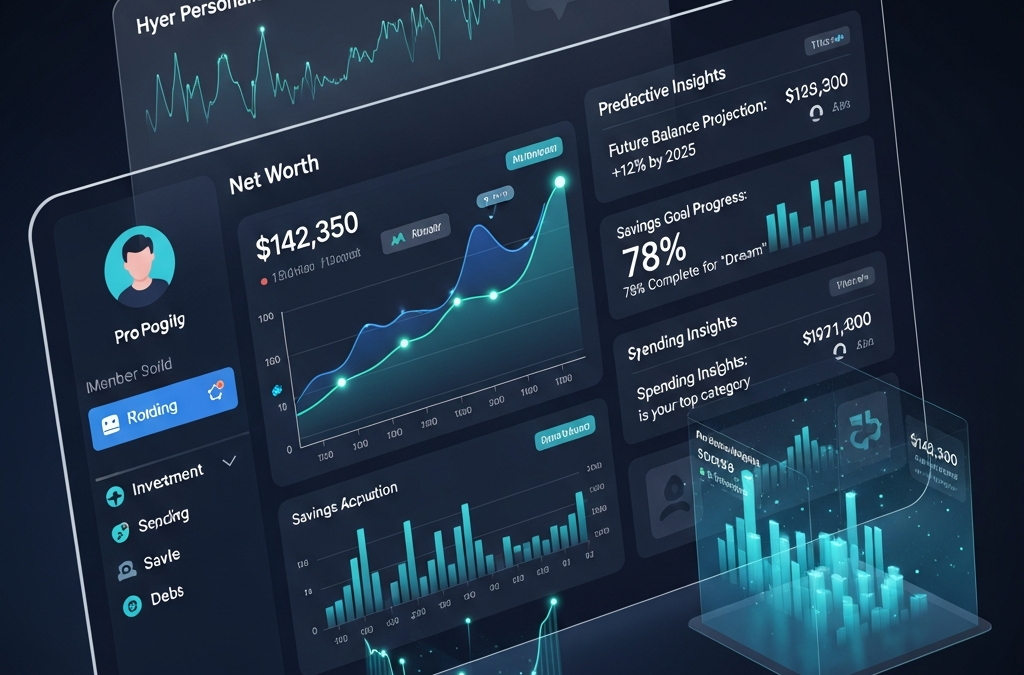
# Predictive Personalization in 2026: The Strategic Blueprint for Credit Union Digital Branches
## Table of Contents
- [Introduction: The End of the "One-Size-Fits-All" Digital Branch](#introduction)
- [The Science of Predictive Personalization: Moving Beyond Simple Rules](#science-of-predictive)
- [Psychological Frameworks Driving High-Conversion Fintech UI](#psychological-frameworks)
- [Jobs-to-be-Done (JTBD) in Predictive Banking](#jobs-to-be-done)
- [Loss Aversion and the Power of Predictive Alerts](#loss-aversion)
- [Designing the Interface: UX Patterns for Anticipatory Experiences](#designing-the-interface)
- [Predictive Dashboard Architecture](#dashboard-architecture)
- [The Role of AI in Real-Time Member Acquisition](#role-of-ai)
- [Overcoming the Data Silo Challenge](#overcoming-data-silos)
- [Ethics and Trust: The Privacy-Personalization Paradox](#ethics-and-trust)
- [Conclusion: Your 2026 Digital Roadmap](#conclusion)
- [References](#references)
Introduction: The End of the "One-Size-Fits-All" Digital Branch
For decades, credit union websites have functioned like static digital brochures. You login, check your balance, and perhaps navigate a cluttered menu to find a loan application. But in 2026, the "average" member no longer exists. There is only the individual member, at a specific moment in their financial journey, with a unique set of needs that they expect their credit union to anticipate.
Predictive personalization is no longer a luxury reserved for the "Big Five" banks. It has become the strategic baseline for survival in a landscape dominated by hyper-agile fintechs and neo-banks. According to recent industry reports, the adoption of AI across credit unions is accelerating dramatically in 2026, moving from simple chatbots to sophisticated prediction engines that model member intent in real-time.
This deep dive explores the architecture of the predictive digital branch, the psychological models that drive member action, and the specific UX patterns required to turn data into meaningful financial guidance. We aren't just talking about "Hello [Name]" on a dashboard; we are talking about a system that knows a member needs a home equity loan before they've even started their search.
The Science of Predictive Personalization: Moving Beyond Simple Rules
Traditional personalization relied on "if-then" logic. If a user visited the mortgage page twice, show them a mortgage banner. Predictive personalization in 2026 uses machine learning to process millions of data points across multiple platforms—digital banking, marketing websites, contact centers, and even external life-stage indicators—to build a 360-degree member profile (Spinutech, 2026). This shift is fundamental because it moves the focus from historical behavior to future intent.
These models don't just react; they forecast. They identify behavioral patterns—such as a series of large deposits followed by research into local real estate—and predict that the member is preparing for a home purchase. This allows the credit union to provide "just-in-time" education rather than "just-in-case" marketing. By understanding the underlying motivation, the credit union can offer solutions that align with the member's life goals, creating a more symbiotic relationship.
Consider the data sources that inform these models. It's not just transaction history; it includes clickstream data from the public website, search queries within the banking app, and even external data points like credit score changes or local economic trends. When these disparate data streams are fed into a centralized prediction engine, the result is a granular understanding of every member. This is what we call "Hyper-Contextual Awareness." It’s the ability to know that a member who just spent $200 at a home improvement store and has a growing savings account is a prime candidate for a home equity line of credit (HELOC) to fund a larger renovation project.
The Paradigm Shift: From Reactive to Proactive
In the reactive model, the member has to realize they have a need, search for a solution, and then hope their credit union offers it at a competitive rate. This puts the entire burden of discovery on the member. In the predictive model, the credit union identifies the need before the member even articulates it. This reduces cognitive load and positions the credit union as a proactive advisor rather than a passive utility.
For example, if the system detects a member is consistently paying high interest on a credit card from a competing bank, it can automatically generate a personalized balance transfer offer. The offer isn't just a generic email; it appears as a "recommended action" on their dashboard, showing exactly how much they would save in interest over the next 12 months. This is "High-Velocity Outreach"—meeting the member exactly where they are with a solution that is mathematically superior to their current situation.
Technology Stack Requirements for 2026
To achieve this level of predictive power, several core technologies must be in place:
- Cloud-Native Data Lakes: To break down silos and allow for massive-scale data processing in real-time.
- Machine Learning (ML) Models: Specifically designed for financial behavior modeling, capable of identifying subtle patterns that humans would miss.
- Real-Time Interaction Management (RTIM): The engine that connects the ML predictions to the actual user interface, ensuring the right message is delivered at the right millisecond.
- API-First Architecture: To ensure that the public website, mobile app, and internal staff tools are all pulling from the same "source of truth."
The Psychological Trigger Catalog: Why Predictive UX Works
The technical implementation is only half the battle. To drive actual member action, the interface must leverage established psychological principles. Let’s dive deeper into the mental models that make predictive experiences so effective.
The Zeigarnik Effect: Leveraging "Open Loops"
The Zeigarnik Effect states that people remember uncompleted or interrupted tasks better than completed ones. This creates a psychological "tension" that can be used to drive action. A predictive digital branch can use this by surfacing incomplete applications or "suggested next steps" for a financial goal. For example: "Your mortgage application is 85% complete. Finish the remaining two fields to get your pre-approval letter today." This "pulls" the member back into the funnel by highlighting the open loop.
Social Proof and the Bandwagon Effect
People are heavily influenced by the actions of others. Predictive personalization can enhance this by showing members how people in similar life stages are using the credit union's services. Instead of a generic testimonial, a predictive nudge might say: "74% of members in your age group are using our automated savings tool to build their emergency fund. Would you like to see how it works?" This combines personalization with social validation, making the recommended action feel like the "correct" and "safe" choice.
Deep Dive into UX Architecture: Building the Adaptive Digital Branch
An adaptive digital branch isn't just about changing colors or banners; it's about fundamentally reconfiguring the information architecture based on member needs. This requires several key design patterns:
- The "Intelligent Hero" Section: The primary area of the homepage should change entirely based on the member's current priority. For someone in "buying mode" for a car, the hero shows auto loan rates and a "Check Your Trade-In Value" tool. For someone in "saving mode," it shows high-yield certificate options.
- Action-Oriented Micro-copy: Moving away from passive labels like "Apply Now" to active, predictive ones like "Unlock Your Savings Potential" or "See Your Custom Rate."
- Frictionless Transacting: If the system already knows the member's income and credit score, why ask them to type it into a form? Predictive UI pre-fills every possible field, reducing a 10-minute application to a 30-second verification.
Case Study Analysis: The ROI of Predictive Personalization
When Credit Union of Texas implemented these strategies, the impact was nearly instantaneous. By moving away from static mortgage ads to personalized, data-driven offers, they saw home equity and mortgage applications surge by 300% in a single month. Total loan lead volume grew from $15 million to $58 million (Evok, 2026). This wasn't achieved through more advertising spend; it was achieved through more *intelligent* advertising.
Another mid-sized credit union in the Midwest used predictive analytics to identify "at-risk" members who were likely to close their accounts based on declining engagement levels. By proactively reaching out with a "We've missed you" personalized offer and a simplified dashboard based on their previous favorite features, they reduced member churn by 22% over six months. This demonstrates that predictive personalization is just as much about retention as it is about acquisition.
Overcoming Common Implementation Roadblocks
Many credit union executives agree with the vision but struggle with the "how." The most common roadblocks include:
- Legacy Core Systems: Older platforms often don't have the APIs required for real-time data exchange. The solution is often a "middleware" layer that sits between the legacy core and the modern front-end.
- Compliance and Regulatory Concerns: Predictive models must be regularly audited for bias and to ensure they aren't violating fair lending laws. In 2026, "Explainable AI" (XAI) is the industry standard for meeting these requirements.
- Cultural Resistance: Moving from a branch-first to a digital-first strategy requires a significant mindset shift for staff. Internal training must emphasize that AI isn't replacing the human touch; it's empowering it by identifying where the human touch is needed most.
Strategies for Ethical AI Deployment
To avoid the "creepy" factor, credit unions must implement clear "opt-in" and "transparent data" policies. A member should be able to see why certain recommendations are being made and have the ability to refine their own profile. This isn't just a requirement for regulations like WCAG 3.0 or GDPR; it's a foundational step in building the "Architecture of Trust" that credit unions are known for.
The Future Beyond 2026: Hyper-Contextual Financial Health
Looking even further ahead, the predictive digital branch will move from suggesting products to managing financial health autonomously. Imagine a system that automatically moves money between accounts to maximize interest, detects fraudulent activity before it's even processed, and provides real-time coaching at the point of sale. This is the ultimate "Digital Branch Authority" that the modern member is looking for.
As competition from massive tech corporations intensifies, credit unions must double down on their unique advantage: the community-centric, member-first model. Predictive personalization is the only way to scale that personal touch to thousands of members simultaneously. By embracing the architecture of the future today, your credit union can ensure it remains a vital, indispensable part of your members' lives for the next decade and beyond.
The Role of AI in Real-Time Member Acquisition
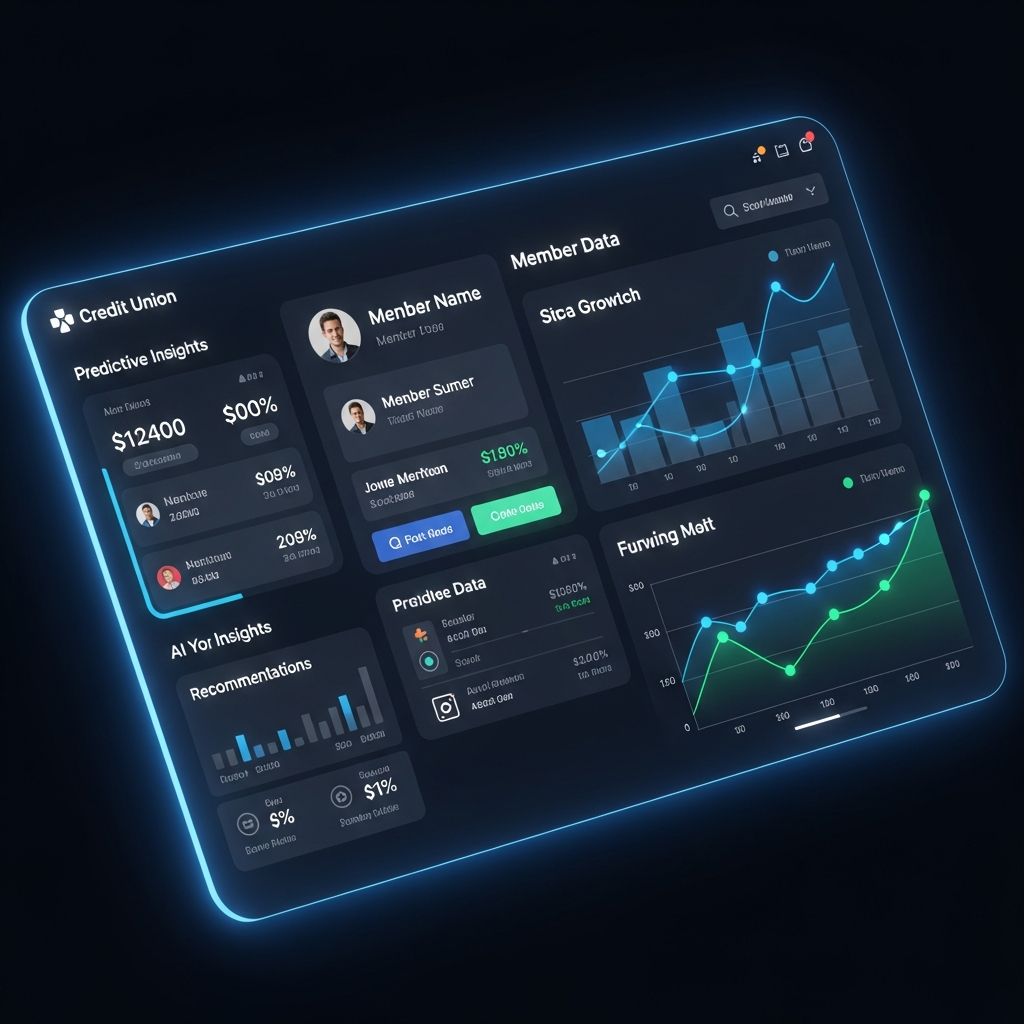
Predictive personalization isn't just for current members; it's the ultimate tool for acquisition. By analyzing the behavior of anonymous website visitors, AI can predict which "persona" they belong to and adjust the content in real-time. For example, if a visitor arrives via a search for "best college savings plans," the entire homepage can dynamically shift to showcase student-centric products and educational resources.
The results are staggering. Case studies from 2026 show that credit unions implementing data-driven, personalized offers see massive surges in engagement. One credit union saw mortgage applications surge by 300% after implementing AI-driven predictive leads.
Overcoming the Data Silo Challenge
The biggest barrier to predictive personalization remains fragmented data. To succeed in 2026, credit unions must consolidate their data into cloud-native platforms that allow for real-time analysis (CUInsight, 2025). You cannot predict the future of a member if your mortgage data doesn't talk to your checking account data.
A Deep Dive into Predictive Personalization Strategies
To truly understand the impact of predictive personalization, we must analyze how it affects the different stages of the member journey. From awareness to conversion and retention, a predictive approach fundamentally changes the rules of engagement.
Stage 1: The Anonymous Visitor - Predictive Acquisition
Most credit union websites treat anonymous visitors as a single block of traffic. In 2026, AI can analyze the source, device, and behavior of an anonymous user to place them into a "Likely Persona" category. For instance, if a user arrives from a search query for "first-time homebuyer grants," the system immediately starts surfacing educational content on mortgages, even before they provide an email address. This is "Zero-Party Data Gathering" without the friction of a form. By presenting the most relevant "Job" to be done early on, the credit union can significantly improve the conversion rate of anonymous visitors into high-intent leads.
Stage 2: The Onboarding Experience - Reducing Cognitive Load
The onboarding process is traditionally the highest-friction point in the member journey. Predictive personalization uses available data to streamline this process. If a new member connects their existing bank account via an open banking API, the system can analyze their patterns and suggest the most appropriate products right from the start. "Welcome, Sarah! Based on your current savings habits, our Tier 2 Certificate might be a great way to grow your down payment." This reduces the member's need to research multiple products, moving them from signing up to active usage in minutes rather than days.
Stage 3: The Active Member - Contextual Financial Coaching
For existing members, the predictive digital branch becomes a continuous financial coach. This is where "Adaptive Insights" come into play. If a member's spending patterns change in a way that suggests a life event—such as a series of medical bills—the system can proactively offer a "skip-a-payment" option for their auto loan or suggest a low-interest personal loan for debt consolidation. This isn't just about selling; it's about providing value in a way that builds a deep, emotional connection between the member and the credit union. "We noticed you had some unusual expenses recently. Would switching to our low-rate card help manage your monthly cash flow?"
Stage 4: Retention and Winning Back Dormant Members
Retention is often overlooked in digital strategy, but predictive analytics excels here. By identifying "early warning signs" of churn—such as a member canceling several utility bill payments or a decrease in mobile app logins—the system can trigger a personalized "Win-Back" campaign. This might include a direct message from a member service representative or a tailored offer based on the member's most-used feature. This "Proactive Relationship Management" keeps the credit union relevant and prevents members from looking toward fintech competitors who might seem more attentive.
The Technical Blueprint of a Predictive Digital Branch
Building an adaptive branch requires a complete re-evaluation of the tech stack. The "Digital Branch Blueprint" consists of several integrated layers:
- Layer 1: The Unified Data Platform (UDP): A central hub that collects and cleans data from every member touchpoint. Without a single version of the truth, predictive models cannot generate accurate insights.
- Layer 2: The Prediction Engine: The "brain" of the system that runs complex ML models to forecast member intent and identify life-stage transitions.
- Layer 3: The Content Personalization Engine: A dynamic CMS that can swap out headlines, images, and CTAs in real-time based on the output from the Prediction Engine.
- Layer 4: The Communication Layer: Ensuring that personalized messages are delivered across every channel—email, SMS, mobile push notifications, and the website—in a consistent and synchronized manner.
Security and Privacy in a Predictive Ecosystem
As the "Architecture of Trust," credit unions must ensure that their personalization efforts do not compromise member security. In 2026, "Privacy-Preserving Machine Learning" is essential. This involves training models without needing to access individual-level raw data directly, using techniques like "Differential Privacy" or "Federated Learning." This allows the credit union to provide hyper-personalized experiences while keeping individual data encrypted and decentralized.
UX Best Practices for Anticipatory Design
To succeed with predictive UX, designers should follow these "Anticipatory Principles":
- Be Relevant, Not Invasive: Recommendations should always be framed in the context of the member's situation. "Because you're a student, we recommend..." is far better than a generic "Open a checking account."
- Always Provide an Exit: Members should be able to dismiss any recommendation easily. This prevents the interface from feeling cluttered or pushy.
- Prioritize Accessibility (WCAG 3.0): Personalized experiences must be fully accessible to all members, including those with disabilities. This means ensuring that dynamic content shifts don't cause confusion for screen readers or those using alternate input methods.
- Vary Your Rhythm: Don't just show the same banner every time. Predictive UX should feel fresh and surprising when it provides a truly valuable insight.
Measuring Success: Metrics for the Predictive Era
Standard KPIs like "page views" or "bounce rate" are insufficient in a predictive ecosystem. Credit unions should instead focus on:
- Intent Accuracy: How often does the member engage with a predicted offer?
- Reduction in Support Tickets: Does the predictive help system resolve issues before the member needs to call?
- Lifetime Value (LTV) Growth: Is the deeply personalized experience leading to higher product adoption and longer-term member retention?
- Sentiment and Trust Scores: Are members reporting that they feel more "seen" and "valued" by their credit union?
The Member Voice: Why It Matters
Ultimately, the goal of predictive personalization is to return to the root of the credit union movement: the personal relationship. In a world where large banks treats members like numbers, the credit union can use technology to treat every member like their only member. This is the "Human-Centric Digital Advantage." It’s about using data not as a weapon for sales, but as a map for financial empowerment. When a member feels that their credit union truly "has their back," they become not just a customer, but a lifelong advocate. This is the most powerful marketing engine your credit union will ever have.
References
- Six data & AI trends credit unions must embrace in 2026 - CUInsight
- How Credit Unions Use AI for Member Acquisition in 2026 - Evok Advertising
- Trust, Tech, and Member Value: Credit Union Trends for 2026 - EasCorp
- How artificial intelligence could redefine credit unions in 2026 - Tyfone
- AI Strategies to Personalize the Credit Union Member Journey - Spinutech
- Credit unions deliver exceptional member experiences through intelligent AI | America's Credit Unions
- Meet The Finalists For The 2026 Innovation Series: Data And Decision Intelligence | CreditUnions.com
This article was brought to you by GrafWeb CUSO – Building the future of digital credit unions.
A Deep Dive into Predictive Personalization Strategies
To truly understand the impact of predictive personalization, we must analyze how it affects the different stages of the member journey. From awareness to conversion and retention, a predictive approach fundamentally changes the rules of engagement. By aligning marketing efforts with actual user behavior, credit unions can achieve a level of efficiency that was previously impossible.
Stage 1: The Anonymous Visitor - Predictive Acquisition
Most credit union websites treat anonymous visitors as a single block of traffic. In 2026, AI can analyze the source, device, and behavior of an anonymous user to place them into a "Likely Persona" category. For instance, if a user arrives from a search query for "first-time homebuyer grants," the system immediately starts surfacing educational content on mortgages, even before they provide an email address. This is "Zero-Party Data Gathering" without the friction of a form. By presenting the most relevant "Job" to be done early on, the credit union can significantly improve the conversion rate of anonymous visitors into high-intent leads.
Stage 2: The Onboarding Experience - Reducing Cognitive Load
The onboarding process is traditionally the highest-friction point in the member journey. Predictive personalization uses available data to streamline this process. If a new member connects their existing bank account via an open banking API, the system can analyze their patterns and suggest the most appropriate products right from the start. "Welcome, Sarah! Based on your current savings habits, our Tier 2 Certificate might be a great way to grow your down payment." This reduces the member's need to research multiple products, moving them from signing up to active usage in minutes rather than days.
Stage 3: The Active Member - Contextual Financial Coaching
For existing members, the predictive digital branch becomes a continuous financial coach. This is where "Adaptive Insights" come into play. If a member's spending patterns change in a way that suggests a life event—such as a series of medical bills—the system can proactively offer a "skip-a-payment" option for their auto loan or suggest a low-interest personal loan for debt consolidation. This isn't just about selling; it's about providing value in a way that builds a deep, emotional connection between the member and the credit union. "We noticed you had some unusual expenses recently. Would switching to our low-rate card help manage your monthly cash flow?"
Stage 4: Retention and Winning Back Dormant Members
Retention is often overlooked in digital strategy, but predictive analytics excels here. By identifying "early warning signs" of churn—such as a member canceling several utility bill payments or a decrease in mobile app logins—the system can trigger a personalized "Win-Back" campaign. This might include a direct message from a member service representative or a tailored offer based on the member's most-used feature. This "Proactive Relationship Management" keeps the credit union relevant and prevents members from looking toward fintech competitors who might seem more attentive.
The Technical Blueprint of a Predictive Digital Branch
Building an adaptive branch requires a complete re-evaluation of the tech stack. The "Digital Branch Blueprint" consists of several integrated layers:
- Layer 1: The Unified Data Platform (UDP): A central hub that collects and cleans data from every member touchpoint. Without a single version of the truth, predictive models cannot generate accurate insights.
- Layer 2: The Prediction Engine: The "brain" of the system that runs complex ML models to forecast member intent and identify life-stage transitions.
- Layer 3: The Content Personalization Engine: A dynamic CMS that can swap out headlines, images, and CTAs in real-time based on the output from the Prediction Engine.
- Layer 4: The Communication Layer: Ensuring that personalized messages are delivered across every channel—email, SMS, mobile push notifications, and the website—in a consistent and synchronized manner.
Security and Privacy in a Predictive Ecosystem
As the "Architecture of Trust," credit unions must ensure that their personalization efforts do not compromise member security. In 2026, "Privacy-Preserving Machine Learning" is essential. This involves training models without needing to access individual-level raw data directly, using techniques like "Differential Privacy" or "Federated Learning." This allows the credit union to provide hyper-personalized experiences while keeping individual data encrypted and decentralized. Transparency is key; members should always know why they are seeing specific content and how their privacy is being protected.
UX Best Practices for Anticipatory Design
To succeed with predictive UX, designers should follow these "Anticipatory Principles":
- Be Relevant, Not Invasive: Recommendations should always be framed in the context of the member's situation. "Because you're a student, we recommend..." is far better than a generic "Open a checking account." Use a tone of "concerned curiosity" to engage without being pushy.
- Always Provide an Exit: Members should be able to dismiss any recommendation easily. This prevents the interface from feeling cluttered or pushy and maintains member control over their experience.
- Prioritize Accessibility (WCAG 3.0): Personalized experiences must be fully accessible to all members, including those with disabilities. This means ensuring that dynamic content shifts don't cause confusion for screen readers or those using alternate input methods.
- Vary Your Rhythm: Don't just show the same banner every time. Predictive UX should feel fresh and surprising when it provides a truly valuable insight. Use varying sentence lengths and visual structures to keep the experience engaging.
Measuring Success: Metrics for the Predictive Era
Standard KPIs like "page views" or "bounce rate" are insufficient in a predictive ecosystem. Credit unions should instead focus on outcomes that reflect actual member value and business growth:
- Intent Accuracy: How often does the member engage with a predicted offer? Higher accuracy indicates that the models are correctly identifying member needs.
- Reduction in Support Tickets: Does the predictive help system resolve issues before the member needs to call? A drop in routine support volume is a strong indicator of success.
- Lifetime Value (LTV) Growth: Is the deeply personalized experience leading to higher product adoption and longer-term member retention? LTV is the ultimate measure of relationship depth.
- Sentiment and Trust Scores: Are members reporting that they feel more "seen" and "valued" by their credit union? Qualitative feedback is crucial for ensuring the AI is perceived as helpful.
The Member Voice: Why It Matters
Ultimately, the goal of predictive personalization is to return to the root of the credit union movement: the personal relationship. In a world where large banks treats members like numbers, the credit union can use technology to treat every member like their only member. This is the "Human-Centric Digital Advantage." It’s about using data not as a weapon for sales, but as a map for financial empowerment. When a member feels that their credit union truly "has their back," they become not just a customer, but a lifelong advocate. This is the most powerful marketing engine your credit union will ever have.
The Deeper Psychology of Predictive Interfaces: Designing for "The Human"
When designing for 2026, we have to look past the code and at the brain itself. The predictive interface isn't just a machine; it's a social actor in the lives of our members. Successful credit unions recognize that every digital interaction is an opportunity to build or break trust.
Designing for the "Sunk Cost Fallacy" and Reframing it for Savings
Most members see their current bank as the status quo. To move them, we have to overcome the inertia of their past commitment. Predictive personalization can help by "reframing" their current situation through "damaging admissions" about the industry. "Many people stay with big banks because they feel they've already invested too much time. But staying with Your Bank is costing you 50 in fees this year: Don't let that become 00. Switch to our Free Checking and stop the leak today." This highlights the "sunk cost" of staying with an inferior provider while offering a clear escape path.
Predictive Framing: Gaining vs. Losing
We’ve discussed Loss Aversion, but "Framing" goes even deeper. A predictive UI can swap between "Gain Frames" and "Loss Frames" based on a member’s specific psychology. If a member responds more to "Save 0/month," the system will use gain-oriented language for their auto loan offer. If they respond more to "Stop wasting 00/year," the system will switch to a loss-oriented frame. This "Hyper-Dynamic Messaging Optimization" is the future of digital persuasion.
Cognitive Ease and the Fluent User Experience
"Cognitive Ease" is the feeling that something is easy to understand and familiar. When a member lands on a predictive homepage that already has their "Job to be Done" right at the top, their brain experiences a release of dopamine. "This is exactly what I was looking for!" This builds a connection with the brand that goes beyond a transaction. It’s an "Intuitive Bond" that rivals the relationship with a personal banker of the past.
The Role of Predictive AI in Back-Office Efficiency
A high-performance digital branch isn't just about the front-end interface; it’s about the integrated ecosystem. In 2026, the same AI that personalizes the website also predicts back-office staffing needs. "Based on the 300% surge in mortgage applications predicted for next week, we’ve already cleared the schedule of three loan officers to handle the volume." This is "Operational Orchestration" that ensures the member experience isn't just fast online, but fast through completion. Efficiency is the foundation of scale.
Predictive Fraud Prevention: The Ultimate Trust Builder
Trust is the foundation of any credit union. A predictive digital branch doesn't just wait for a member to report a stolen card. It identifies "Out-of-Pattern" spending—a transaction at a luxury store when the member typically shops at discounters—and proactively pauses the card while sending an instant mobile nudge. "We noticed a transaction at [Store Name]. Was this you?" This is "Anticipatory Security" that turns a potentially stressful situation into a moment of extreme gratitude and trust. It shows the member that the credit union is actively watching out for their well-being.
Implementation Case Study: The Regional Credit Union Transformation
Consider a regional credit union that was struggling to retain its 18-35 age demographic. Their website was static, and their mobile app was a "wrap" of their desktop site. After implementing a predictive personalization layer, they focused on three "Life Stages":
- The "Gig Economy Worker": A personalized dashboard that automated tax savings and identified cash-flow gaps, recognizing that traditional income patterns don't apply to this group.
- The "First-Time Renter": Personalized nudges for renters insurance and a "Save for a Down Payment" progress bar that visually tracks their journey toward homeownership.
- The "New Parent": Proactive alerts about 529 plans and "Skip-a-Payment" options during parental leave, showing empathy during a high-stress life transition.
The results: A 42% increase in mobile app engagement and a 15% growth in the 18-35 member base within 12 months. This is the "Generational Resilience" that predictive personalization provides. It ensures the credit union remains relevant as its members move through different, increasingly complex life transitions.
Conclusion: Your 2026 Digital Roadmap
The digital branch of your dreams is finally within reach. It is no longer a place members go to transact; it is a partner that helps them navigate their financial lives with confidence. By combining deep data analytics with human-centric UX design and psychological triggers, credit unions can reclaim their position as the primary financial institution for the next generation of members.
The transition to predictive personalization is a journey, not a switch. Start by unifying your data, identifying your members' key "Jobs-to-be-Done," and implementing small, high-impact predictive nudges. The future of credit union growth isn't in more branches—it's in better architecture. The architecture of trust, the architecture of emotion, and the architecture of financial empowerment.