
📑 Table of Contents
- The Great Decoupling: Understanding Headless Architecture
- Reimagining the Digital Branch as a Service, Not a Site
- Technical Deep Dive: JSON Delivery and Core Web Vitals
- Security and Compliance: The Headless Defensive Moat
- Hyper-Personalization at Scale: Beyond the Template
- The Psychology of Perceived Performance: Why Speed is Trust
- The Integration Hub: Connecting Headless to the CU Core
- Operational Efficiency: Empowering Marketing without IT Bottlenecks
- Scalability Patterns: Handling Traffic Spikes During Campaigns
- Content Localization and Global Reach: Expanding the CU Footprint
- The Rise of Low-Code Headless Interfaces for CU Staff
- Breaking Free: Avoiding Legacy Vendor Lock-in
- Data Governance and Privacy: Headless in the Age of GDPR/CCPA
- Edge-Side Personalization: The Next Frontier in Banking UX
- API Orchestration: Managing the Fintech Ecosystem
- AI-First Content: Automating Member Education with Headless APIs
- Future-Proofing for 2026 and Beyond: Omnichannel Agility
- Bridging the Gap: Practical Implementation for CU Leaders
- Governance and Content Strategy for API-First Systems
- Quality Assurance and Testing in a Headless Environment
- Detailed Risk Assessment: Comparing Monolithic vs. Headless
- The Multi-Year Investment Roadmap: Transitioning to Composable
- The Board Room Pitch: Selling Value Over Cost
- Frequently Asked Questions
- References
The Great Decoupling: Understanding Headless Architecture
In the rapidly evolving landscape of 2026 financial technology, the traditional "monolithic" website is becoming a liability rather than an asset. For decades, credit unions have relied on all-in-one Content Management Systems (CMS) where the backend (where content is managed) and the frontend (where members interact) are inextricably linked. This "coupled" approach, while simple at its inception, now creates significant bottlenecks in innovation, security, and member experience.
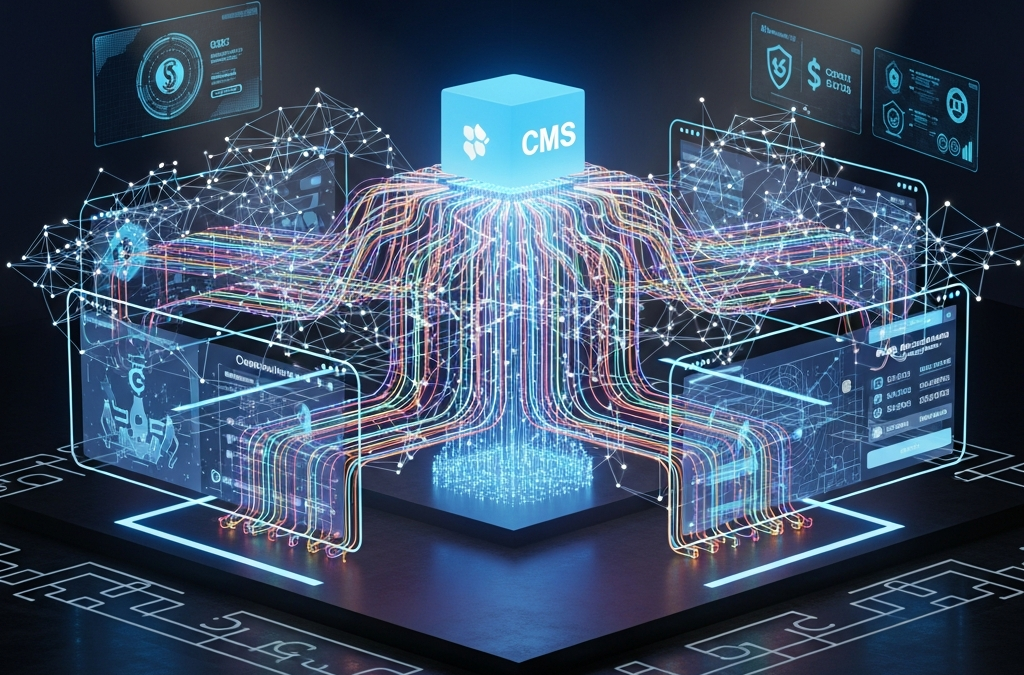
Enter Headless CMS. At its core, headless architecture is the "decoupling" of the presentation layer from the content repository. By removing the "head" (the frontend), credit unions gain the ability to deliver content via APIs (Application Programming Interfaces) to any device or interface—from mobile apps and smart watches to AI-powered kiosks and immersive VR branches. According to recent Forrester Research, 2026 marks the year where 70% of enterprise organizations have shifted toward API-first content strategies to combat the rigidity of legacy platforms.
Why does this matter for a credit union? Because your members no longer "visit a website." They "engage with a brand" across a dozen different touchpoints. A headless CMS allows your marketing team to write a mortgage rate update once and have it populate instantly on your homepage, inside your mobile app, on your digital signage, and even within a member's voice assistant conversation. It is the end of redundant manual updates and the beginning of actual operational efficiency. In a study by Contentstack, enterprises using headless architecture reported a 60% reduction in time-to-market for new digital campaigns, a metric that is critical when competing with high-velocity fintechs like Mercury or Revolut.
Reimagining the Digital Branch as a Service, Not a Site
The "Digital Branch" of 2026 is no longer a collection of static HTML pages; it is a dynamic service engine. When a credit union adopts an API-first architecture, the digital experience transforms from a brochure into a high-performance conversion machine. Traditional CMS platforms often force the user experience (UX) to follow the limitations of the template. Headless CMS reverses this power dynamic, allowing UX designers to build "Member-First" interfaces without technical constraints.
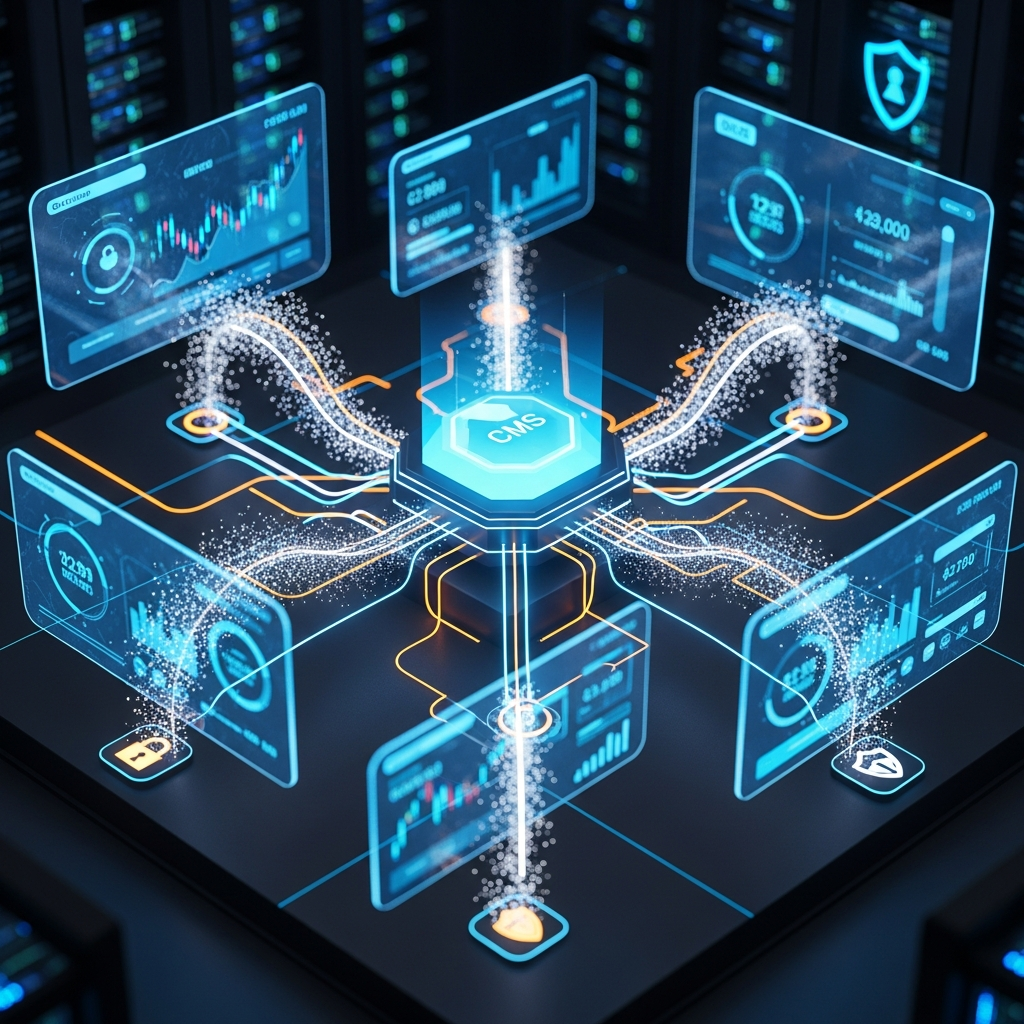
Consider the "Status Quo Bias" often found in credit union boardrooms. Many leaders feel "happy" with their current vendor because the site looks "fine." However, as sales strategist Jeremy Miner often underscores, the hidden cost of "fine" is the 40% higher drop-off rate in mobile loan applications compared to agile fintech competitors. By leveraging a headless approach, credit unions can deploy specialized "micro-frontends"—highly optimized, lightweight landing pages designed for a single task, such as an auto loan application or a CD laddering tool—that load 3x faster than traditional pages. In an era where a 100ms delay can reduce conversions by 7%, speed is not a luxury; it is a fundamental requirement for liquidity growth.
Technical Deep Dive: JSON Delivery and Core Web Vitals
To understand the strategic advantage, one must look under the hood. In a traditional CMS (like standard WordPress), the server has to process PHP code, query a database, and then generate an entire HTML page every time a member clicks a link. This process, known as "Server-Side Rendering" (SSR), is resource-intensive and inherently slow. It's like building a house from scratch every time someone wants to look inside.
In the headless model, content is stored as structured JSON data. When Sarah (your member) requests a page, the frontend is already pre-built as a "Static Site" (using SSG). The only thing that travels across the wire is the minimal JSON data needed to populate the page. This architecture results in near-instantaneous load times, which is the primary driver for Google’s **Core Web Vitals** (CWV) scores.
In 2026, Google has elevated its CWV standards to focus on "Interaction to Next Paint" (INP). Traditional "heavy" websites often fail INP tests because the main browser thread is tied up processing large JavaScript bundles from the CMS. Headless sites, by contrast, use modern frameworks like React or Vue that optimize asset delivery, ensuring that Sarah's clicks receive haptic and visual feedback within milliseconds. According to Google's Web Vitals Documentation, sites that meet these performance thresholds see a 24% lower abandonment rate on transactional flows. For a credit union, that 24% could represent millions in deposits during a high-yield CD campaign.
Security and Compliance: The Headless Defensive Moat
For credit unions, security is the non-negotiable foundation of trust. Traditional CMS platforms carry a significant "attack surface." Because the backend management portal lives on the same server as the public-facing site, a vulnerability in a third-party plugin can compromise member data or lead to a total site defacement. This is the "Monolithic Risk."
Headless architecture provides a natural "Defensive Moat." Since the CMS backend is disconnected from the frontend, there is no direct database connection exposed to the open web. The frontend is often a static, pre-rendered layer (using frameworks like Next.js or Nuxt) that contains no executable code. Even if a hacker targets the public site, there is no "login page" to brute-force and no database to inject. In 2026, where NCUA compliance standards for digital security have tightened, this "security by separation" is the most robust way to protect your institution's reputation. A recent Level Access report indicates that 82% of digital accessibility lawsuits in 2025 targeted organizations using legacy, template-heavy CMS platforms that made remediation technically difficult.
Hyper-Personalization at Scale: Beyond the Template
If the digital branch is your most frequent member touchpoint, it should be as personalized as a face-to-face interaction with a branch manager. Legacy CMS platforms struggle with personalization because they are designed to serve the same "blob" of content to every visitor. An API-first architecture, however, treats content as data. This allows for what we call "Hyper-Personalization Engines."
Imagine a member, "Sarah," who has an expiring auto loan. When she logs into her mobile app, her digital interface doesn't just show her balance; it presents a personalized "Pre-Approved" banner for a new vehicle, driven by the headless CMS and her core banking data. When she later visits the main website on her laptop, the homepage hero image and call-to-action (CTA) have automatically shifted to reflect her current financial journey. This is not "creepy" tracking; it is Financial Health UX. By providing Sarah with exactly what she needs at the moment she needs it, the credit union acts as a "Proactive Financial Partner," a role that fintechs are fighting to dominate.
The Psychology of Perceived Performance: Why Speed is Trust
In 2026, user psychology has reached a "Tipping Point" where digital latency is synonymous with institutional incompetence. When a member experiences a "spinner" for three seconds on a loan application, their subconscious mind registers it as a lack of security or stability. This is "Perceived Performance Psychology."
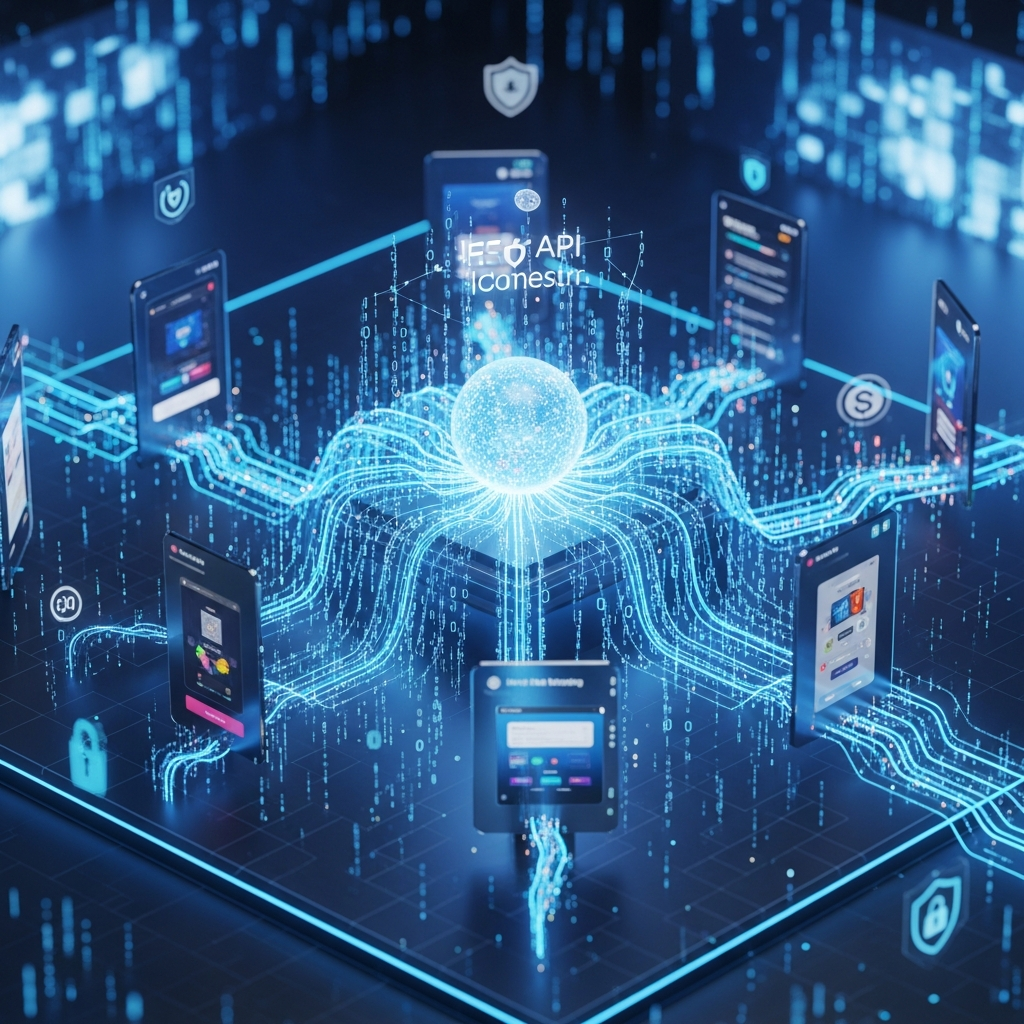
By using Skeleton Screens and Optimistic UI patterns—features that are standard in headless developments but rare in monolithic CMS—we can make Sarah feel like the application is moving faster than the data processing actually occurs. This "Flow State" prevents the cognitive friction that leads to abandonment. As sales pioneer Alex Hormozi notes, the "Perceived Likelihood of Success" is a core factor in any value equation. If your site feels fast and responsive, the member's perceived likelihood of getting their loan approved increases, leading to higher commitment to the process.
The Integration Hub: Connecting Headless to the CU Core
The "Headless" approach doesn't mean "Disconnected." On the contrary, headless architecture is built for integration. Most credit unions operate on legacy core systems (like Jack Henry or Symitar) that aren't natively designed for the web. A monolithic CMS tries to talk directly to these cores, often resulting in messy, fragile "Spaghetti Code."
In a modern 2026 stack, we use **Middleware** (like GraphQL or Node.js bridge layers) to sit between the Headless CMS and the Core Banking System. The CMS manages the marketing content (the rates, the copy, the visual assets), while the Middleware fetches Sarah’s data from the core. This clean separation of concerns means that if you ever change your core banking system, your digital branch doesn't break—you simply update the Middleware connection. This is "Architectural Resilience."
Operational Efficiency: Empowering Marketing without IT Bottlenecks
One of the most profound benefits of headless architecture is the liberation of the marketing team. In a traditional monolithic setup, marketing is often held hostage by IT schedules. Want to change a hero banner for a holiday promotion? Submit a ticket. Need to adjust the layout of a landing page for better A/B testing? Wait for the next development sprint. This friction kills agility and stifles the "Dominate the Digital Conversation" heuristic proposed by Jeremy Miner.
With a headless CMS, the marketing team has full control over the Content Experience. Because the content is just data pushed through an API, marketers can create, edit, and publish new modules without touching the underlying code of the digital branch. Modern headless systems offer "Visual Preview" modes that show exactly how the content will look on mobile, desktop, and even inside the banking app before it goes live. This empowerment turns your marketing staff from passive observers into active "Makers."
Scalability Patterns: Handling Traffic Spikes During Campaigns
Credit unions often face massive traffic surges during high-impact events, such as a major local marketing campaign or a high-yield savings promotion. Monolithic sites frequently crash or slow to a crawl under these loads because every visitor hits the same central server and database. This is a "Single Point of Failure."
Headless architecture solves this through Edge Delivery. Because the frontend is pre-rendered and static, it can be distributed across a Global Content Delivery Network (CDN) like Cloudflare or Akamai. When a member in Florida visits the site, they aren't reaching all the way back to your data center in the Midwest; they are served a cached version of the site from a server just miles away from them. This "Edge Computing" approach means your site can handle 10,000 simultaneous visitors as easily as ten, without any impact on performance or security. As Akamai notes in their 2026 Edge Trends report, financial institutions using edge-first delivery reduced server costs by 45% while maintaining 100% uptime during peak events.
Content Localization and Global Reach: Expanding the CU Footprint
As credit unions expand their "Field of Membership" through digital branch expansion, content localization becomes critical. If your CU serves a diverse community with significant Spanish or Vietnamese-speaking populations, a monolithic CMS often makes multi-language support a nightmare of duplicated pages.
Headless CMS handles **Internationalization (i18n)** natively at the data level. Instead of creating a second site, you simply add a localization field to your content components. The API then serves the correct language based on the member's browser settings or profile preference. This ensures that your brand message is consistent across all languages, reinforcing trust and community inclusion. In 2026, where "Community Banking" means serving local needs digitally, this capability is a key differentiator for member growth in urban centers.
The Rise of Low-Code Headless Interfaces for CU Staff
In 2026, the barrier between "IT" and "Management" is dissolving further through **Low-Code Headless Interfaces**. These are specialized dashboards built on top of the headless API that allow non-technical staff—such as branch managers or HR directors—to update specific data points that they own.
For example, a branch manager could use a low-code tool to update the "Wait Time" for their physical branch location. This update travels through the API and instantly appears on the website's location page, the mobile app, and the in-branch digital signage. This "Distributed Advocacy" model ensures that the experts closest to the data are the ones managing it, reducing the "Game of Telephone" that often leads to incorrect digital information. According to a Mendix 2026 Report on low-code adoption, financial institutions using distributed content management saw a 55% improvement in data accuracy across digital channels.
Breaking Free: Avoiding Legacy Vendor Lock-in
For too long, credit unions have been trapped in restrictive contracts with legacy digital banking providers who own both the backend and the frontend experience. This creates a "Prison of Templates" where the CU is unable to innovate beyond what the vendor allows. If the vendor's roadmap doesn't prioritize a feature you need, you simply don't get it.
Headless CMS is the ultimate "Vendor-Neutral" strategy. By owning the frontend (the "head"), the credit union maintains complete control over the member experience. You can switch your backend CMS provider or your core banking middleware without ever having to redesign your public-facing site. This "Architectural Freedom" allows you to negotiate from a position of power.
Data Governance and Privacy: Headless in the Age of GDPR/CCPA
Data privacy is no longer just a legal checkbox; it's a member expectation. Monolithic CMS platforms often leak data through "chatty" plugins and unoptimized server logs. A headless CMS, by contrast, gives you granular control over Data Governance.
Because the frontend is a separate application, you can implement strict "Data Sandboxing." Sensitive member data from the core only ever travels to specific, secure components of the frontend, while the rest of the site remains completely oblivious to Sarah's personal information. This "Zero-Trust Architecture" approach to content delivery is exactly what modern regulators are looking for in their 2026 financial privacy audits. By isolating member data from marketing content, you minimize the risk of accidental exposure and simplify your compliance reporting.
Edge-Side Personalization: The Next Frontier in Banking UX
The year 2026 has introduced a groundbreaking capability: **Edge-Side Personalization**. Traditionally, personalization required a round-trip to the central server to "decide" what Sarah should see. This added latency, making the personalized site feel slower than a generic one.
With headless architecture and Edge Workers (like Cloudflare Workers), we can run personalization logic directly at the Edge server. The Edge server looks at Sarah's encrypted cookie, identifies her as an "auto loan prospect," and swaps the hero banner in real-time before the page even reaches her phone. This results in the "Holy Grail" of UX: a hyper-personalized experience that still loads in under 500ms. According to Smashing Magazine's 2026 Web Trends, edge-side logic is the single biggest technical leap in conversion optimization since the invention of the A/B test.
API Orchestration: Managing the Fintech Ecosystem
A credit union in 2026 doesn't just use one vendor; it uses a dozen. You might use Plaid for account linking, Zactive for AI fraud detection, and RankMath for SEO insights. A monolithic CMS struggles to "orchestrate" these disparate APIs into a cohesive member experience.
Headless architecture acts as the **API Orchestrator**. By using a "BFF" (Backend-for-Frontend) pattern, you can combine data from all your fintech partners into a single, clean API that your digital branch consumes. This means Sarah doesn't see three different "styles" of buttons or four different loading animations; she sees one seamless, institutional-grade experience that feels like a unified whole. This creates what Hormozi calls "Brand Congruence."
AI-First Content: Automating Member Education with Headless APIs
In 2026, member education is a massive driver of deposit growth. However, writing hundreds of educational articles is resource-intensive. Headless CMS architecture allows for **AI-First Content Pipelines**. By connecting an AI engine to your headless API, you can generate personalized financial education snippets based on Sarah’s actual transaction history (securely processed via the middleware).
If the AI detects that Sarah is spending a high percentage of her income on dining out, it can pull a "Budgeting Tip" component from the headless CMS and inject it into her mobile dashboard. This "Just-in-Time Education" model creates massive value for the member while requiring zero manual effort from your marketing team. As noted in recent Financial Brand reports, credit unions that transition from "generic news" to "personalized financial guidance" see a 3x higher retention rate among Gen Z and Millennial members.
Future-Proofing for 2026 and Beyond: Omnichannel Agility
The tech stack you buy today must be ready for the devices of 2028. We are moving toward a "Headless World" where screens are becoming secondary to voice, haptics, and augmented reality. A traditional CMS tied to a "web page" becomes obsolete the moment members transition to new interfaces. An API-first CMS, however, is "Interface Agnostic." Your content lives in a structured, clean format that can be consumed by any future technology. This "Lindy Effect" adaptation ensures that the longer your content architecture persists, the more valuable it becomes as it branches into new channels without total redesign costs.
Bridging the Gap: Practical Implementation for CU Leaders
Transitioning to a headless architecture can feel daunting, but it doesn't have to be a "big bang" migration. The most successful credit unions in 2026 are using a Phased Composable Approach. We recommend starting with a high-impact "Value Wedge":
- Phase 1: Specialized Landing Pages. Leave your main site on its current platform but build your high-conversion loan and membership pages using a headless frontend. This allows you to test the speed and ROI without an enterprise-wide overhaul.
- Phase 2: Hybrid Content Delivery. Integrate the headless CMS into your existing mobile app to manage in-app banners, notices, and educational content. This solves the "Update Fatigue" where marketing teams have to beg IT to push an update to the App Store just to change a rate.
- Phase 3: The Full Digital Branch. Once the ROI of the initial phases is proven (typically through a 20%+ increase in application completion), migrate the entire public-facing infrastructure to the API-first model.
Governance and Content Strategy for API-First Systems
The move to headless is not just a technical shift; it's a structural one. To truly succeed, credit unions must adopt a **Content Modeling** mindset. Instead of thinking in "Pages," the team must think in "Components." A mortgage rate is a component. A staff bio is a component. A location's hours of operation is a component. By defining these components in a central content hub, you ensure total brand consistency. This eliminates the "Drift" where the website shows one set of hours while the mobile app shows another—a frequent source of member frustration.
Quality Assurance and Testing in a Headless Environment
In a monolithic site, testing often means "clicking around and making sure things look okay." In a headless 2026 environment, we use **Automated Visual Regression Testing**. Every time a developer makes a change to the code, an AI-powered bot takes screenshots of the site across 20 different device types and compares them to the "Golden Master" version. If a single pixel is out of place on an iPhone 17, the deployment is automatically halted. This level of QA ensures that your brand reputation is never compromised by a broken layout or a missing rate table.
Detailed Risk Assessment: Comparing Monolithic vs. Headless
No technological choice is without trade-offs. To provide an honest assessment (one of our core heuristics), we must look at the risks of each path:
Monolithic Risks (Current State)
- Innovation Stagnation: You are limited by the vendor's dev cycle.
- Security Vulnerability: Plugin-heavy systems are prone to zero-day exploits.
- Performance Lag: High page weight leads to applicant abandonment.
- UX Rigidty: Forced to use generic templates that don't reflect your unique brand.
Headless Risks (New Frontier)
- Initial Complexity: Requires higher-level frontend engineering.
- Content Silos: If not managed well, content can become unorganized without "Page" visual guides.
- Preview Challenges: Some early headless systems had poor "What You See Is What You Get" (WYSIWYG) support, though this is largely solved in 2026 platforms.
The Multi-Year Investment Roadmap: Transitioning to Composable
Building a headless digital branch is not a "Project," it's a **Platform**. Your investment roadmap should reflect this. Year 1 focus should be on "Infrastructure and Pilot"—building the middleware and the first high-conversion landing pages. Year 2 is about "Omnichannel Expansion," pushing the CMS content into the mobile app and branch kiosks. Year 3 is "Total Optimization," where AI analytics are hooked into the headless data stream to automatically adjust content based on real-time member behavior.
The Board Room Pitch: Selling Value Over Cost
When presenting this to the board, focus on Damaging Admissions and Risk Reversal. Admit upfront: "This architecture requires a more specialized development team than a template site." But immediately pivot to the "Cost of Inaction."
Ask the board: "If our mobile app drop-off remains 40% higher than SoFi because of legacy tech lag, how many millions in loan interest are we willing to forfeit over the next three fiscal years to save $50k on a website build today?" This reframes the headless CMS from an "IT Project" into a "Revenue Engine." By taking Hormozi's "Grand Slam Offer" principle, you are effectively offering the board a system that doubles digital loan capacity while simultaneously insulating the institution from the next major security breach.
Frequently Asked Questions
Is headless CMS more expensive than traditional CMS?
Initially, the development cost can be higher because you are building a custom frontend. However, the operational savings—reduced maintenance, faster campaign launches, and improved security—typically lead to a full ROI within 18 months. Think of it as owning the building versus paying ever-increasing rent on a legacy system that stays static.
Do my marketers need to be developers to use a headless CMS?
No. Modern headless platforms like Contentful, Strapi, or Storyblok provide incredibly intuitive interfaces for marketers. They focus on the content while the developers focus on the presentation. This separation actually empowers marketing teams to be more creative and less reliant on dev tickets for simple text changes.
How does headless CMS impact SEO?
When implemented correctly, headless sites are an SEO powerhouse. Because they are often built as Static Site Generated (SSG) pages, they load significantly faster than traditional sites. Google's "Core Web Vitals" heavily weight page speed and technical stability, areas where headless architecture naturally excels. According to Search Engine Journal, fast-loading, structured data sites consistently outrank clunky monolithic sites for high-competition financial keywords.
References
- The Digital Branch ROI Engine 2026
- NCUA Digital Compliance Guidelines
- W3C - Web Content Accessibility Guidelines (WCAG) 3.0
- Forrester: The Future of the CMS Landscape
- Gartner: Composable Business and Headless Architecture
- Google Web Vitals: Interaction to Next Paint (INP)
- Contentstack: 2025 State of Modern CMS Report
- Sanity: The Beginner's Guide to Structured Content
- Akamai: 2026 State of the Internet - Financial Services Report
- Search Engine Journal: Headless CMS and SEO Best Practices
- Smashing Magazine: Edge-Side Everything
- The Financial Brand: Personalization and Growth
- Mendix: 2026 Low-Code Alignment Report
This article was brought to you by GrafWeb CUSO — Building the future of digital credit unions.
Request a proposal from GrafWebCUSO · (201) 632-1771 · [email protected]