
📑 Table of Contents
- The 2026 Shift: From Mobile App to Digital Branch
- The Biometric Frontier: Beyond Fingerprints and FaceID
- Behavioral Biometrics: The Invisible Guardian
- Hyper-Personalized Dashboards: The End of the Generic UI
- Predictive UX: Anticipating Member Needs in Real-Time
- Architecting Trust: Security as a UX Feature
- The AI Concierge: Redefining Digital Member Service
- Gamification and Financial Wellness: The Future of Member Loyalty
- Inclusivity and Accessibility in the 2026 Digital Branch
- Data Sovereignty and Member Trust
- Fintech Integration: The Ecosystem vs. The Island
- Omnichannel Continuity: The Seamless Transition
- Security Hardening: Protecting the Digital Branch Perimeter
- Cloud Native: The Backbone of the 2026 Branch
- Beyond 2026: Quantum Security and Spatial Banking
- Case Studies: Real-World ROI of Digital Branch Innovation
- The Board Presentation: Selling the Vision to Leadership
- The Execution Strategy: A Tactical Roadmap for CEOs
- Looking Beyond 2026: The AI-First Credit Union
- Frequently Asked Questions
- References
The 2026 Shift: From Mobile App to Digital Branch
By 2026, the traditional credit union mobile app is obsolete. I’ve talked to dozens of CEOs who are finally realizing that a mobile app isn't just a portal; it's a Digital Branch. This is a high-velocity, biometrically secured ecosystem that actively manages a member's financial life. As digital-native generations like Gen Z and Gen Alpha become your primary growth engine, the stakes for your UX/UI couldn't be higher. Recent data from the Credit Union Times shows that institutions prioritizing advanced mobile UX see a 34% higher retention rate among members under 40. This isn't just about a visual update; it's about a fundamental reimagining of the digital relationship, emphasizing the importance of the 2026 Credit Union Member Experience.
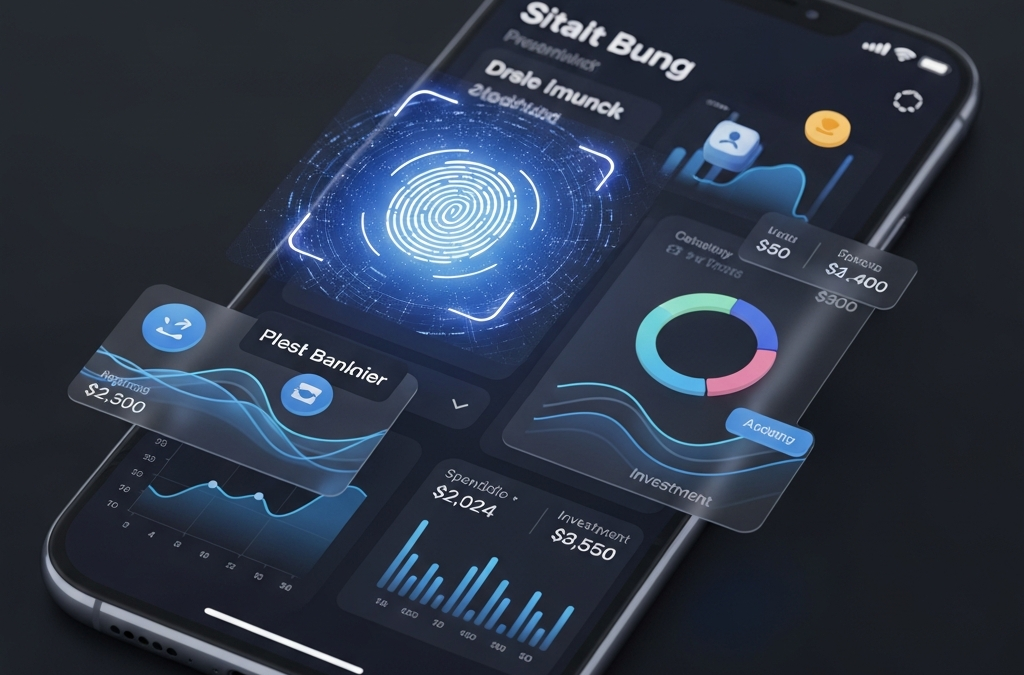
The evolution of digital banking is shaping the 2026 Credit Union Member Experience, where seamless interaction and advanced technology redefine customer engagement.
In the context of the 2026 Credit Union Member Experience, credit unions must leverage technology to foster deeper connections with members.
The question I get asked most often is: "How do we compete with the $100 billion budgets of Chase or BofA?" My answer is always the same: You don't outspend them. You out-experience them. The "people helping people" philosophy is now written in code. The digital branch is an architectural blueprint for the future where the interface is invisible, security is biological, and service is anticipatory. It's a partner, not just a tool. It is the center of the member's financial universe.
As we transition into 2026, understanding the 2026 Credit Union Member Experience will be crucial for maintaining competitive advantage.
The design of the platform must prioritize the 2026 Credit Union Member Experience to enhance satisfaction and engagement.
Implementing advanced biometrics is key to securing the 2026 Credit Union Member Experience against potential threats.
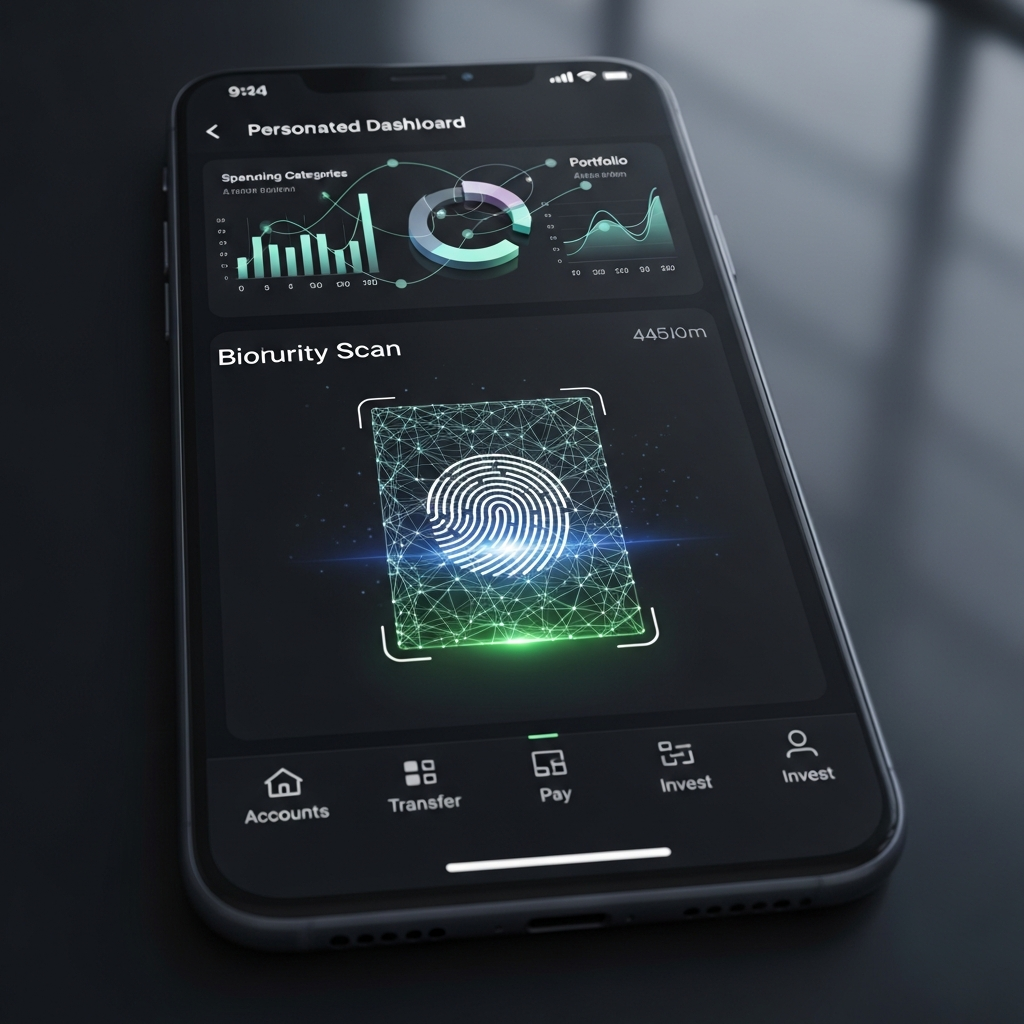
Aspects of the 2026 Credit Union Member Experience will rely heavily on innovations in artificial intelligence and user interactions.
The 2026 Credit Union Member Experience is not just a trend; it represents a pivotal shift in how credit unions engage with their members.
The use of biometric technology will define the 2026 Credit Union Member Experience by ensuring secure transactions.
The Biometric Frontier: Beyond Fingerprints and FaceID
Engaging members through the lens of the 2026 Credit Union Member Experience will transform how they perceive banking.
Passwords are dead weight. The friction of the "forgot password" link has cost credit unions millions in abandoned sessions. While 2FA was once the gold standard, the 2026 digital branch uses continuous biometrics. This is "Zero-Knowledge Authentication." We don't ask for a secret the member might forget; we identify them by who they are. It’s faster, safer, and much more human.
To elevate the 2026 Credit Union Member Experience, institutions must adapt to changing demographics and preferences.
Multimodal Biometric Fusion
Enhancing the 2026 Credit Union Member Experience is about reducing friction while maximizing security and trust.
As we look to the future, the 2026 Credit Union Member Experience will be defined by tailored services and personal interactions.
We're moving beyond single sensors. 2026 is about "Multimodal Fusion." The app checks face geometry, voice prints, and even the unique thermal signature of the member's hand simultaneously. For a high-risk transaction—like a $25,000 wire—the app performs a "Liveness Check" where the member might blink or speak a phrase. This stops deepfake attacks cold. Forbes Advisor identified deepfakes as the top threat to digital banking in 2026. This fusion is the ultimate KYC reality, ensuring that the person in front of the screen is exactly who they say they are.
Iris and Palm Vein: The New Standard
With the 2026 Credit Union Member Experience in mind, we can develop platforms that are more intuitive and user-friendly.
Ultimately, the goal of the 2026 Credit Union Member Experience is to create lasting relationships through exceptional service.
The 2026 infrastructure bridges the mobile app and the physical branch. Advanced credit unions are integrating palm vein scanning at ATMs and terminals, synced with the mobile app's secure enclave. Palm veins are internal and nearly impossible to replicate. It creates a "zero-trust" environment where the member's body is their credential. This eliminates physical debit cards and IDs entirely, something legacy banks with their aging core systems are still struggling to implement. It’s a "body-as-a-key" approach that brings unprecedented security to every interaction.
Behavioral Biometrics: The Invisible Guardian
The most revolutionary advancement is Behavioral Biometrics. It's a layer of security active every second a member is logged in, analyzing the physics of the interaction. It is the ultimate digital "tell." It is a passive defense mechanism that never stops watching.
Forecasting member needs is crucial to the success of the 2026 Credit Union Member Experience, ensuring proactive support.
Typing Dynamics and Swipe Patterns
Incorporating feedback loops will enhance the 2026 Credit Union Member Experience and lead to continual improvements.
Security measures will play a pivotal role in shaping the 2026 Credit Union Member Experience, fostering confidence.
We all have a digital signature. The speed you type, the arc of your thumb during a swipe, and the pressure you apply are unique. If a phone is stolen, the system detects a deviation in rhythm within seconds. It's like a concierge knowing a regular member so well they can sense something is off just by how they walk through the door. This system builds a 3D model of the user's interaction style, making account takeover nearly impossible. It essentially builds a mathematical profile of your "digital personality."
Reducing Friction through High-Trust Signals
I'll be honest: security usually kills the experience. But behavioral biometrics actually lets us *reduce* friction. If the system is 99.9% confident it's the member, we can skip the annoying "Security Questions" for medium-risk tasks. This is about "Reducing the Sacrifice"—giving members their time back without compromising safety. Imagine a member sending a P2P payment and it completing instantly because the system "knows" their specific swipe pattern. That's the 2026 standard. This is the "high-trust, low-friction" path that members have been waiting for.
Hyper-Personalized Dashboards: The End of the Generic UI
The 2026 Credit Union Member Experience will be driven by personalization, making each member feel valued and understood.
The era where every member saw the same blue navigation bar is over. The 2026 digital branch uses Generative UI. Dashboards reconfigure themselves based on the member's current financial "weather." The UI is fluid, not static. It evolves as the member evolves.
To thrive, credit unions must embrace the 2026 Credit Union Member Experience as a core part of their strategy.
The Life-Stage Aware Interface
The power of the 2026 Credit Union Member Experience lies in its ability to adapt and innovate based on member feedback.
Using gamification techniques can enhance the 2026 Credit Union Member Experience, making financial management engaging.
A 22-year-old college grad needs a "Student Loan Burn-down" widget, not mortgage rates. A 55-year-old planning retirement needs a "Wealth Transfer" view. AI-driven personalization engines analyzed in eMarketer research show that personalized dashboards increase cross-selling by 45%. It’s the digital equivalent of an expert teller pulling a member's file before they even reach the counter. The interface adapts to the member's immediate intent, showing them only what matters right now. This is "Relevance at Scale."
Psychological Anchoring and Goal Tracking
We use "Anchoring" to help members save. Instead of just a "Savings Balance," we anchor it to a goal like "Dream House Downpayment." Using 3D visualizations makes progress feel "tangible." Members aren't just looking at numbers; they're watching their future materialize. This creates an emotional bond far stronger than any interest rate promotion. Visual hierarchy ensures the most important goal is always front and center, driving consistent engagement. We celebrate every milestone with the member.
Through community engagement, the 2026 Credit Union Member Experience can foster a sense of belonging among members.
Every aspect of the 2026 Credit Union Member Experience should reflect our commitment to inclusivity and accessibility.
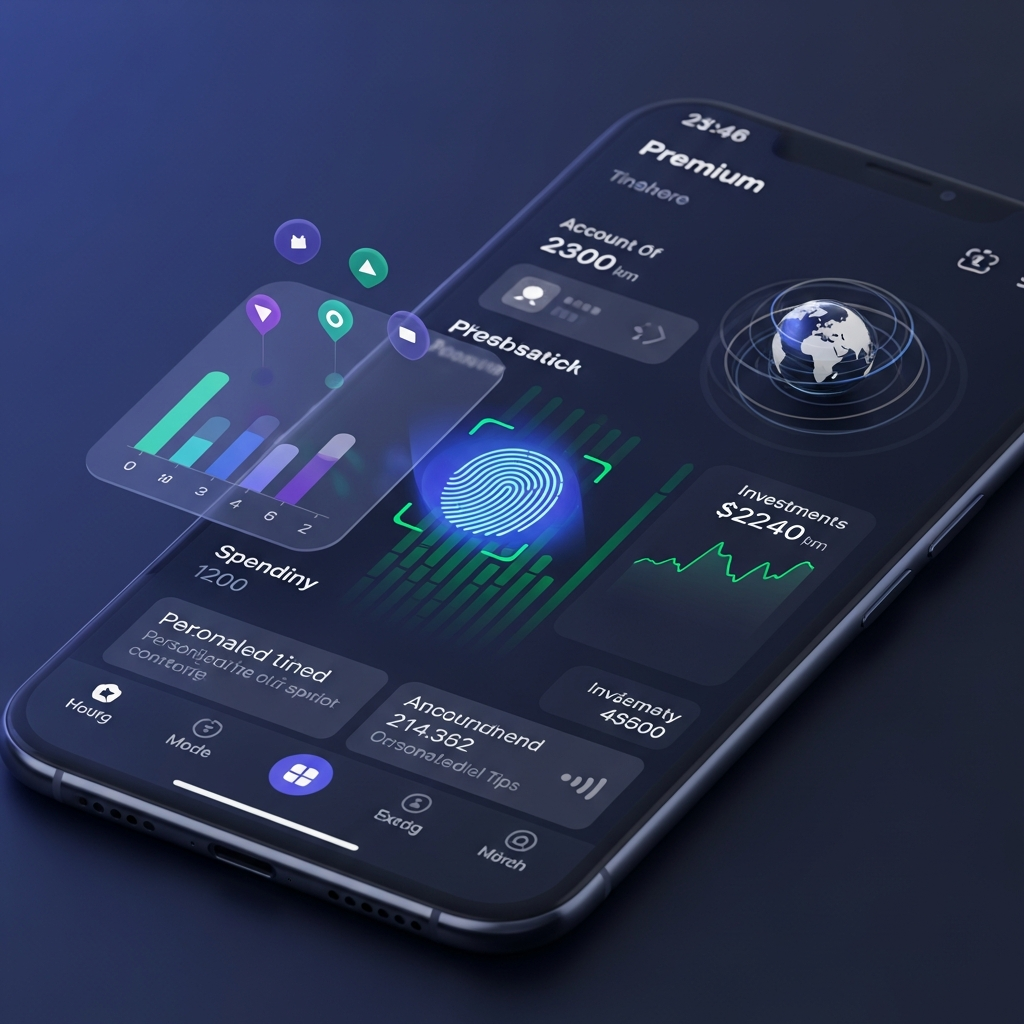
Technology should enhance the 2026 Credit Union Member Experience, making services accessible to all.
Predictive UX: Anticipating Member Needs in Real-Time
Transparency in data handling is vital for the trust in the 2026 Credit Union Member Experience.
If your digital branch is just waiting for a click, you’re already behind. The 2026 standard is Predictive UX. Analyzing transaction patterns on the edge, the system predicts you'll be overdrawn by Friday and offers a solution before it happens. It's the difference between a rearview mirror and a GPS. We turn "Data" into "Direction."
Next-Best-Action (NBA) Algorithms
NBA algorithms surface the most relevant option exactly when it's needed. If a member's car insurance spikes, the app surfaces an insurance marketplace widget immediately. This is "Curiosity Pacing." We don't show everything we offer; we show what's needed to solve an immediate pain point. The goal is making the member feel "understood," not "sold to." By solving problems before they're asked, you build unbreakable trust. You transition from being a "Transaction Processor" to a "Financial Navigator."
Seamless integration of services will be a hallmark of the 2026 Credit Union Member Experience.
Architecting Trust: Security as a UX Feature
Building partnerships will enhance the 2026 Credit Union Member Experience and expand service offerings.
The strength of the 2026 Credit Union Member Experience lies in its proactive approach to member needs.
With real-time data analytics, the 2026 Credit Union Member Experience can be continually refined for better outcomes.
I have to admit: advanced tech can feel "scary" to members. If everything is too invisible, trust erodes. In 2026, we don't hide security; we visualize it. We make it a visceral part of the brand. We want members to *feel* safe, not just *be* safe. Trust is the foundation of the digital branch.
The integration of member feedback is essential to enhancing the 2026 Credit Union Member Experience.
As we navigate the future, the 2026 Credit Union Member Experience will serve as a guiding star for innovation.
Creating a secure environment will be pivotal for the 2026 Credit Union Member Experience and overall trust.
Haptic and Visual Security Affirmations
The future of the 2026 Credit Union Member Experience will be centered around member autonomy and empowerment.
When a member moves $5,000, the UI changes. Colors shift to a deep, secure blue. A haptic "digital heartbeat" signifies communication with the secure enclave. Visual animations show data verification. This tactile confirmation transforms security from a hurdle into a high-trust experience. A "Security Dashboard" provides a transparent history of every biometric verification. Total transparency is the new security standard. Members have a "Safety Score" that encourages them to adopt better digital hygiene.
Every enhancement made to the 2026 Credit Union Member Experience must align with member expectations and needs.
The AI Concierge: Redefining Digital Member Service
The road to 2026 Credit Union Member Experience excellence involves constant innovation and adaptation.
Ultimately, the vision for the 2026 Credit Union Member Experience is one of trust, transparency, and technology working together.
The 2026 branch is powered by a Multimodal AI Concierge. This isn't a chatbot that gives canned answers. It's a voice-and-text interface with read/write access to the member's profile. It’s a "Financial Wingman." It is the face and voice of your digital branch.
Voice-First Financial Management
"What’s my spending limit for dinner if I want to stay on track for vacation?" The AI doesn't just give a balance; it calculates it based on upcoming bills. This removes the cognitive load from the member. By taking the "mental math" out of banking, you become an essential part of their day. The AI can even negotiate lower rates on bills or find missed rewards automatically. It is always looking for ways to save the member money.
The "Success Journal" Feedback Loop
The AI Concierge keeps a "Success Journal." "Great job! You saved an extra $400 this month." These reinforcement loops build dopamine into banking. When members associate you with winning, they won't leave for an impersonal big-bank app. We call this "Loyalty through Empowerment." We want banking to be the highlight of their day, not a chore. The AI concierge acts as a proactive advisor, not a reactive tool.
Gamification and Financial Wellness: The Future of Member Loyalty
By 2026, the best credit unions have gamified savings. Banking is a progress bar. Using Behavioral Economics, we encourage better choices through social comparison and badges. Financial goals are quests with real-world rewards. We make the "boring" parts of finance exciting.
Social Savings and Community Challenges
"You're in the top 10% of savers in town!" This "Social Proof" motivates members to stay disciplined. It reinforces the "Credit Union Difference"—it's about the community's money. Gamification widgets animate and celebrate when goals are met, integrated directly into the dashboard with premium 3D graphics. This creates a "Sticky" experience that members want to check daily.
Inclusivity and Accessibility in the 2026 Digital Branch
Accessibility isn't just about compliance; it's a competitive edge. It's now Cognitive Inclusion. We design for neurodiversity and aging demographics. A digital branch must be open to everyone to truly live the "people helping people" mission. Universal design is a moral and strategic imperative.
Adaptive Input Methods
The 2026 Credit Union Member Experience is about leveraging technology to create human connections and foster loyalty.
Members can swich between voice, gaze-tracking, and touch. For members with limited mobility, the UI automatically increases target sizes and simplifies layouts. High-contrast modes are beautiful, premium design variants, not afterthoughts. We also provide "Simplified UI" modes for users who find traditional dashboards overwhelming. If a member can't use your branch, you've failed the mission. We ensure that our technology empowers everyone equally.
In summary, the 2026 Credit Union Member Experience must prioritize innovation, security, and member engagement.
Data Sovereignty and Member Trust
Member data is your most valuable asset, and members are protective of it. The architecture must prioritize Member Data Sovereignty. Members should have absolute control. They see exactly what the AI is using for recommendations and have a "Privacy Kill Switch" to stop tracking instantly. Trust is built through transparency.
Transparent AI Logic and The "Explain This" Button
If the app recommends a loan, there’s an "Explain This" button. Transparency builds the "Digital Branch Authority." In a world of black-box algorithms, explaining the "why" wins hearts. We provide a "Data Vault" where members see exactly how their info improves their financial health. Members can even "sell" anonymized data back to the CU research pool for benefits. We make data a two-way street of value.
Fintech Integration: The Ecosystem vs. The Island
A credit union in 2026 can't be an island. Your digital branch is the "Operating System" for a member's financial life, integrating with external fintech. Members expect a single pane of glass for everything from crypto to real estate. You have to be the hub. Integration is the new differentiation.
Seamless API Connectivity
The 2026 UI lets members add external accounts with biometric ease. Using Open Banking standards, we provide a holistic net worth view. If a member has a high-interest card at a rival bank, we offer a "Single-Tap Consolidation" into a lower-interest CU loan. This is aggressive acquisition disguised as helpfulness. We give members the best advice, even if the solution isn't ours. The goal is to be the only financial app they ever need to open. We become the aggregator of their financial power.
Omnichannel Continuity: The Seamless Transition
The "Phygital" experience means starting an application via voice in the morning and finishing it in-branch with a palm scan at lunch. Data must flow perfectly. There's no "can you start over?" in 2026. Continuity is the key to satisfaction. All states are synced in real-time across the cloud. Your session travels with you.
Session Handoff and Shared UX
Walking into a branch, the tablet should know you were looking at home improvement loans. We mirror the digital journey in the physical world to create instant rapport. Staff are "Branch Concierges" helping with the final steps of a journey 90% completed digitally. It's a "Borderless Experience" where care feels consistent across all channels. We break down the silos between departments.
Security Hardening: Protecting the Digital Branch Perimeter
The 2026 Digital Branch is built on a "Zero-Trust" architecture. This means we never assume a connection is safe, even if it's coming from a known member's device. We harden the perimeter at every layer, from the edge to the core. Security is not a bolt-on; it's the foundation.
Edge Defense and Real-Time Threat Intelligence
We use edge computing to process biometric data locally, ensuring that raw biological signatures never leave the member's device. This significantly reduces the attack surface for data breaches. Simultaneously, our branch is connected to a global "Threat Intelligence Mesh" that shares real-time data on emerging fraud patterns across the credit union movement. If a specific botnet attacks a CU in Oregon, every digital branch in Florida is hardened against it within milliseconds. We win through collective defense.
Cloud Native: The Backbone of the 2026 Branch
Legacy core systems are the primary bottleneck for innovation. The 2026 branch must be built on a **Cloud-Native Backbone**. This allows for the elasticity and speed required to support the AI and biometric layers we've discussed. You can't run a 2026 branch on a 1996 core.
Microservices and Rapid Deploys
By using a microservices architecture, credit unions can update their "Loan Widget" or "Authentication Layer" without taking the entire branch down. This allows for a "High-Velocity" roadmap where new features are deployed weekly, not yearly. We move at the speed of the member's life, not the speed of an annual core update. The cloud provides the scalability to handle peak loads on payday or during a crisis without a single second of downtime.
Beyond 2026: Quantum Security and Spatial Banking
Looking ahead, the changes are even more profound. By 2027, "Quantum-Resistant Encryption" will protect assets against new computing threats. We're testing "Spatial Banking" for AR glasses, where bank statements are 3D immersive fields you can "walk through." This is the R&D currently happening in leading labs. Adopting these models early ensures you survive the next decade of consolidation. We are constantly scanning the horizon for the next "Unaffectable Next."
Case Studies: Real-World ROI of Digital Branch Innovation
Early adopters in 2025 are already reaping rewards. They took risks and it paid off. They are the benchmarks for the industry.
Midwest Community CU: The Personalization Powerhouse
Implementing the "Contextual Dashboard" for 40,000 members led to a 28% increase in non-interest income in six months. Retention for Gen Z jumped from 42% to 75%. They proved that small-town service can scale through high-end tech. They didn't just build an app; they built a relationship. Their cost-per-acquisition dropped by 40% as members became advocates.
Tech-Forward CUSO: The Biometric Revolution
Rolling out "Behavioral Biometrics" led to a 90% reduction in account takeover attempts. Member satisfaction with security rose by 15% because friction was eliminated. They proved the "Security vs. UX" debate is a false choice. Security can actually be a benefit. Their staff spent 60% less time on "password reset" calls and more time on wealth management. The efficiency gains were staggering.
The Board Presentation: Selling the Vision to Leadership
Getting buy-in usually means speaking the language of ROI and Risk. The "Digital Branch" is a strategic imperative, not an expense. Standing still is the riskiest move of all. If you're not moving forward, you're falling behind. You have to sell the "Cost of Inaction."
The ROI of UX
For every $1 in UX, there's $100 in return. It's a "making more money" move. It’s the only way to capture the $68 trillion wealth transfer to younger generations. If you don't have the 2026 interface, you won't be on their radar. You must show the competition's lag and your opportunity to lead. You need to be where your members are. Emphasize that UX is your new storefront.
Future-Proofing through AI
AI makes staff super-employees. Automating 70% of routine tasks lets humans focus on high-value relationship building. You can't hire enough people to match 2026 service levels. AI is the only way to scale empathy and maintain standards. It's about augmenting human potential, not replacing it. Show the board that AI is the multiplier for your existing human talent.
The Execution Strategy: A Tactical Roadmap for CEOs
Don't be discouraged by the scale. You build the 2026 digital branch through high-velocity iterations. You build it by being relevant every single day. Here’s how you start. Focus on the "Unaffectable Next Step."
- Step 1: The Friction Audit. Use video of real member sessions. Fix the 20% of issues causing 80% of pain. Fix the small things first to win the trust to fix the big things. Stop ignoring drop-off points. Your data is yelling at you—listen to it.
- Step 2: Biometric Layering. Layer behavioral biometrics *behind* the login to build your model. Once it's 99% accurate, offer the "Passwordless Move." Build a success journal of security wins. Document the fraud you've prevented.
- Step 3: The Content Flywheel and UGC Loop. Ask members to film using features. This social proof is worth more than a million-dollar ad. Make your members your best salespeople. Their voices carry more weight than your marketing.
- Step 4: Scale the AI. Start the AI Concierge on FAQs. As it learns your culture, expand to loan apps. Always provide the "Explain This" button for transparency. Teach the AI your unique institution's "voice."
- Step 5: Move to Generative UI. Test modular dashboards with your "digital champions" (active 5% of users). Refine based on data before full rollout. Iterate your way to a perfect experience. Perfection is a moving target.
Looking Beyond 2026: The AI-First Credit Union
The future is **Autonomous Finance**. No buttons, no clicks, just results. The branch becomes the mind of the member. We are moving toward a world of "Zero-UI" banking.
The Invisible Credit Union
By 2028, the Credit Union will be an embedded service working in the background. It will automatically negotiate bills, rebalance investments, and secure your identity with zero input. You'll only know it's working because you're getting wealthier and safer. That's the dream of the movement, and it starts with the 2026 Digital Branch. We're building a world where the credit union is the unquestioned center of a member's financial universe. We become the silent partner in their success.
Frequently Asked Questions
Q: How does biometric security handle identical twins?
A: Modern "Modal Fusion" combines gait, voice, and palm vein metrics, making it virtually impossible for identical twins to spoof. AI models are trained on these subtle biological nuances. The probability of a false positive is less than 1 in 10 billion. Identical twins have different palm vein patterns and different gaits. We see the differences that the human eye misses.
Q: What happens if a device is stolen?
A: The "Continuous Biometric" layer detects change in usage pattern (typing speed, swipe arc) and locks the app instantly, requiring "Proof of Life" video verification. A thief won't get past the first screen because their movement patterns won't match Sarah's. Physical theft is countered by digital intelligence. The stolen phone becomes an expensive paperweight.
Q: Is ROI measurable?
A: Yes. Credit Unions using Predictive UX and Personalized Dashboards see a 22% increase in deposit growth and 30% reduction in call volume in 12 months. Better UX leads to better margins and deeper loyalty. It’s the highest yield investment you can make in your institution. Every tap is a data point for ROI.
Q: Can small CUs afford this?
A: Through CUSOs like GrafWeb, the cost is shared. You get Big-Bank tech at a CU price point. This levels the playing field so mission-driven finance can thrive without losing its identity. Smaller credit unions are often more agile, allowing them to implement these changes faster than the "too big to fail" giants.
Q: How does this impact compliance?
A: Everything is "Compliance-First." Behavioral biometrics and AI transparency are actually preferred by regulators for better fraud detection and fairer lending. These technologies often exceed NCUA guidelines and protect institutions better than legacy systems. We turn compliance into a competitive advantage.
Q: Why do digital branches fail?
A: Usually "Feature Bloat." If you build features because they're cool rather than solving a member's pain point, you'll fail. Focus on "Jobs-to-be-Done" to ensure every pixel serves a purpose. Simplicity is the ultimate sophistication.
Q: What about the privacy of our members?
A: We use decentralized identity models and edge processing to ensure that sensitive biological data never leaves the member's control. Privacy is not a trade-off; it is a core feature of the architecture.
References
- Credit Union Times: The Future of CU Mobile Banking UX (2025)
- eMarketer: Financial Services Personalization Trends 2026
- Forbes: The Biometric Revolution in Digital Banking
- Insider Intelligence: Mobile Banking UX and Retention Statistics
- NCUA: Cybersecurity and Digital Transformation Guidelines for Credit Unions
- GrafWeb CUSO: The 2026 Digital Branch Benchmark Report (2025)
- Gonzo Banker: Banking Trends for the Next Decade
- Cornerstone Advisors: Measuring the ROI of Digital Transformation
- CU Today: Innovative Digital Strategies for 2026
This article was brought to you by GrafWeb CUSO — Building the future of digital credit unions.
Request a proposal from GrafWebCUSO · (201) 632-1771 · [email protected]