Table of Contents – Blueprint for Credit Unions
Understanding the Blueprint for Credit Unions
- Introduction: The Death of the Silo
- Defining Omnichannel in the 2026 Landscape
- The Psychology of the Modern Member
- Core Components of a Virtual Branch
- UX/UI Principles for Cross-Device Consistency
- Blending the Physical and Digital Worlds
- Data as the Glue: Personalization at Scale
- Security and Trust in an Open Ecosystem
- The Implementation Roadmap
- Frequently Asked Questions
- Conclusion: The Future of Member Connection
- References
Introduction: The Death of the Silo
The year 2026 has brought a definitive end to the era of fragmented banking experiences. History has shown that credit unions that treated their mobile apps, websites, and physical branches as independent entities have faced significant member attrition. According to ebankIT’s 2026 Digital Banking Report, we have entered a decisive moment where personalization and integration are no longer optional. The modern credit union must operate as a singular, cohesive organism that lives across every touchpoint a member chooses.
For decades, the “branch-first” mentality dominated. Then came “digital-first.” Today, we reside in an “omnichannel-always” world. This transition is not just about technology; it is about the fundamental redesign of the member relationship. When a member starts a loan application on their phone during a morning commute and expects to finish it with a specialist in a physical branch that afternoon, the credit union must maintain the context of that conversation perfectly. Any friction in this journey is a lost opportunity.
Defining Omnichannel in the 2026 Landscape
Omnichannel is often confused with multichannel communication. In a multichannel environment, a credit union has many ways to reach members—email, SMS, phone, and in-person. However, these channels often do not talk to each other. As noted by Fresh Consulting, fragmentation in the digital experience creates a direct path for frustrated users to drop off. Omnichannel, by contrast, is the seamless integration of these channels so that the transition between them is invisible to the user.
In 2026, this definition has expanded to include the “Internal Omnichannel”—ensuring that the employees at the credit union have the same unified view of the member that the member has of the institution. If the member sees a personalized offer for a car loan on the mobile app, the teller at the drive-up window must see that same offer and be prepared to discuss it. This level of synchronization requires a robust technological backbone that transcends legacy core systems.
The Psychology of the Modern Member
Member expectations are no longer set by other financial institutions. They are set by Netflix, Amazon, and Starbucks. These companies have mastered the art of “contextual continuity.” Research from Talkdesk indicates that 100% of modern banks and credit unions now use traditional channels like email and SMS, but the leaders are those who can weave these into a narrative. The member doesn’t want to repeat their story. They want to be known.
This psychological need for recognition is particularly strong in the credit union sector, where the “people helping people” philosophy is the primary differentiator. If a digital experience feels cold, anonymous, or disjointed, it betrays the credit union’s brand promise. The digital branch must feel like a familiar face, regardless of the screen size.
Core Components of a Virtual Branch
A true 2026 digital branch is more than just a marketing site with a login portal. It is a comprehensive suite of services that includes:
- Real-time Video Concierge: High-definition video support that allows for face-to-face interaction from anywhere.
- Digital Wallets and Contactless Integration: As highlighted by Better Branches, the rise of digital wallets is a reminder that members expect flexibility in how they transact.
- Unified Document Management: The ability to upload, sign, and store documents in a way that is accessible by both the member and the credit union staff across all devices.
- Interactive Financial Education: Not just static articles, but dynamic tools that help members visualize their financial health.

The Blueprint for Credit Unions is essential for navigating the complexities of the evolving financial landscape.
UX/UI Principles for Cross-Device Consistency
Consistency is the bedrock of trust. From a design perspective, this means developing a comprehensive design system that scales. Whether a member is looking at the Navy Federal Credit Union website or using their mobile app, the iconography, typography, and interaction patterns must remain consistent. This reduces the cognitive load on the member, making the experience feel intuitive rather than challenging.
Implementing the Blueprint for Credit Unions allows institutions to enhance member engagement and retention.
With the Blueprint for Credit Unions, technology can be leveraged to create a more personalized member experience.
Every credit union should develop their own Blueprint for Credit Unions to remain competitive.
Designers should focus on “Atomic Design” principles—creating small, reusable components that can be assembled into larger interfaces. This ensures that a “Submit” button looks and behaves the same way on a 27-inch desktop monitor as it does on a 6-inch smartphone. Furthermore, accessibility must be baked into the foundation. An omnichannel experience that excludes members with disabilities is a failure of both design and mission.
Blending the Physical and Digital Worlds
The physical branch is not dead; it is evolving. PYMNTS reports that the digital imperative is actually an omnichannel one. Innovative credit unions are using technology to enhance the physical visit. This includes:
- Geolocation-Based Notifications: Greeting a member via the app when they walk into a branch.
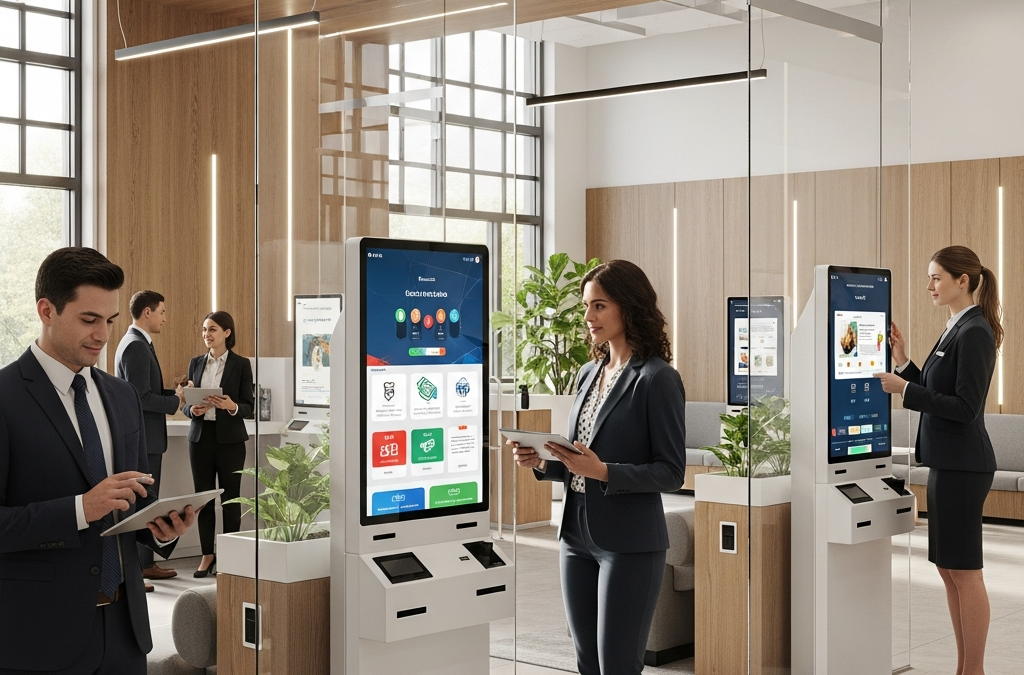
- Smart Kiosks: Self-service stations that allow members to perform complex tasks with the option to summon a live human for assistance.
- App-Based Appointment Scheduling: Letting members book a time to speak with a specialist and providing the specialist with the member’s digital history before they even arrive.
Consider the frictionless experience offered by institutions like Capital One Cafes or the high-tech branch designs of JPMorgan Chase. These spaces are designed to facilitate conversations, not just transactions. Credit unions can lead in this space by leveraging their deep community ties to create “community hubs” that are powered by digital convenience.
Data as the Glue: Personalization at Scale
The secret ingredient of omnichannel success is data. Specifically, it is the ability to turn raw data into actionable insights in real-time. If a member recently searched for “mortgage rates” on the website, the mobile app should prominently display a “Mortgage Pre-Approval” widget on their next login. This is “Predictive Personalization.”
Credit unions have a treasure trove of first-party data. By applying AI and machine learning to this data, they can move from being reactive to proactive. Instead of waiting for a member to call about a problem, the system can identify a pattern—such as a series of declined transactions—and reach out via the member’s preferred channel with a solution. This turns a potentially negative experience into a loyalty-building moment.
Utilizing the Blueprint for Credit Unions ensures that services are aligned with member needs.

Security and Trust in an Open Ecosystem
As we open more channels, we also open more potential attack vectors. The 2026 omnichannel strategy must be built on a foundation of “Zero Trust.” This means verifying every identity and every device at every step. However, security cannot come at the expense of convenience. Methods like biometrics (FaceID, fingerprint) and behavioral analytics (analyzing typing patterns or mouse movements) provide high security with low friction.
The member must also feel in control of their data. Transparent privacy settings and clear communication about how data is being used to improve their experience are vital. Institutions like Starling Bank or Monzo have shown that being “digital-native” often means being “trust-native” through extreme transparency and user control.
The Implementation Roadmap
Building an omnichannel digital branch is a marathon, not a sprint. The roadmap for 2026 looks like this:
- Audit the Current Journey: Map every touchpoint a member has and identify where the silos exist.
- Invest in Middleware: Do not try to rebuild the core. Instead, use API-driven middleware to connect legacy systems to modern front-ends.
- Empower the Staff: Train employees on the digital tools so they can assist members regardless of the channel.
- Iterate and Test: Use A/B testing and member feedback loops to constantly refine the experience.
Companies like Q2 and Alkami provide platforms specifically designed to help credit unions make this transition. Leveraging these specialized partners can significantly accelerate the time-to-market and ensure a more robust end-product.
Frequently Asked Questions
Q: Is omnichannel only for large credit unions with huge budgets?
A: No. While the scale differs, the principles of consistency and personalization can be applied by any institution. Many fintech partners offer scalable solutions for smaller credit unions.
Q: Will digital branches replace physical ones entirely?
A: Unlikely. People still value physical presence for major life decisions like buying a home or starting a business. The goal is to make the physical and digital reinforce each other.
By following the Blueprint for Credit Unions, organizations can anticipate member needs and preferences.
Q: What is the biggest hurdle to omnichannel success?
A: Often, it’s not the technology, but the organizational culture. Breaking down departmental silos is the hardest and most important part of the process.
The importance of a well-structured Blueprint for Credit Unions cannot be overstated in today’s market.
In conclusion, a comprehensive Blueprint for Credit Unions will elevate the member experience significantly.
Conclusion: The Future of Member Connection
The 2026 credit union is no longer a building or a website. It is a service that follows the member through their day, providing value at the exact moment it is needed. By architecting a true omnichannel digital branch, credit unions can reclaim their position as the most member-centric institutions in the financial landscape. The future belongs to those who can connect the dots between the screen and the handshake.
References
- ebankIT 2026 Digital Banking Report
- Fresh Consulting: Omnichannel Banking Strategy Guide
- Talkdesk: Enhancing CX through Omnichannel Banking
- Better Branches: The Rise of Omnichannel Commerce
- PYMNTS: The Omnichannel Imperative for Credit Unions
- Appzillon: Understanding Omnichannel Banking
- Navy Federal Credit Union – UX Example
- Starling Bank – Trust and Transparency Model
Each initiative outlined in the Blueprint for Credit Unions should focus on outcomes that matter to members.
This article was brought to you by GrafWeb CUSO – Building the future of digital credit unions.
Understanding the nuances of the Blueprint for Credit Unions will drive innovation and success.
All credit union staff should familiarize themselves with the Blueprint for Credit Unions to enhance service delivery.
Additionally, the Blueprint for Credit Unions should be revisited regularly to ensure relevance.
Ultimately, the success of any credit union hinges on the effective execution of the Blueprint for Credit Unions.
As we look to the future, a solid Blueprint for Credit Unions will be the key to unlocking new opportunities.
Therefore, every strategic move should align with the principles laid out in the Blueprint for Credit Unions.