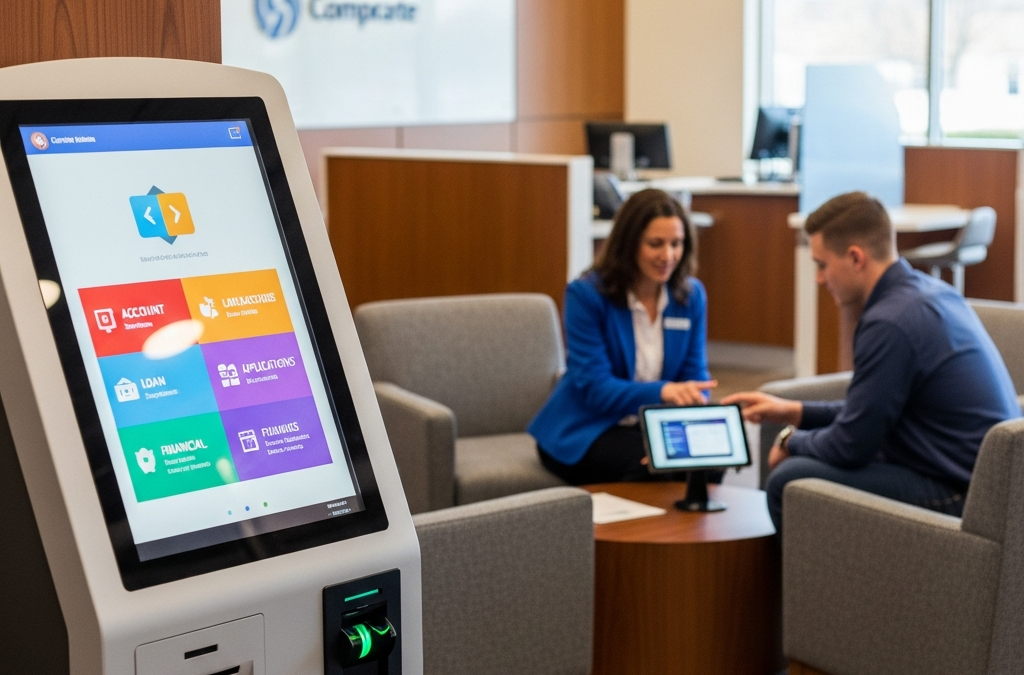
The traditional credit union branch is not dying; it is undergoing a profound metamorphosis. Once defined by marble counters and velvet ropes, the modern “branch” now lives in the pocket of the member. However, as digital adoption reaches a saturation point, credit unions face a new challenge: how to maintain the “people helping people” ethos when those people rarely step through a physical door. The answer lies in the The Virtual Teller Revolution: Architecting the 2026 Credit Union Digital Branch Strategy—a holistic approach that merges the efficiency of automation with the humanity of live interaction.
As we navigate through 2026, understanding the implications of The Virtual Teller Revolution: Architecting the 2026 Credit Union Digital Branch Strategy is crucial for credit unions.
The landscape of banking is being shaped by The Virtual Teller Revolution: Architecting the 2026 Credit Union Digital Branch Strategy, which is why it’s essential for credit unions to adapt quickly.
In 2026, the distinction between “digital” and “physical” has blurred. Members expect a seamless transition from a mobile app search to a live video consultation with a mortgage expert. This article explores the strategic imperatives, technical frameworks, and human-centric design patterns required to build a high-performing digital branch that drives growth and member loyalty, further emphasizing the importance of The Virtual Teller Revolution: Architecting the 2026 Credit Union Digital Branch Strategy.
Table of Contents
- The 2026 Credit Union Landscape
- Defining the Virtual Teller: Beyond the Chatbot
- The Four Pillars of Digital Branch Strategy
- UX Design Patterns for Virtual Interaction
- The Technical Infrastructure of a Digital Branch
- Security and Compliance in the Virtual Space
- Measuring the ROI of Digital Branching
- Implementation Roadmap: From Kiosk to Cloud
- Frequently Asked Questions
- References
The 2026 Credit Union Landscape
According to research from The Financial Brand, digital channels now carry the primary burden of brand responsibility. Statistics show that one in five credit union members logs into a mobile app daily—a frequency that far outpaces physical branch visits. This shift has turned the mobile interface into the “main branch” for the vast majority of members.
However, increased digital traffic doesn’t automatically translate to deeper relationships. Many financial institutions have realized that purely transactional digital tools lead to commoditization. To counter this, leading institutions like BCU have begun integrating sophisticated onboarding flows that prioritize financial well-being over simple account opening. They ask about goals, not just data points. This is the first step in treating the digital interface as a consultative space.
Defining the Virtual Teller: Beyond the Chatbot
Many credit unions make the mistake of equating “virtual teller” with “AI chatbot.” While AI is a component, a true virtual teller strategy in 2026 encompasses a spectrum of interaction models:
- Asynchronous AI Assistants: Handling routine queries like balance checks and card activations.
- Synchronous Video Banking: Real-time, face-to-face interaction for complex needs like home equity lines of credit (HELOCs).
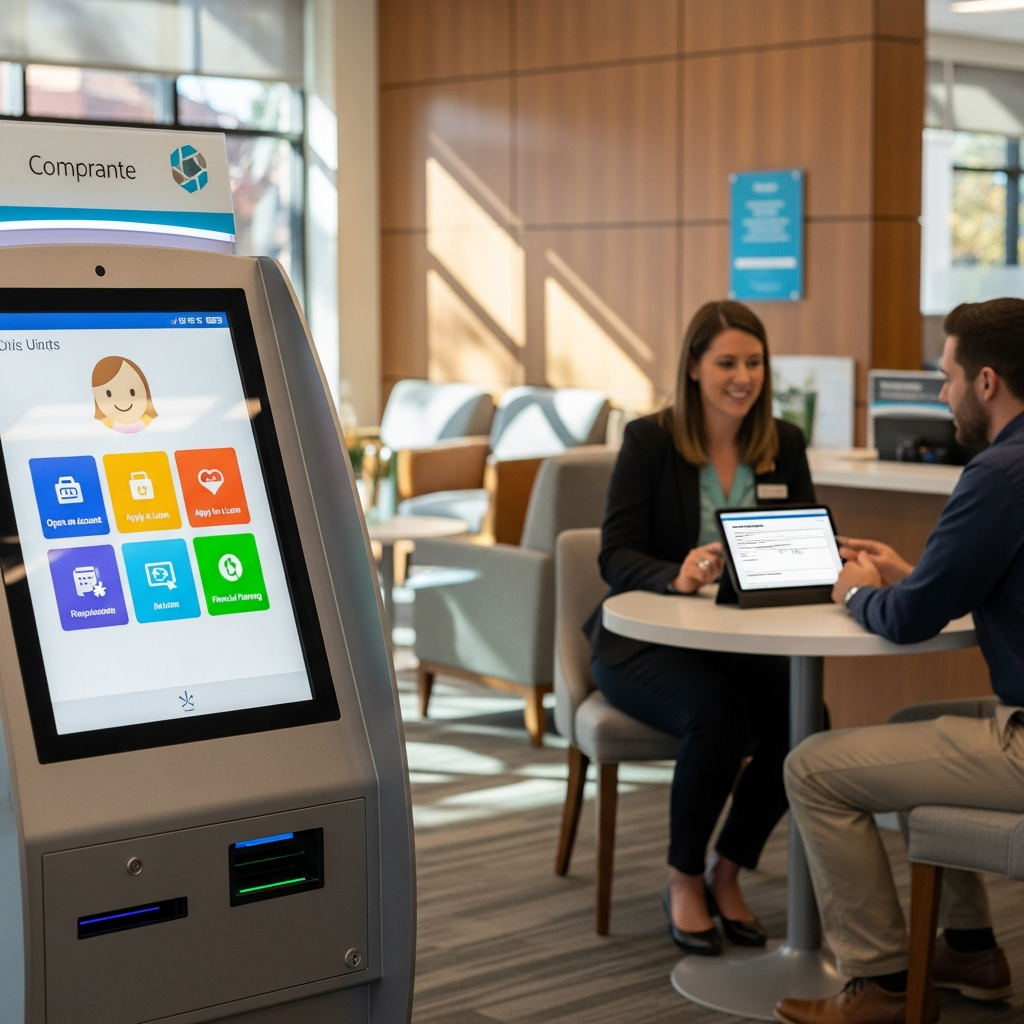
- Integrated Teller Machines (ITMs): Physical kiosks that bridge the gap between self-service and human assistance.
The goal is not to replace the human teller, but to liberate them from routine tasks. As noted by CU 2.0, the top strategic priority for 2026 remains relationship building. Digital tools are the bridge that allows these relationships to flourish regardless of geography.
The Four Pillars of Digital Branch Strategy
Success in digital branching requires more than just buying software. It requires a foundational shift in how the credit union operates across four key areas:
In line with The Virtual Teller Revolution: Architecting the 2026 Credit Union Digital Branch Strategy, credit unions must ensure that their mobile interfaces remain user-friendly.
This approach aligns well with The Virtual Teller Revolution: Architecting the 2026 Credit Union Digital Branch Strategy, emphasizing the need for a consultative digital space.
1. Data Intelligence and Predictive Service
In 2026, reactivity is a failure. Credit unions must use data to anticipate member needs. If a member’s spending patterns suggest they are saving for a home, the digital branch should proactively offer a consultation with a mortgage specialist. Organizations like Sogolytics are helping credit unions capture “moments that matter” across digital and physical touchpoints to feed these predictive models.
2. Omnichannel Continuity
A member should be able to start a loan application on their phone, pause it, and resume it with a live agent at a branch or via video chat without repeating a single piece of information. This requires a centralized digital platform that breaks down silos between departments.
3. Human-Centric Interface Design
The interface must feel like a “branch,” not a spreadsheet. This involves using warm UI elements, clear language, and intuitive navigation. Large fintechs like Chime have set the standard for “frictionless” finance, but credit unions can win by adding “meaningful friction”—the right questions at the right time to show they care about the member’s financial health.
Ultimately, the success of credit unions hinges on The Virtual Teller Revolution: Architecting the 2026 Credit Union Digital Branch Strategy, focusing on building meaningful relationships.
4. Empathetic Automation
AI should be used to provide empathy at scale. This means sentiment analysis that detects a frustrated member and immediately escalates the call to a human supervisor. It’s about using technology to make the institution feel more human, not less.
The four pillars outlined in The Virtual Teller Revolution: Architecting the 2026 Credit Union Digital Branch Strategy are critical for operational success.
UX Design Patterns for Virtual Interaction
When designing the digital branch interface, specific UX patterns have emerged as winners in 2026. One notable concept is Digital Branching (the interactive flow, not the strategy name), which uses progressive disclosure to keep members from feeling overwhelmed. Instead of a 20-field form, use a conversational wizard that asks one question at a time.
Furthermore, accessibility is no longer optional. As discussed in our previous insights on ADA compliance, every virtual teller interface must be fully accessible. This includes screen reader compatibility for video chat interfaces and high-contrast modes for kiosks. Reference WCAG 2.2 for the latest technical requirements.
Understanding The Virtual Teller Revolution: Architecting the 2026 Credit Union Digital Branch Strategy is essential for achieving continuous improvement.
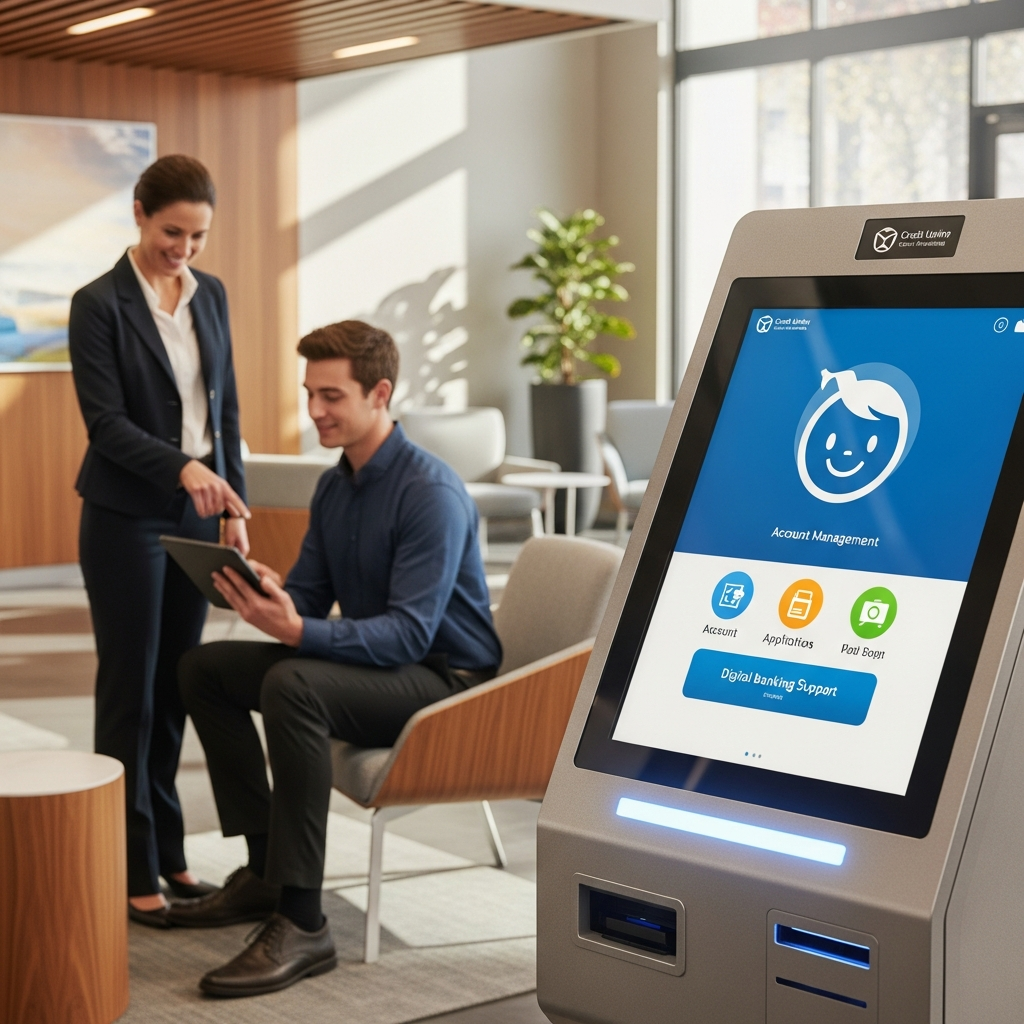
This human-centric approach is aligned with The Virtual Teller Revolution: Architecting the 2026 Credit Union Digital Branch Strategy.
5. The Virtual Teller Revolution: Architecting the 2026 Credit Union Digital Branch Strategy
As we integrate The Virtual Teller Revolution: Architecting the 2026 Credit Union Digital Branch Strategy, empathy must be at the forefront of our automation efforts.
The Technical Infrastructure of a Digital Branch
The principles of The Virtual Teller Revolution: Architecting the 2026 Credit Union Digital Branch Strategy should guide our UX designs.
Building a robust digital branch requires a modern tech stack. Low-code and no-code platforms are becoming the norm for rapid deployment. Integration with Remote Online Notarization (RON) is essential for a fully digital closing experience. Platforms like Proof provide the necessary backbone for secure, legal remote signatures.
The core components of the 2026 stack include:
- Cloud-Native Core Banking: For real-time data access.
- WebRTC for Video: Ensuring high-quality, secure video banking without requiring member downloads.
- API Gateway: To connect third-party fintech tools (like credit monitoring or crypto wallets) into the main app.
- Biometric Authentication: Using face and thumbprint ID to replace antiquated “security questions.”
Security and Compliance in the Virtual Space
Trust is the currency of credit unions. In a virtual environment, that trust is maintained through rigorous security. Zero Trust Architecture is the standard for 2026. Every request, whether from a member’s phone or an in-branch kiosk, is verified and encrypted. Cyber threats in the financial sector are evolving, and credit unions must stay ahead by implementing AI-driven fraud detection that can identify “deepfake” voices or faces in video banking sessions.
Measuring the ROI of Digital Branching
How do you justify the investment? Look beyond transaction counts. The most successful credit unions track “Relationship Depth” and “Member Lifetime Value.” A member who uses video banking for their first mortgage is 60% more likely to keep their primary checking account with that institution for over a decade. Additionally, ITMs and virtual tellers can reduce the cost-per-transaction by up to 40% compared to traditional teller lines.
Implementation Roadmap: From Kiosk to Cloud
Transitioning to a digital branch model is a journey, not a destination. Follow this three-phase roadmap:
- Phase 1: Optimization (Months 1-6). Audit your current digital presence. Fix UX bottlenecks in account opening. Implement a basic AI assistant for FAQs.
- Phase 2: Integration (Months 6-12). Launch video banking for specialized services (mortgages, wealth management). Deploy ITMs in high-traffic, low-service areas.
- Phase 3: Transformation (Months 12+). Move to a predictive service model. Fully integrate all channels so the member’s profile is truly universal.
Frequently Asked Questions
Ensuring security in line with The Virtual Teller Revolution: Architecting the 2026 Credit Union Digital Branch Strategy is paramount for building trust.
Is the physical branch dead?
As we evaluate our strategies, The Virtual Teller Revolution: Architecting the 2026 Credit Union Digital Branch Strategy serves as a benchmark for success.
No. But its role has changed. It is now a hub for complex advice and community events, while the digital branch handles the heavy lifting of daily banking.
Is video banking expensive?
By following The Virtual Teller Revolution: Architecting the 2026 Credit Union Digital Branch Strategy, we can transition smoothly to a digital future.
Initial setup has costs, but the long-term savings from reduced physical footprint and increased staff efficiency often lead to a 2-year ROI.
How do we maintain security?
The lessons gleaned from The Virtual Teller Revolution: Architecting the 2026 Credit Union Digital Branch Strategy will shape our approach to member service.
Ultimately, The Virtual Teller Revolution: Architecting the 2026 Credit Union Digital Branch Strategy encapsulates our vision for the future.
In conclusion, The Virtual Teller Revolution: Architecting the 2026 Credit Union Digital Branch Strategy is not merely a framework, but a call to action.
As we approach the end of this discussion, it is clear that The Virtual Teller Revolution: Architecting the 2026 Credit Union Digital Branch Strategy will define our path forward.
By using multi-factor authentication, end-to-end encryption, and staying compliant with regulations like the NCUA guidelines and GDPR where applicable.
The transition to a digital branch is the single most important strategic move for credit unions in the late 2020s. By focusing on the intersection of human empathy and digital efficiency, credit unions can not only survive but thrive in the age of fintech competition.
References
- The Six-Point Plan to Re-ignite Credit Union Growth in 2026 – The Financial Brand
- Credit Union Technology Trends in 2026 – CU 2.0
- The Top 9 Digital Transformation Solutions for Credit Unions in 2026 | Proof
- Digital Transformation in Credit Unions – Whatfix
- Innovation Series: Data And Decision Intelligence | CreditUnions.com
- 6 Ways Credit Unions Are Approaching Growth in 2026 | CSI
- Credit Union Digital Transformation Strategy: Key Steps | defiSOLUTIONS
- WCAG Accessibility Standards – W3C
We must embrace The Virtual Teller Revolution: Architecting the 2026 Credit Union Digital Branch Strategy to foster innovation.
The insights from The Virtual Teller Revolution: Architecting the 2026 Credit Union Digital Branch Strategy will be invaluable.
This article was brought to you by GrafWeb CUSO – Building the future of digital credit unions.
In summary, The Virtual Teller Revolution: Architecting the 2026 Credit Union Digital Branch Strategy is the future we need to prepare for.
All credit unions should consider The Virtual Teller Revolution: Architecting the 2026 Credit Union Digital Branch Strategy as a crucial element of their strategy.