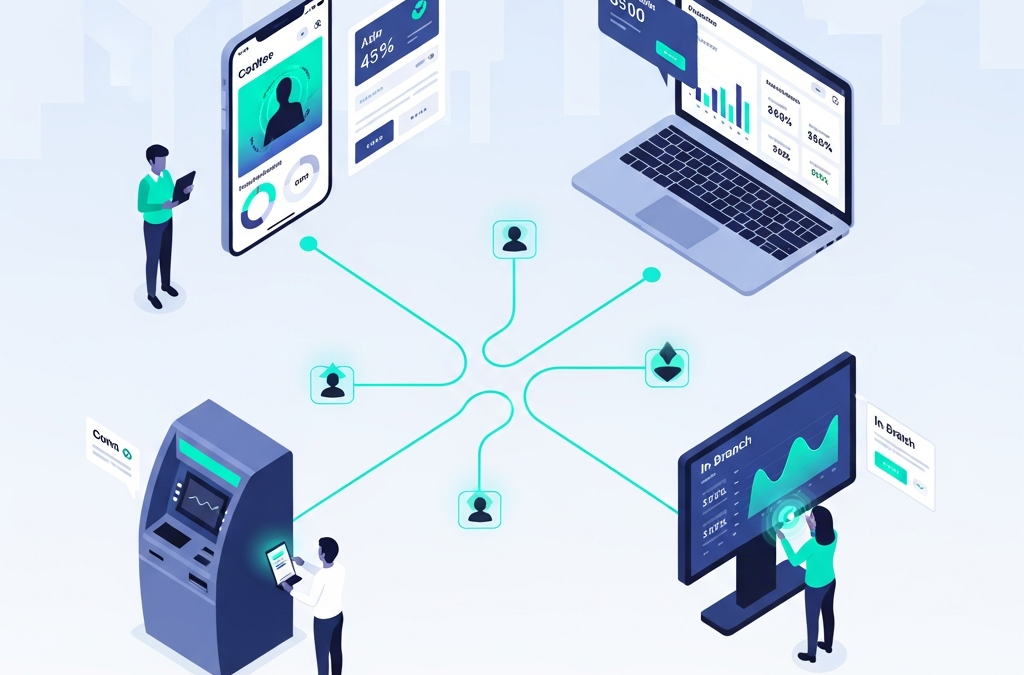
In the evolving landscape of financial services, credit unions are at a pivotal crossroads. Traditional brick-and-mortar branches are giving way to digital alternatives that promise greater accessibility, efficiency, and member satisfaction. Enter digital branching, a transformative approach that redefines how credit unions engage with their members across multiple channels. This comprehensive guide explores the intricacies of digital branching, offering actionable strategies for credit unions to create seamless, multi-channel experiences that drive loyalty and growth.
What is Digital Branching?
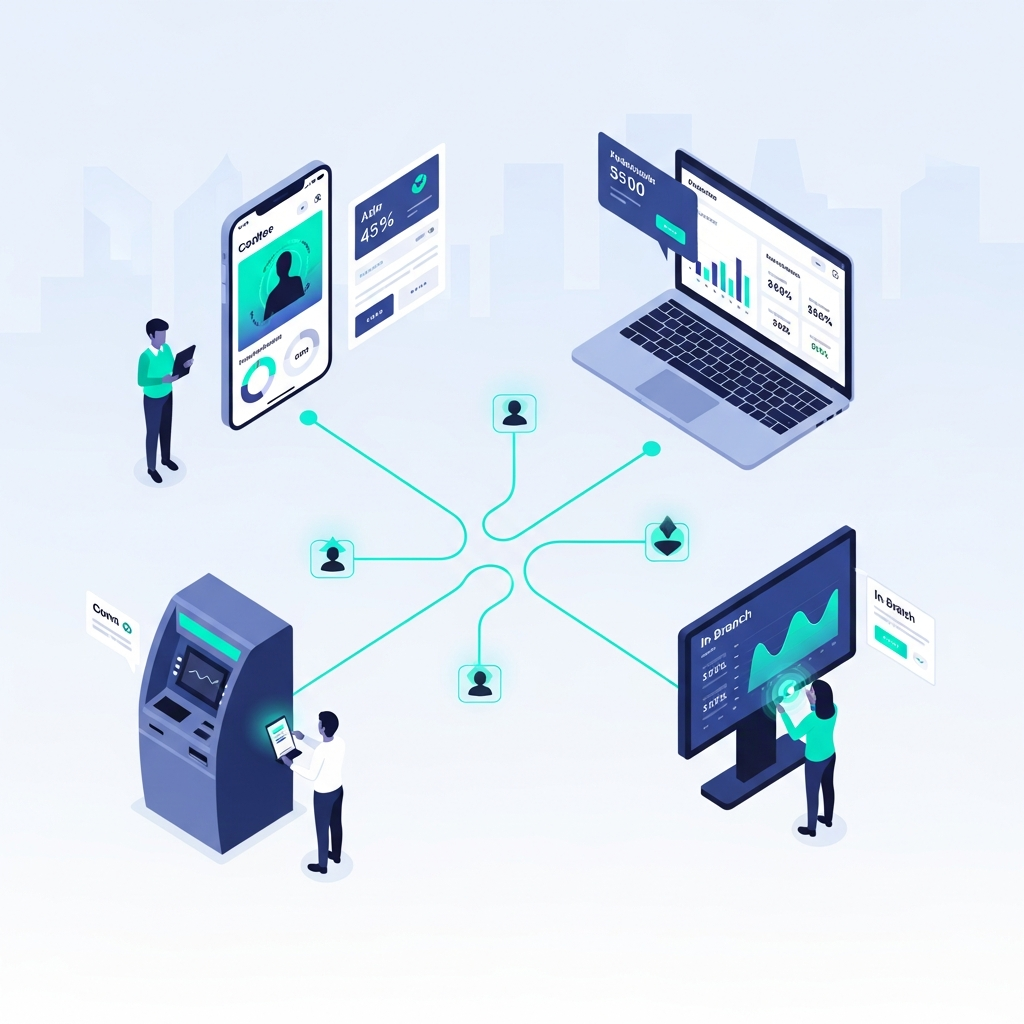
Digital branching refers to the integration of digital technologies to extend the branch experience beyond physical locations. It encompasses mobile apps, online banking portals, ATMs, video tellers, chatbots, and even emerging technologies like AR/VR kiosks. The goal is a unified member journey where members can initiate a transaction on their phone, continue it at an ATM, and complete it in-branch without friction.
Unlike traditional online banking, digital branching emphasizes contextual continuity. For instance, if a member starts a loan application on their mobile device during commute, the system recognizes their progress when they visit a branch kiosk, pre-populating forms and maintaining session data. This level of seamlessness is what sets digital branching apart, turning disparate touchpoints into a cohesive ecosystem.
The Imperative for Credit Unions to Adopt Digital Branching
Credit unions face unique pressures: competition from fintechs and big banks, younger demographics demanding instant gratification, and regulatory demands for accessibility. According to a 2025 Filene Research Institute report, 68% of credit union members expect omnichannel consistency, yet only 42% report satisfaction with current offerings. Digital branching addresses this gap by:
- Reducing operational costs: Shift routine transactions to self-service channels, freeing staff for high-value interactions.
- Boosting member engagement: Personalized, frictionless experiences increase transaction volumes and cross-sell opportunities.
- Enhancing retention: Consistent experiences build trust, with studies showing 25% higher retention rates in omnichannel environments.
Key Challenges in Implementing Digital Branching
While the benefits are clear, implementation hurdles abound. Legacy core systems often lack API integrations, data silos hinder personalization, and cybersecurity concerns loom large. Moreover, ensuring ADA compliance across channels adds complexity.
Data Fragmentation: Members interact via multiple apps, but data doesn't flow. Solution: Implement a Customer Data Platform (CDP) like Tealium or Segment to unify profiles.
UX Inconsistencies: Mobile apps feel modern, but web portals lag. Adopt design systems like Material UI or Fluent Design for consistency.
Security and Compliance: Multi-channel means multi-risk. Use biometric auth (Face ID, voice) and zero-trust architectures.
Proven Strategies for Seamless Multi-Channel Experiences
1. Build a Unified Data Backbone
The foundation of digital branching is a robust data layer. Integrate your core banking system (e.g., Jack Henry, FIS) with real-time APIs. Use event-driven architecture with Kafka or RabbitMQ to sync actions across channels.
Example: When a member deposits a check via app, trigger updates to ATM balances and in-branch displays instantly.
2. Design for Omnichannel UX
Employ Journey Mapping to visualize member paths. Tools like Miro or Figma help prototype cross-channel flows.
Progressive Disclosure: Start simple on mobile, expand on desktop/branch.
Contextual Handover: QR codes at branches link to session-specific web apps.
3. Leverage AI for Personalization
AI elevates digital branching from seamless to predictive. Use ML models (TensorFlow.js for edge) to anticipate needs. If a member frequently transfers to savings on payday, pre-offer it at login.
Chatbots like those powered by Dialogflow can triage to video bankers, maintaining context.
4. Integrate Emerging Tech
AR for virtual branch tours via mobile. VR kiosks for immersive financial planning. Blockchain for secure cross-channel identity.
5. Ensure ADA Compliance
WCAG 2.2 AA across all channels. VoiceOver support on iOS, TalkBack on Android, screen readers for kiosks.
Case Studies: Credit Unions Leading the Way
Navy Federal Credit Union
Implemented a CDP-integrated platform, resulting in 35% increase in digital transactions and 18% membership growth.
Alliant Credit Union
Video teller network with AI routing cut wait times by 50%, boosting NPS to 85.
Penn State FCU
Mobile-first with ATM handoff, saw 22% uplift in loan originations.
Technology Stack Recommendations
| Layer | Tools |
|---|---|
| Core Integration | Finastra FusionFabric, Temenos |
| Frontend | React Native, PWA |
| Backend | Node.js, AWS Lambda |
| Data | Snowflake, Kafka |
| AI/ML | Google Cloud AI, Hugging Face |
Implementation Roadmap
- Phase 1 (0-3 months): Audit current channels, map journeys.
- Phase 2 (3-6 months): API integrations, MVP mobile-web sync.
- Phase 3 (6-12 months): ATM/branch pilots, AI personalization.
- Phase 4 (12+ months): Scale with AR/VR, continuous optimization.
Measuring Success: KPIs to Track
Key metrics include Channel Switch Rate (under 5% friction), Completion Rate (90%+), NPS per channel, and Digital Transaction Mix (70%+ digital).
Conclusion
Digital branching isn't a trend—it's the future of credit unions. By prioritizing seamless multi-channel strategies, you position your institution as the member's trusted financial partner, anytime, anywhere. Ready to transform? Partner with experts like GrafWebCUSO to architect your digital branching success.
Published on Thursday, February 26, 2026