
📑 Table of Contents
- The 2026 Shift: From Transactional to Transformational
- The Psychology of Financial Empowerment: Beyond Numbers
- Jobs-to-be-Done (JTBD) in Banking
- Overcoming Hyperbolic Discounting
- Loss Aversion and Financial Security
- The Power of Anchoring in Savings Goals
- Social Proof and Regional Banking Confidence
- Top 5 UX Trends for Credit Union Mobile Apps
- Predictive Cash Flow Visualizations
- Micro-Interactions and the Peak-End Rule
- Conversational Personalization
- Glassmorphism and Immersive Depth
- Human-in-the-Loop Transitions
- AI and Hyper-Personalization: The New Member Standard
- Anticipatory Service vs. Reactive Support
- Subscription Management as a Value-Add
- The Ethical AI Pillar
- Moving from Chatbots to Autonomous Advisors
- Accessibility and Inclusive Universal Design: Reaching Every Member
- ADA Compliance is Not Optional
- Reducing Cognitive Load for Diverse Ability Sets
- Designing for Neurodiversity in Digital Finance
- The Challenge of Legacy Core Integration
- Using API Middleware for "Faux-Modernization"
- When to Consider a Full Core Conversion
- The Trust Economy: Privacy in a Hyper-Connected World
- Zero-Party Data: Letting Members Lead
- Blockchain and the Future of Identity
- Digital Financial Literacy: Education as a Feature
- Gamified Learning Modules
- Real-Time Contextual Education
- ESG and the Digital Experience
The 2026 Shift: From Transactional to Transformational
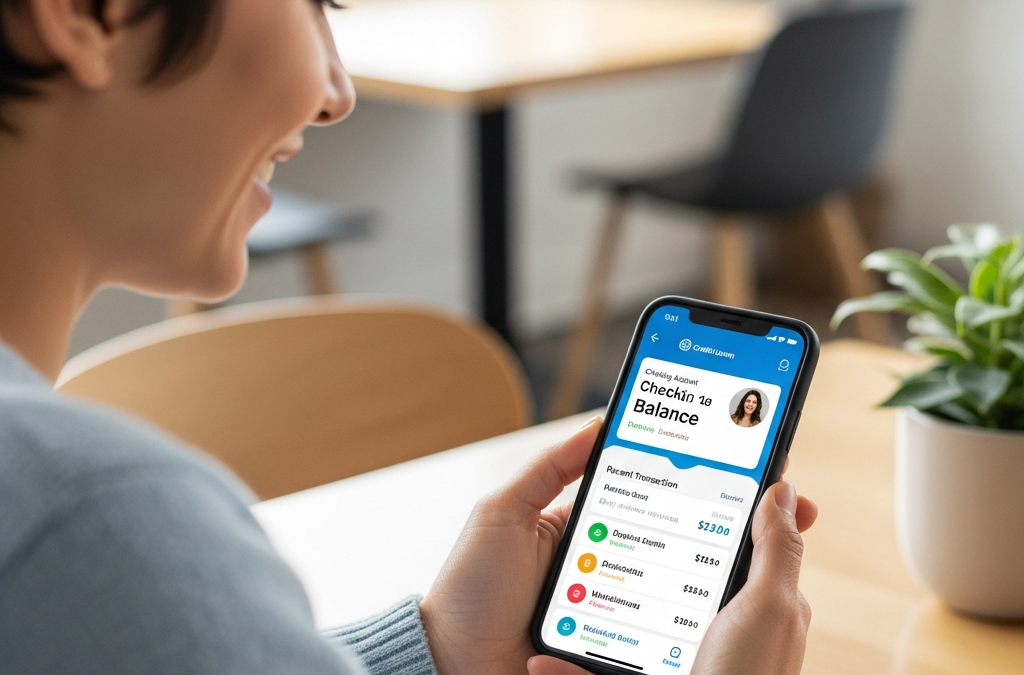
I genuinely don't know how to feel about the current state of most banking apps. For a long time, we’ve been told that "digital banking" just meant putting a website inside a phone-shaped container. But as we move toward 2026, those days are over. The landscape has matured, and it’s no longer about whether you can move money from Savings to Checking at 2:00 AM. It’s about whether your financial institution actually helps you live a better life.
The 2026 shift is the transition from **Transactional Banking** to **Transformational Banking**. Members are no longer just looking for a "drill" (a banking app); they are looking for a "hole" (financial security, homeownership, and a stress-free retirement). If your mobile strategy is still centered on showing a list of past purchases, you aren't just behind the curve—you are providing a tool for a job that has already changed.
In fact, recent industry data suggests that over **75% of consumers** now expect their financial institutions to provide proactive advice rather than just reactive transaction histories (Accenture, 2024). For credit unions, this represents a massive opportunity. Because credit unions are already community-focused, they have the "Permission to Play" in the wellness space. Now, they just need the digital architecture to deliver on that promise.
The Psychology of Financial Empowerment: Beyond Numbers
Banking is deeply personal, and yet, we treat it with the cold sterile logic of a spreadsheet. To design an app that actually resonates with a member at 11:30 PM while they’re worrying about their mortgage, we have to look at the "interplay" of human emotion and financial management.

Jobs-to-be-Done (JTBD) in Banking
People don't buy products; they "hire" them to get a job done. When a member logs into your app, they might think they’re just checking their balance, but the "job" they are hiring the app for is often Anxiety Reduction. If they see a low balance without a clear path to fix it, your app is failing at that job. A wellness-focused app identifies the "job" as **Financial Peace of Mind** and provides immediate steps to reach it, such as "You're $50 short for rent next week, would you like to move $50 from your 'Emergency' bucket automatically?"
Overcoming Hyperbolic Discounting
Humans are hardwired for immediate rewards. This is called **Hyperbolic Discounting**, and it's why it's so much easier to buy a $6 latte today than to save $6 toward a retirement 30 years away. A 2026 mobile strategy must "nudge" members by making future goals feel immediate. Use visual "streaks," progress badges, and small micro-interactions that celebrate every $5 saved. You have to make the future self as interesting as the present self.
Loss Aversion and Financial Security
We feel the pain of losing $100 twice as much as the joy of gaining $100. This is **Loss Aversion**. Your mobile app can use this ethically by framing savings not as "gaining money" but as "protecting against loss." Highlighting how an emergency fund prevents high-interest debt during a car breakdown is a much more powerful psychological trigger than a generic "Save for a rainy day" banner.
The Power of Anchoring in Savings Goals
When you present a savings goal, the initial number you suggest acts as an **Anchor**. If you suggest a $1,000 emergency fund, the member might feel overwhelmed. But if you anchor them to a weekly $20 contribution by comparing it to their average spending on food delivery, that $20 feels "small" and achievable. Use anchoring to shift the member's perspective from the total mountain to the next single step.
Social Proof and Regional Banking Confidence
Members trust those who are like them. By integrating anonymized **Social Proof**—such as "4,200 other members in [Your City] are also using this tool to save for their first home"—you tap into the community-focused strength of the credit union model. It makes the member feel they aren't alone in their financial journey, which significantly increases long-term commitment.
Top 5 UX Trends for Credit Union Mobile Apps
What does a 2026 digital branch actually look like? It’s not about adding more buttons; it’s about reducing the effort it takes to understand one’s own money. Here is the "Global Optimum" of banking design as we head into the next year:
1. Predictive Cash Flow Visualizations
Stop showing members only what happened in the past. 2026 is the year of the **Cash Flow Forecast**. Using machine learning, the app should show a simple line graph projecting the member's balance 14 to 30 days into the future. By factoring in recurring bills, historical spending habits, and expected payroll, you can show a member they’ll be "in the red" on the 25th of the month. This foresight is the ultimate value-add for a community-focused credit union.
2. Micro-Interactions and the Peak-End Rule
The **Peak-End Rule** states that people judge an experience based on its most intense point and its end. If applying for a loan is a tedious "wall of forms" that ends with a boring "Thank you" screen, the member's memory of your brand will be negative. Instead, use micro-interactions—vibrant animations, celebrated milestones, and smooth transitions—to create "peaks" of delight during the process. Ensure the "end" feels like a victory, not a relief from a chore.
3. Conversational Personalization
The hierarchical menu is dying. Users are moving toward Intent-Based Navigation. Instead of digging through "Accounts > Transfers > Schedule," a member should be able to type or say, "Pay my rent on Friday." AI-driven search that understands natural language turns the mobile app into a digital assistant. It makes the app feel less like a tool and more like a talented advisor sitting across the desk from you.
4. Glassmorphism and Immersive Depth
Visual trends for 2026 lean into **Glassmorphism**—using blurred background effects and translucent layers to establish hierarchy. This isn't just for "showcasing" style; it helps the brain process information. By making secondary information appear "behind" the primary data, we reduce the cognitive load. It makes the "landscape" of the app feel organized, breathable, and modern.
5. Human-in-the-Loop Transitions
The greatest weakness of "Big Bank" apps is the dead end. When the AI can't help, you're stuck in a loop. The credit union advantage is the human touch. Your 2026 strategy must include seamless "Human-in-the-Loop" transitions. If a member is looking at a mortgage calculator for more than three minutes, a small, non-intrusive prompt should appear: "Would you like to talk to Sarah, our mortgage specialist, via video call right now?"
AI and Hyper-Personalization: The New Member Standard
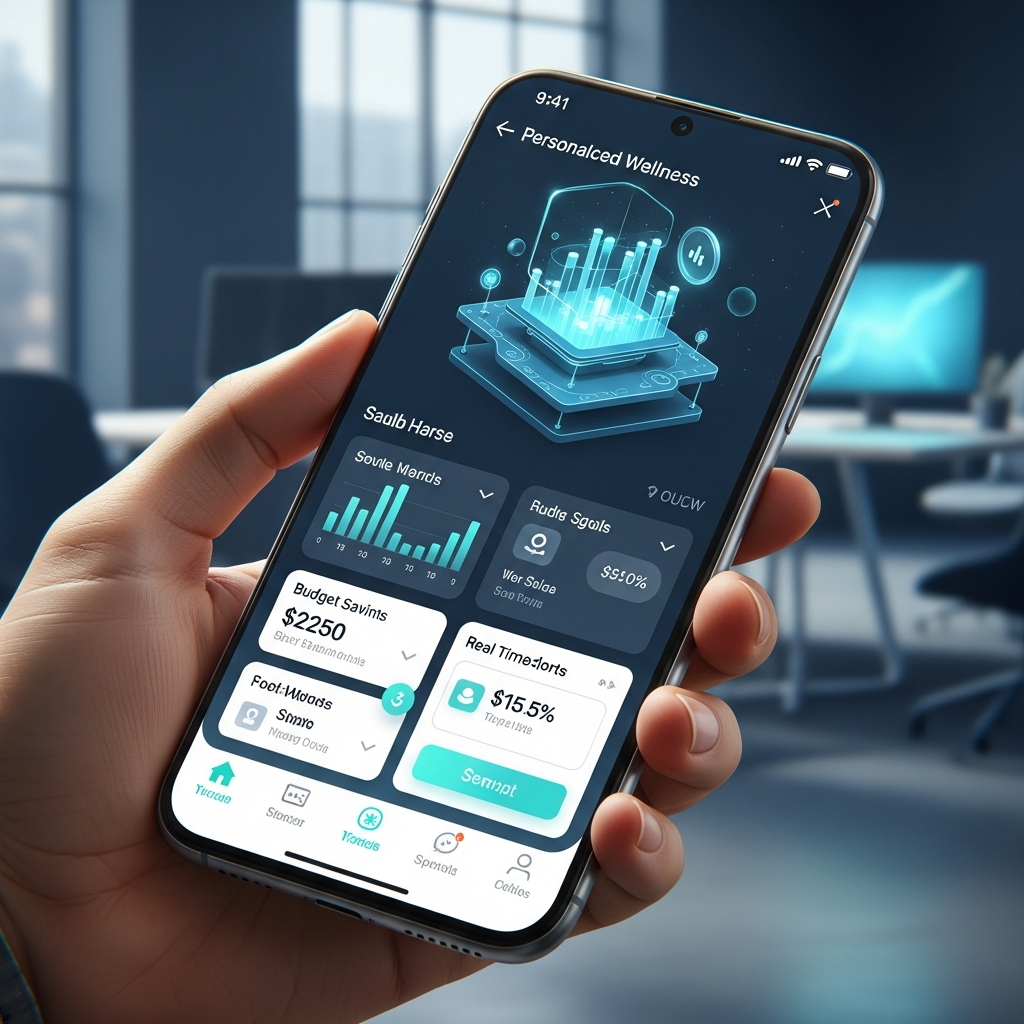
Artificial Intelligence is often treated as a "vibrant" buzzword, but in 2026, it is the silent engine of member loyalty. It allows us to move from generic "Personalization" (putting their name in an email) to **Hyper-Personalization** (understanding their life stage and reacting to it).
Anticipatory Service vs. Reactive Support
Reactive support is waiting for a member to call about a fraudulent charge. Anticipatory service is the app noticing a sudden increase in a member's utility bill and automatically searching for "Local energy savings programs" or "Low-interest home weatherization loans." This shift in service model is what transforms a credit union from a utility into a partner.
Subscription Management as a Value-Add
One of the "crucial" pain points for modern consumers is "Subscription Creep." By 2026, every top-tier CU app will include a native subscription manager. By identifying recurring payments to Netflix, Hulu, or gym memberships the member hasn't visited in months, the credit union can proactively offer to cancel them. "We noticed you're spending $80 a month on unused subscriptions; would you like us to help you save that for your vacation fund instead?" This is a masterclass in **Reciprocity**.
The Ethical AI Pillar
As we "delve" deeper into AI, we must remain "deeply rooted" in ethics. AI in banking cannot be a "black box." Your strategy must prioritize **Explainable AI**. If a member's loan is denied or a financial wellness suggestion is made, the app should clearly explain the "why." This transparency is the "testament" to why members trust credit unions over faceless fintech startups.
Moving from Chatbots to Autonomous Advisors
By 2026, we’re moving away from simple FAQ bots toward **Autonomous Advisors**. These systems don't just answer questions; they perform tasks. "Hey Cassie, find me the best auto-loan rate for a $30k hybrid SUV and pre-fill my application." The app becomes an agent acting on behalf of the member's best interests within the credit union's ecosystem.
Accessibility and Inclusive Universal Design: Reaching Every Member
Accessibility is a "crucial" pillar of modern design. With "ADA compliant website design credit union" impressions rising, it's clear the industry is finally waking up. But true accessibility isn't just about screen readers; it’s about **Universal Design**—the idea that a product should be usable by anyone, regardless of age, ability, or status.
ADA Compliance is Not Optional
By 2026, the legal landscape for digital accessibility will be even more rigorous. Your mobile strategy must ensure 4.5:1 contrast ratios, tap targets large enough for people with motor impairments, and a structure that "underscores" clarity. But beyond the legal risk, it's just good business. 1 in 4 Americans lives with a disability; ignoring them is ignoring 25% of your community (CDC, 2024).
Reducing Cognitive Load for Diverse Ability Sets
"Intricate" financial data can be overwhelming. Inclusive design means using **Hick's Law** to simplify the "tapestry" of financial information. Use clear icons, simple language (avoiding "amortization" when "loan schedule" will do), and consistent patterns. This helps members with ADHD, dyscalculia, or those who are simply stressed and tired.
Designing for Neurodiversity in Digital Finance
A often-overlooked area of accessibility is Neurodiversity. Users with ADHD or Autism may have different processing needs for complex data. A 2026 strategy should allow for **UI Customization**, such as a "Focused Mode" that hides everything except essential account actions, or "Visual Scaffolding" that uses color-coded categories for spending to make data easier to parse at a glance.
The Challenge of Legacy Core Integration
I genuinely believe the biggest barrier to the "wellness" dream isn't vision—it's legacy technology. Most credit unions are stuck on "Core" systems that were designed when the fax machine was high technology.
Using API Middleware for "Faux-Modernization"
You don't always have to rip and replace your core system. Modern credit unions are using **API Middleware Layers** (like those from Mulesoft or Jack Henry’s Banno) to "wrap" the old core in a modern layer. This allows you to build the "vibrant" digital experiences mentioned above while keeping your stable backend records intact.
When to Consider a Full Core Conversion
If your core system prevents you from delivering real-time data or integrating with third-party wellness tools, it’s a "pivotal" moment to consider a full conversion. While costly, the "Opportunity Cost" of failing to attract Gen Z members because your app takes 24 hours to show a transaction is fatal in a 2026 market.
The Trust Economy: Privacy in a Hyper-Connected World
How do we balance "Hyper-Personalization" with the growing demand for privacy? This is the "interplay" that will define the next decade of banking. Members want you to know them, but they don't want you to "track" them.
Zero-Party Data: Letting Members Lead
Instead of guessing what a member needs, ask them. This is **Zero-Party Data**. Your mobile app should include a "Financial Preference Center" where members explicitly tell you, "I am planning to buy a car in six months" or "I want to save $5,000 for a wedding." When the member provides the data, the personalization feels like a "service" rather than a "surveillance" tactic.
Blockchain and the Future of Identity
While still in its "evolving landscape," decentralized identity via blockchain technology may offer a way for members to own their own financial data by 2026. Credit unions, as member-owned cooperatives, are perfectly positioned to "stand as" the trusted custodians of these digital identities.
Digital Financial Literacy: Education as a Feature
We shouldn’t just help members manage their money; we should help them understand it. Educational content in 2026 is no longer a separate "blog" link; it’s an integrated part of the UX.
Gamified Learning Modules
Use the **IKEA Effect** to increase value. When members participate in creating their own financial plans through short, interactive learning modules, they value the plan more. "Spend 2 minutes learning about credit utilization to unlock a 0.25% rate discount." This gamification creates a "virtuous cycle" of engagement.
Real-Time Contextual Education
Don't send a newsletter about HELOCs. Instead, when a member makes a large home-improvement purchase at Home Depot, show a small "Did You Know?" tooltip in the app about how their home equity could fund their next project at a lower rate. This is **Timeliness** in action.
ESG and the Digital Experience
Credit union members care about their community and the planet. By 2026, digital branches will integrate **ESG (Environmental, Social, and Governance)** tracking directly into the dashboard.
Carbon Tracking and Green Loans
Imagine a mobile app that calculates the estimated carbon footprint of a member's spending and offers "Green Loan" offsets for electric vehicle purchases or solar panel installations. This aligns the app with the "vibrant" values of a younger, socially-conscious membership.
Digital Community Giving Portals
Credit unions are the heart of their communities. Integrating a "Round-Up for Charity" feature where small change from every transaction goes to a local non-profit—visible on the main dashboard—strengthens the emotional bond between the member and the institution.
Marketing Wellness: How to Sell Peace of Mind
You can't just build a great app; you have to "showcase" it. Your marketing should follow the **AIDA** (Attention, Interest, Desire, Action) model.
- Attention: Use local imagery and community stories in your social posts.
- Interest: Highlight a specific pain point (e.g., subscription creep).
- Desire: Show the "after" state—a member looking relaxed as the app handles their budgeting.
- Action: Use strong CTAs like "Start Your Wellness Journey Today."
Measuring Success: KPIs for the New Digital Branch
If you only measure success by "Monthly Active Users" (MAU), you are missing the point. In 2026, the relevant KPIs are:
- Financial Velocity: How quickly are members moving from "Unstable" to "Healthy" financial categories?
- Advisory Conversion: What percentage of AI-suggested actions are taken by the member?
- Member Lifetime Value (MLV): How much has the overall relationship value grown since the wellness tools were introduced?
Real-World Impacts and Strategic Results
While the "future outlook" is bright, the "indelible mark" of a good strategy is seen in the numbers. Credit unions that have moved to a wellness-first mobile model have seen "remarkable" shifts in their KPIs.
- Increased Life-Stage Conversions: When an app proactively assists with savings, members are 3.5x more likely to keep their primary mortgage with that institution when they upgrade homes.
- Gen Z and Alpha Retention: Younger generations are "vibrant" early adopters of wellness tools. Credit unions offering these tools see a **22% lower attrition rate** in members under 30.
- Call Center Efficiency: By providing "pivotal" data directly in the app (like "Why did my credit score change?"), one mid-sized credit union reduced "Explainer Calls" by 18%, allowing staff to focus on complex advisory roles.
Your Roadmap to a Digital Branch Transformation
Building the future isn't about a single "groundbreaking" launch; it's a "pivotal" series of small, intentional steps. Here is your roadmap for the coming twelve months:
Phase 1: Friction Audit
Start with "Inversion." Instead of asking "How do we make our app better?", ask "What makes our app annoying?" Go through every flow—opening an account, applying for a credit card—and count the clicks. Every click is a chance for a member to quit. Aim for the "Rule of Three": No important action should take more than three taps.
Phase 2: Goal-Gradient Implementation
Add a "Progressive Disclosure" element to your savings accounts. Use the **Goal-Gradient Effect** to show how close the member is to their next milestone. "You've saved 80% of your car down payment!" is more motivating than a simple dollar amount. Use it to "foster" a sense of momentum.
Phase 3: Language Simplification
The "Curse of Knowledge" is the biggest killer of credit union UX. Have someone who doesn't work in banking read your app's copy. If they see words like "E-Escrow" or "Regulation D," translate them into human. This "refinement" "exemplifies" your "commitment" to transparency.
Phase 4: Speed Optimization
Speed is a "vital" part of UX. Every 1-second delay in mobile banking load times can reduce conversion rates by 7% (Google, 2024). If your app feels "nestled" in slow legacy APIs, 2026 is the year to decouple the frontend from the core banking system to "enhance" performance.
Security and Trust: The Foundation of Wellness
You can't have "wellness" without safety. But in 2026, security must be "seamless," not a "challenge." Use **Biometric Authentication** as the default, but layer it with Behavioral Biometrics. Does the user hold their phone at the usual angle? Do they type with their usual rhythm? This "intricate" layer of security "serves as" a silent guardian, allowing for a "rich" user experience while keeping fraudsters at bay.
Partnering with Fintech: The "CUSO" Advantage
No credit union can build a "vibrant" "tapestry" of 2026 features alone. The "landscape" is too "dynamic." The key is to leverage Credit Union Service Organizations (CUSOs) and fintech partners to "showcase" modern features without the 2-year development cycle. Partnerships allow you to "align with" the latest trends while staying "true" to your local community mission.
Future-Proofing Your Digital Investment
The "future looks bright" for credit unions that embrace the wellness model. By building an app that "stands as" a financial co-pilot, you aren't just creating a digital channel; you are building a "legacy" of member success. This "evolution" "underscores" the "vital" role credit unions play in the "evolving landscape" of American finance. It’s about being there for the member in the moments that matter, not just the moments that involve a debit card.
Frequently Asked Questions
What is financial wellness in a mobile app?
Financial wellness refers to tools and features that help members manage their money, plan for the future, and understand their financial health—going beyond simple balance checks. It includes budgeting, debt-paydown tools, and predictive credit monitoring.
Is AI safe for credit union members?
Yes, when implemented with rigorous data privacy standards and "Explainable AI" models. Credit unions are "renowned" for their member-first approach, and AI should be "fostering" that trust, not subverting it.
How much does a credit union app redesign cost?
Costs vary, but it's important to look at the "Opportunity Cost." The cost of losing a generation of Gen Z members to a "Digital-Only" bank is far higher than the investment in a modern "vibrant" mobile experience.
How does ADA compliance affect mobile apps?
Mobile apps must follow WCAG guidelines to ensure compatibility with assistive technologies. This includes proper labeling of buttons, text-to-speech support, and high-contrast color modes.
Can small credit unions afford these 2026 UX features?
Yes, by using shared platforms and CUSOs, smaller institutions can offer a "Big Bank" digital experience at a fraction of the cost of custom development.
What is the JTBD framework in banking?
Jobs-to-be-Done (JTBD) is a strategic framework that focuses on the core outcome or 'job' a consumer is trying to achieve with a product, rather than just the features of the product itself.
References
- Accenture: Making Digital Banking Personal (2024)
- Google: Mobile Page Speed and Conversion (2024)
- CDC: Disability Impacts All of Us (2024)
- Nielsen Norman Group: 10 Usability Heuristics for UI Design
- NCUA: Fintech Resources for Credit Unions
- Statista: Consumer Personalization Expectations in Banking
- Forbes: Digital Banking Growth Statistics (2024)
This article was brought to you by GrafWeb CUSO ✨ Building the future of digital credit unions.