
📑 Table of Contents
- Why Payments Matter More Than Ever for Credit Unions
- Real-Time Payments: FedNow and the RTP Network in 2026
- The Digital Wallet Imperative: Apple Pay, Google Pay, and Beyond
- P2P Payment Integration: Zelle, Venmo, and Meeting Members Where They Are
- Card Management Modernization: Tokenization, Virtual Cards, and Instant Issuance
- Open Banking and API-Driven Payment Experiences
- Payment Fraud Prevention in an Instant World
- Capturing Younger Members Through Modern Payment Experiences
- Core System Integration: The Technical Reality of Payment Modernization
- The Competitive Scene: Credit Unions vs. Neobanks on Payments
- Building Your Payment Modernization Roadmap
- References
Why Payments Matter More Than Ever for Credit Unions
Payments are the heartbeat of the member relationship. Every transaction—whether it’s a direct deposit, a debit card swipe, a wire transfer, or a mobile check deposit—represents a moment of trust between the member and the credit union. When those moments feel fast, reliable, and modern, trust deepens. When they feel slow, clunky, or outdated, trust erodes.
The stakes have never been higher. According to a 2025 study by Cornerstone Advisors, nearly 40% of consumers under 35 said they would leave their primary financial institution if it didn’t offer instant payment capabilities. That’s not a future trend—it’s happening right now. Younger members, in particular, have been conditioned by apps like Cash App, Venmo, and PayPal to expect money movement in seconds, not days.
Beyond retention, payments drive revenue. Interchange fees from debit and credit card transactions remain a significant income source for credit unions. Digital wallet transactions, P2P payments, and instant transfers all create fee opportunities when structured correctly. And perhaps most importantly, the credit union that becomes the member’s primary payment hub captures a disproportionate share of their financial life—from direct deposits to bill pay to savings transfers.
The question is no longer whether credit unions should modernize their payment infrastructure. The question is how quickly they can do it, and how well they can execute.
Real-Time Payments: FedNow and the RTP Network in 2026
The launch of the Federal Reserve’s FedNow Service in 2023 marked a watershed moment for the U.S. payment system. For the first time, financial institutions of all sizes could send and receive payments instantly, 24/7/365, without depending on correspondent banks or proprietary networks. By 2026, FedNow has reached critical mass, with thousands of financial institutions participating and billions of dollars flowing through the network monthly.
The Clearing House’s RTP network, which launched several years before FedNow, continues to operate alongside it, creating a dual-rail real-time payment infrastructure. Most modern core processors and payment gateways now connect to both networks, giving credit unions redundancy and choice. The competition between FedNow and RTP has driven down costs and accelerated innovation in the payment space.
For credit unions, the implications are deep. Real-time payments enable instant payroll deposits, immediate fund availability after transfers, real-time bill payment, and urgent person-to-person money movement. These capabilities level the playing field with mega-banks and neobanks that have long offered instant transfers through proprietary systems.
But adoption requires more than just connectivity. Credit unions need to update their core banking platforms, deploy modern payment hubs, and train staff on the operational differences between batch processing and real-time processing. Fraud detection systems must be re-engineered to make decisions in milliseconds rather than minutes. And member-facing applications need to clearly communicate availability windows and cut-off times for real-time versus standard payments.
The credit unions that have invested in real-time payment infrastructure report significant member satisfaction gains. Members who experience instant transfers are less likely to maintain secondary accounts at competing institutions. When the credit union can match the payment speed of the neobank down the street, the primary reason for maintaining multiple banking relationships disappears.
One area where real-time payments shine is in lending disbursement. Instead of issuing a paper check or waiting for an ACH transfer to clear, credit unions can fund loans instantly via FedNow or RTP. For small-dollar loans, emergency assistance programs, and same-day auto financing, this capability creates a member experience that rivals anything the big banks can offer.
The Digital Wallet Imperative: Apple Pay, Google Pay, and Beyond
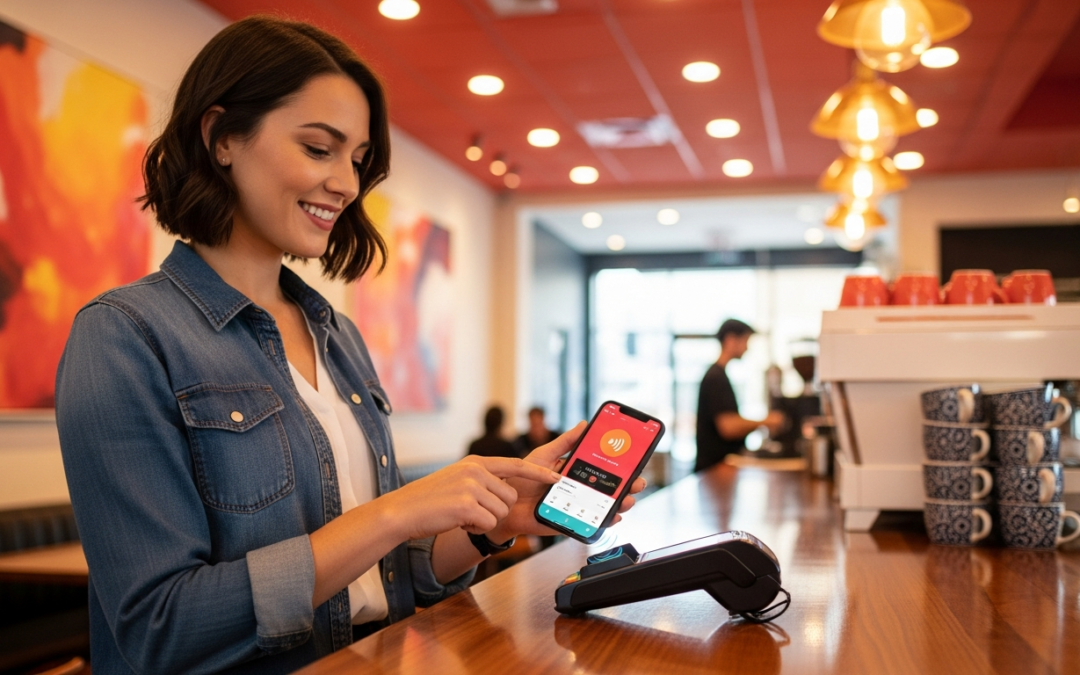
Digital wallets have evolved from novelty to necessity. In 2026, more than 60% of in-store transactions at major retailers are initiated through a digital wallet, according to industry estimates. Apple Pay alone processes billions of transactions annually, and Google Pay, Samsung Pay, and merchant-specific wallets like Walmart Pay and Starbucks have all gained significant traction.
For credit unions, supporting digital wallets is table stakes. If a member can’t add their credit union debit or credit card to Apple Pay, they’re likely to use a different card for mobile transactions—and over time, that card may become their primary card. Digital wallet support directly impacts top-of-wallet status, which drives interchange revenue and transaction data insights.
The technical side of digital wallet enablement has become simpler. Major card processors and core providers now offer streamlined tokenization services that allow credit unions to issue digital wallet tokens alongside physical card credentials. The challenge is no longer technical implementation—it’s member education and adoption. Many members don’t realize their credit union cards work with digital wallets, or they assume the experience will be inferior to what they get with a big bank card.
Credit unions should aggressively promote digital wallet capabilities through onboarding flows, email campaigns, and in-branch signage. Every new card issuance—whether plastic or digital—should include instructions for adding the card to Apple Pay and Google Pay. Some credit unions have even started offering instant card provisioning: when a member opens a new account online, they can add the virtual card to their digital wallet immediately, before the physical card arrives in the mail.

The next frontier is digital wallet evolution beyond payments. Apple is expanding Wallet into identity verification, digital keys, and event ticketing. Google Pay is integrating deeper with Google’s ecosystem of services. Credit unions that position their cards as the default payment method within these expanding ecosystems gain long-term engagement advantages.
P2P Payment Integration: Zelle, Venmo, and Meeting Members Where They Are
Person-to-person payments have become one of the most visible battlegrounds in consumer finance. Venmo, Cash App, and Zelle collectively handle hundreds of billions of dollars in P2P volume annually. Members use these platforms to split dinner checks, pay rent, send gifts, and reimburse friends. The credit union that isn’t integrated into these flows effectively outsources its most frequent member touchpoints to third-party apps.
Zelle, in particular, represents both an opportunity and a challenge for credit unions. Because Zelle is bank-integrated—funds move directly between financial institution accounts—it offers a more seamless experience than app-based wallets that require balance transfers. Many credit unions now offer native Zelle integration within their mobile banking apps, allowing members to send and receive money without leaving the familiar credit union interface.
Venmo and Cash App remain popular, particularly among younger members. While credit unions can’t control the user experience within these apps, they can ensure that their debit cards work smoothly as funding sources. Members who link their credit union debit card to Venmo for daily transactions are more likely to keep that card as their default payment method, maintaining top-of-wallet status.
The data opportunity here is significant. When members use P2P payment platforms, they generate transaction data that reveals spending patterns, merchant preferences, and lifestyle trends. Credit unions that can aggregate and analyze this data alongside their own transaction records gain richer insights into member behavior. Privacy-compliant data analysis enables more targeted product offers, better fraud detection, and more personalized member experiences.
Forward-thinking credit unions are exploring embedded P2P capabilities within their own apps, rather than relying solely on third-party integrations. By building native P2P transfer functionality powered by FedNow or RTP rails, credit unions can offer instant transfers between members without any intermediary. This strengthens the credit union brand in the payment experience and keeps transaction data completely within the credit union’s ecosystem.
Card Management Modernization: Tokenization, Virtual Cards, and Instant Issuance
The humble plastic card has undergone a radical transformation. Modern card management platforms offer capabilities that were science fiction just a few years ago: virtual card numbers for online shopping, one-time-use tokens for subscription services, real-time spending controls, and instant issuance of digital cards to mobile wallets.
Tokenization lies at the heart of modern card management. Instead of transmitting sensitive card numbers with every transaction, tokenization replaces the primary account number with a unique digital token that’s valid only for a specific device, merchant, or transaction. This dramatically reduces fraud risk and simplifies compliance with Payment Card Industry Data Security Standards (PCI DSS). Most modern card processors now offer tokenization as a standard service, and credit unions should ensure their card programs support the latest tokenization standards.
Virtual cards represent another important innovation. A virtual card is a digital-only card number that exists separately from the physical card. Members can generate virtual card numbers for specific merchants, set spending limits, and deactivate them when no longer needed. This is particularly useful for subscription services, recurring payments, and online shopping where card-on-file security is a concern.
Instant card issuance is perhaps the most impactful member experience improvement in the card space. When a member opens a new account or reports a lost or stolen card, they can receive a digital card credential immediately—usable in Apple Pay, Google Pay, or the credit union’s own mobile app—while the physical card is mailed. This eliminates the painful 7-10 day waiting period that has historically driven members to use backup cards from competing institutions.
Real-time spending controls and alerts round out the modern card management suite. Members should be able to set transaction limits, block international usage, restrict merchant categories, and receive instant notifications for every transaction. For credit unions, these controls reduce fraud liability while increasing member confidence in using their cards as primary payment instruments.
Open Banking and API-Driven Payment Experiences
Open banking has arrived in the United States. Building on momentum from the Consumer Financial Protection Bureau’s 1033 rulemaking and growing adoption of standards like FDX (Financial Data Exchange), credit unions now have the regulatory framework and technical standards to securely share member data with authorized third parties. Payment initiation is emerging as one of the most powerful use cases for open banking APIs.
API-driven payments allow members to initiate transfers and payments directly from third-party applications without leaving those apps. A member using a budgeting tool like YNAB or Mint can initiate a loan payment or savings transfer without switching to the credit union’s app. A small business using QuickBooks can pay invoices directly from their credit union business account through API integration. These experiences reduce friction and keep credit union accounts at the center of the member’s financial ecosystem.
The technical implementation of open banking payments requires careful attention to security and authentication. Strong customer authentication (SCA), OAuth 2.0 authorization flows, and API rate limiting are essential components of a secure open banking architecture. Credit unions should work with established open banking platforms like Finicity, Plaid, and Akoya to ensure compliance with evolving regulatory requirements while delivering a smooth member experience.
Beyond payments, open banking APIs enable account aggregation, credit decisioning, and personalized financial insights. Credit unions that embrace open banking can offer members a comprehensive view of their financial life, including accounts at other institutions, while keeping the credit union as the primary relationship hub.
The strategic opportunity for credit unions is to become the member’s data custodian, not just their transaction processor. By providing useful, secure, and member-authorized data sharing, credit unions can deepen trust and create switching costs that extend far beyond any single payment transaction.
Payment Fraud Prevention in an Instant World
The acceleration of payments creates new fraud challenges. When money moves in seconds rather than days, the window for detecting and preventing fraudulent transactions shrinks dramatically. Real-time payment systems require real-time fraud detection, which demands machine learning models operating at sub-second latency.
Credit unions face a unique set of fraud risks in the modern payment scene. Authorized push payment (APP) fraud, where members are tricked into authorizing transfers to fraudsters, has become one of the fastest-growing fraud types. Synthetic identity fraud, where fraudsters combine real and fabricated information to create fake identities, exploits gaps in traditional verification methods. Account takeover attacks, often initiated through phishing or credential stuffing, can lead to unauthorized instant transfers that are nearly impossible to recover.
The good news is that the tools for combating modern payment fraud have evolved significantly. Behavioral biometrics analyze how a member interacts with their device—typing speed, swipe patterns, even how they hold their phone—to detect anomalies that may indicate account takeover. Consortium data sharing allows credit unions to pool fraud intelligence across institutions without exposing sensitive member information. And AI-powered transaction monitoring can flag suspicious payment patterns in real time, blocking or flagging transactions before funds leave the credit union.

Credit unions should adopt a layered approach to payment fraud prevention. The first layer is strong authentication: multi-factor authentication (MFA) for all payment initiation, device fingerprinting, and risk-based authentication that applies additional scrutiny to high-risk transactions. The second layer is transaction monitoring: real-time scoring of every payment against historical member behavior and known fraud patterns. The third layer is post-transaction recovery: clear processes for members to report unauthorized transactions, with timelines and escalation paths that meet regulatory requirements.
Member education is a critical but often overlooked component of fraud prevention. Credit unions should regularly communicate common fraud schemes, warning signs of social engineering attacks, and steps members can take to protect their accounts. Members who understand fraud risks are less likely to fall victim to scams, reducing losses for both the member and the credit union.
Capturing Younger Members Through Modern Payment Experiences
Younger generations—Gen Z and younger millennials—have fundamentally different expectations for financial services than their parents’ generation. They grew up with smartphones, social media, and on-demand services. The concept of waiting for a payment to process or visiting a branch to initiate a transfer feels as archaic to them as a rotary phone. For credit unions looking to attract younger members, payment modernization is the most effective entry point.
Studies consistently show that Gen Z consumers prioritize payment experience over almost any other banking feature. They want instant transfers, seamless digital wallet integration, peer-to-peer payment capabilities, and transparent fee structures. They are more likely to choose a financial institution based on its mobile app and payment features than on branch proximity, interest rates, or even brand reputation.
This creates a genuine opportunity for credit unions. Unlike the largest banks, which often struggle to innovate quickly due to legacy system complexity, many credit unions have the organizational agility to adopt modern payment technologies rapidly. A credit union with 50,000 members can implement an instant payment solution in weeks, while a mega-bank with millions of customers may take months or years to handle internal approval processes.
Youth-focused payment features that resonate with younger members include early wage access programs, which allow employees to access earned wages before payday; round-up savings programs, that automatically transfer spare change from purchases to savings accounts; split payment capabilities, that enable in-app bill splitting with friends; and savings goals with automatic micro-transfers. Each of these features leverages the credit union’s payment infrastructure to deliver value that younger members actively seek.
Credit unions should market these payment capabilities specifically to younger demographics through social media channels, college partnerships, and employer-based programs. The messaging should emphasize speed, convenience, and control—the attributes that matter most to younger consumers. When a credit union can demonstrate that its payment experience matches or exceeds what neobanks offer, while also providing the trust, security, and community focus of a not-for-profit cooperative, it becomes a compelling choice.
Core System Integration: The Technical Reality of Payment Modernization
No discussion of payment modernization is complete without addressing the technical foundation. Most credit unions operate on core processing systems that were designed decades ago, in an era when batch processing was standard and real-time capabilities were unnecessary. Connecting modern payment rails to legacy core systems is often the most challenging aspect of payment modernization.
The key architectural pattern that has emerged is the payment hub. A payment hub sits between the core system and external payment networks, handling message translation, routing, fraud scoring, and settlement logic. This allows credit unions to connect to modern payment networks—FedNow, RTP, card networks, digital wallets—without modifying their core system. The payment hub handles the heavy lifting of real-time processing, while the core continues to manage account balances and transaction records.
This approach has significant advantages. It reduces the risk of core system changes, accelerates time-to-market for new payment capabilities, and allows credit unions to switch payment providers without core conversions. Many core processors now offer integrated payment hub services, and independent payment hub providers like Finxact, Alacriti, and Volante offer solutions specifically designed for community financial institutions.
Credit unions should also evaluate their card processing relationships during payment modernization. Traditional card processors charge premium fees for tokenization, digital wallet enablement, and virtual card services. Newer processors and issuer-processor hybrids offer these capabilities as standard features with transparent, per-transaction pricing. A competitive card processing RFP should evaluate not just pricing, but also API capabilities, tokenization support, and integration with the credit union’s chosen digital wallet strategy.
The move toward cloud-based core systems is accelerating and offers additional benefits for payment modernization. Cloud-native core platforms like Jack Henry’s Banno Digital Platform, Symitar’s Episys cloud offerings, and newer entrants like Nymbus and MANTL provide API-first architectures that simplify integration with modern payment networks. Credit unions that are considering a core conversion should prioritize platforms with strong payment API capabilities.
The Competitive Scene: Credit Unions vs. Neobanks on Payments
Neobanks like Chime, SoFi, Current, and Varo have raised the bar for payment experiences in consumer banking. These digital-only institutions were built from the ground up with modern payment infrastructure. They offer instant transfers, early direct deposit, fee-free overdraft, and seamless digital wallet integration as standard features. Their marketing emphasizes speed, simplicity, and transparency—areas where traditional banks and credit unions have historically struggled.
But the neobank model has weaknesses that credit unions can exploit. Neobanks primarily earn revenue through interchange fees, subscription fees, and lending partnerships. They lack the diversified income streams that credit unions have from loans, investments, and member relationships. Many neobanks are not yet profitable, and their long-term viability depends on continued venture capital funding or eventual acquisitions.
Credit unions have structural advantages that matter to members: they are member-owned cooperatives with no shareholder pressure to maximize profits, they have established trust and brand recognition in their communities, they offer full-service lending products that neobanks can’t match, and they provide human support through branch networks and member service centers. When a credit union combines these structural advantages with modern payment capabilities, it becomes a formidable competitor.
The winning strategy for credit unions is not to try to beat neobanks at their own game. Instead, credit unions should leverage their unique strengths while matching neobanks on payment experience. This means investing in the same instant transfer capabilities, digital wallet support, and mobile-first interfaces that neobanks offer, while also delivering the personalized service, community focus, and comprehensive product suite that neobanks cannot provide.
Some credit unions are taking the offensive by partnering with fintech companies to offer neobank-like features under their own brand. These “credit union neobank” offerings combine the trust and security of a regulated financial institution with the user experience and speed of a modern fintech. The result is a hybrid that appeals to younger members while maintaining the credit union’s core values.
Building Your Payment Modernization Roadmap
Payment modernization is not a single project—it’s an ongoing process that requires strategic planning, phased execution, and continuous improvement. Credit unions should develop a three-to-five-year payment modernization roadmap that aligns with their strategic priorities, member needs, and technical capabilities.
Phase one: Foundation building. The first phase focuses on establishing the technical infrastructure for modern payments. This includes evaluating and selecting a payment hub provider or upgrading core payment capabilities, implementing tokenization for card transactions, enabling digital wallet support (Apple Pay, Google Pay, Samsung Pay), and deploying real-time fraud detection tools. This phase typically takes six to twelve months and requires investment in both technology and staff training.
Phase two: Real-time enablement. The second phase adds real-time payment capabilities. This includes connecting to FedNow and/or the RTP network for instant transfers, enabling real-time account-to-account transfers within the credit union, implementing instant card issuance for digital wallets, and launching early wage access programs. This phase requires close coordination with core processors and payment partners, as well as updates to mobile banking interfaces to surface real-time capabilities. Timeline: three to nine months after phase one.
Phase three: Experience expansion. The third phase focuses on enhancing the member experience through advanced payment features. This includes launching virtual card generation for online shopping, implementing P2P payment integration within the mobile app, deploying open banking APIs for third-party connectivity, and introducing personal financial management tools that leverage transaction data. This is where the credit union begins to differentiate its payment experience from competitors. Timeline: six to twelve months after phase two.
Phase four: Ecosystem integration. The final phase positions the credit union as a central payment hub in the member’s financial ecosystem. This includes offering bill payment aggregation and smart scheduling, enabling instant loan disbursement through payment rails, integrating with popular budgeting and accounting platforms, and developing merchant-funded rewards programs based on transaction data. At this stage, the credit union’s payment infrastructure is a competitive advantage rather than a compliance requirement. Timeline: ongoing.
Throughout all phases, credit unions should maintain a relentless focus on member education and adoption. The most sophisticated payment infrastructure in the world delivers no value if members don’t know about it or don’t trust it. Regular communication, in-app prompts, branch demonstrations, and community events can accelerate adoption and ensure that payment modernization investments deliver tangible returns in member satisfaction and retention.
References
- Federal Reserve FedNow Service Overview — Official information about the FedNow real-time payment infrastructure, participation requirements, and recent adoption milestones.
- The Clearing House RTP Network — Details on the private-sector real-time payment system widely used by credit unions and community banks.
- NCUA Regulation and Supervision — Official NCUA guidance on regulatory expectations for credit union payment systems and digital services compliance.
- Cornerstone Advisors 2025 Consumer Payments Study — Industry research on consumer payment preferences, adoption rates by demographic, and satisfaction benchmarks.
- NCUA Guidance on Payment System Risks — Regulatory guidance on managing risks associated with real-time payment systems and digital payment services.
- Federal Reserve Report on the Economic Well-Being of U.S. Households — Federal Reserve research on consumer financial health, payment behavior, and access to banking services.
- NCUA Letter to Credit Unions on Third-Party Due Diligence — NCUA guidance on managing vendor relationships and data sharing risks relevant to open banking implementations.
- Jack Henry Strategic Insights — Industry analysis and practical guidance for community financial institutions on digital payment strategy and core modernization.
- CFPB Small Entity Compliance Guide on Open Banking — Official CFPB compliance guidance for financial institutions on implementing consumer financial data rights under Section 1033.
- Acuant Guide to Synthetic Identity Fraud Prevention — Research on synthetic identity fraud trends and detection strategies for financial institutions.
This article was brought to you by GrafWeb CUSO — Building the future of digital credit unions.