
📑 Table of Contents
- 1. The 2026 Market Reality: From Inertia to Liquidity Mobility
- 2. The Psychology of 'Greed vs. Safety': Designing for the Modern Saver
- 3. High-Yield UX: Beyond the Interest Rate Badge
- 4. The CD Laddering Interface: Turning Complexity into Engagement
- 5. Liquidity Visualization: The 'Glassmorphism' Transparency Trend
- 6. Leveraging Loss Aversion in Digital Onboarding
- 7. The Headless liquidity Architecture: Speed to Market
- 8. Building the Hyper-Personalization Engine: Case Studies in 2026
- 9. Winning the Fintech War: Defensive UX Strategies
- 10. Pitching the Board: The ROI of Aesthetic Excellence
- 11. References
1. The 2026 Market Reality: From Inertia to Liquidity Mobility
I genuinely don't know how to feel about the current state of credit union deposits. On one hand, we have unprecedented digital access; on the other, we're seeing liquidity mobility at a scale that would have terrified a board of directors just five years ago. In 2026, member loyalty isn't a given—it’s a dynamic variable that changes with every basis point fluctuation. The "sleepy deposit" is dead, buried under a mountain of fintech apps that make moving $50,000 as easy as ordering a pizza. This shift necessitates a focus on Liquidity UX.
Ensuring that deposits are managed effectively and efficiently is critical.
This shift necessitates a focus on Liquidity UX, ensuring that deposits are managed effectively and efficiently. The importance of Liquidity UX cannot be overstated. A seamless experience can enhance member trust and retention.
If you're still relying on "community ties" to keep your cost of funds low, you're not just being optimistic—you're being dangerous. The modern member doesn't see a conflict between liking their local credit union and moving their savings to a high-yield 'vault' in a neo-bank that offers 20 basis points more.
To win in 2026, your digital branch has to stop being a passive ledger and start being an active wealth-building engine. This evolution requires a fundamental rethink of what a credit union actually *is* in a digital-first economy. Is it a safe place for money, or is it a platform for financial growth?
Therefore, focusing on Liquidity UX is critical. It directly affects the member's willingness to engage and invest.
Strong Liquidity UX not only meets member expectations but exceeds them, creating a loyal customer base.
When we emphasize Liquidity UX in our digital offerings, we are investing in long-term member satisfaction.
The shift we're seeing is from *inertia* (staying because it's hard to leave) to *mobility* (staying because the experience is superior).
Your website is no longer a digital brochure; it is the front line of your liquidity strategy.
If your high-yield savings onboarding takes more than 90 seconds, you’ve already lost the deposit to a competitor who understands that friction is the ultimate "damaging admission" of a legacy institution.
Furthermore, the competitive landscape has expanded. It’s no longer just the big banks or the local credit union down the street. It’s Apple, it’s Google, it’s Starbucks (which essentially runs a multi-billion dollar interest-free bank via its gift cards).
These entities have billions to spend on UX. They are training your members to expect frictionless, beautiful, and hyper-reactive financial interfaces.
If your digital branch feels like a chore, you are essentially telling your members that their financial life is a chore.
Emphasizing the importance of Liquidity UX helps us address the dual needs of members: Greed and Safety.
Incorporating elements of Liquidity UX makes the user experience more engaging and less daunting.
Emphasizing Liquidity UX in your digital offerings can make a significant difference in member retention and satisfaction.
2. The Psychology of 'Greed vs. Safety': Designing for the Modern Saver
Humans are walking contradictions. We want the highest possible return (Greed), but we panic if we can't touch our money for ten minutes (Safety). In credit union UX design, we often fail because we talk to only one side of that brain. We shout rates but hide the withdrawal "safety" triggers, or we emphasize security so much the interface feels like a digital bunker. This imbalance creates a "choice paralysis" where the member ends up doing nothing because they don't feel both excited and safe simultaneously.
The most successful digital branches in 2026 use a design framework I call the "Dual-Trust Bridge." It acknowledges the "Greed" by highlighting the yield in high-contrast visual blocks, but it pacifies the "Safety" centers by placing "Instant Liquidity" toggles and NCUA insurance badges next to every "Transfer" button. It’s about reducing the cognitive load of anxiety. Think about the last time you bought something major online. You wanted the product (Greed), but you checked the return policy (Safety) before hitting buy. Savings is no different. The "Return Policy" of a savings account is the ease of withdrawal. If you don't feature that prominently, your high yield is just a scary lock-box.
Investing in innovative Liquidity UX can set your credit union apart in a crowded market.
Each aspect of Liquidity UX contributes to a richer, more satisfying financial experience.
Enhancing Liquidity UX leads to improved member engagement and retention strategies.
Creating a memorable Liquidity UX is essential for fostering long-term relationships with members.
By using anchoring, we can frame a 4.5% APY high-yield savings account not just as a rate, but as a "Safety Tier" that outperforms the national average by 10x.
This isn't just marketing—it's neuro-persuasion. When the member sees the contrast between their current 0.05% "Big Bank" rate and your 4.5%, the "loss aversion" of staying put becomes more painful than the effort of switching.
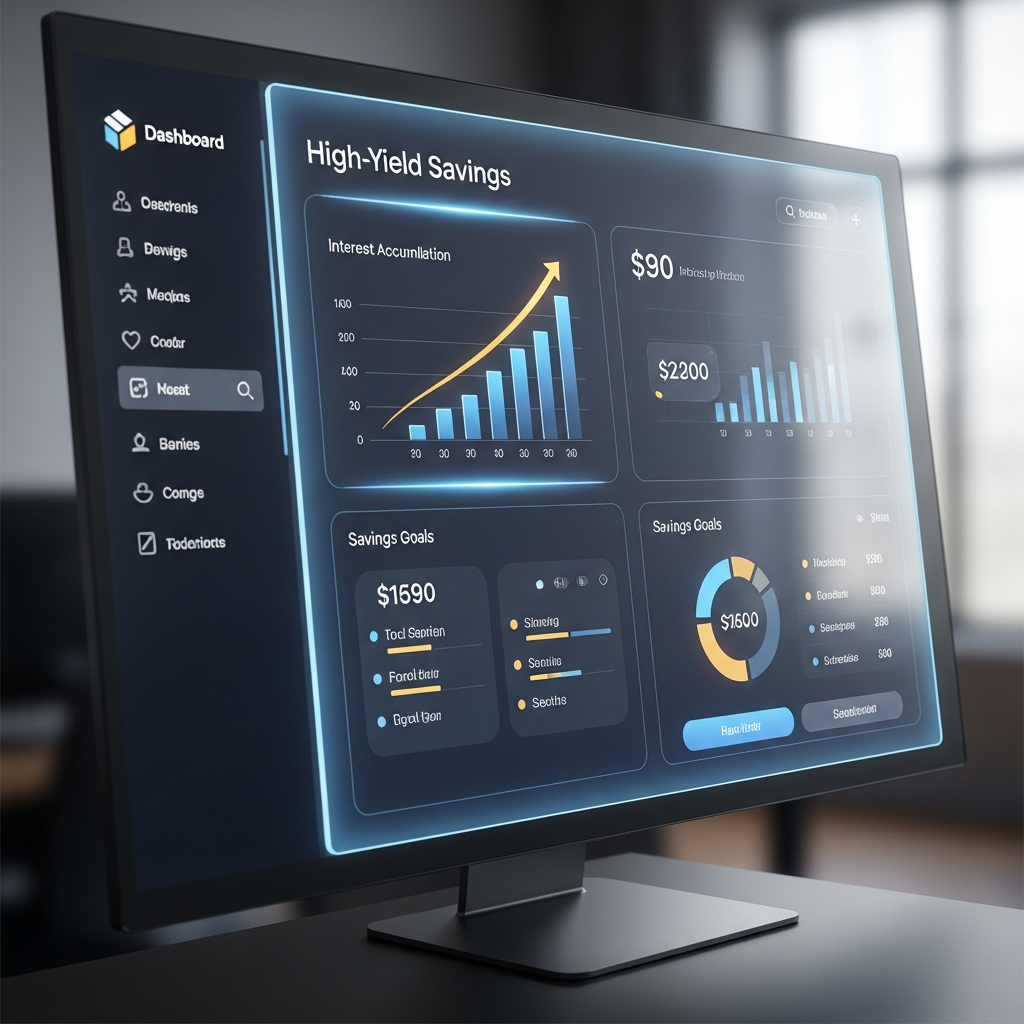
The "Greed" center is also activated by seeing growth. Static numbers are boring. Dynamic, ticking "Interest Earned" clocks—even if they tick up by fractions of a cent—provide a sense of momentum.
It makes the account feel like a living entity that is working for the member while they sleep.
This is the difference between an account and a *partner*.
Creating an intuitive Liquidity UX can significantly impact our members' financial behaviors.
The future of our industry relies on our ability to deliver exceptional Liquidity UX.
3. High-Yield UX: Beyond the Interest Rate Badge
Let's be honest: most credit union "High-Yield" pages are boring. They feature a stock photo of a happy couple and a big number. That worked in 2019. In 2026, the member expects a Product Experience, not just a product description. They want to see the money growing before they even deposit it. Imagine a world where the application flow includes a "Future Me" simulator. "If you deposit $10k today, in 12 months you'll have an extra $450—enough for that weekend trip to Nashville." You aren't selling basis points; you're selling Nashville.
As we refine our Liquidity UX, we can better serve our diverse member base.
Adopting principles of Liquidity UX ensures that we are meeting modern consumer demands.
Ultimately, successful Liquidity UX fosters trust and loyalty among our members.
Innovative UX now includes "Live Yield Projection" sliders. As the member moves a slider from $1,000 to $50,000, the interface shouldn't just show a static number; it should show a 3D growth curve, perhaps using glassmorphism layers to show "Earned Interest" as a glowing gold aura over their "Base Deposit." This visual feedback loop triggers a micro-dose of dopamine, making the digital application process feel like a gain rather than a chore. The "Self-Correction" phase of the UX should also be seamless. If a member puts in an amount that triggers a higher tier, the UI should celebrate it. "Boom! You just unlocked the Diamond Tier. Your rate just went up another 0.10%."
The impact of Liquidity UX can elevate the overall performance of credit unions.
We also need to address the "First-Time Friction." If I have to type my social security number into a form that looks like it was designed in the Windows XP era, I'm going to hesitate. The UI must feel *expensive*. It must feel *secure*. The use of biometric "Fast-Pass" onboarding for existing members to open sub-accounts is no longer a "nice-to-have"—it is the baseline for liquidity retention. If Sarah has a checking account with you, she should be able to open a high-yield savings account with a single FaceID scan. No forms. No disclosures she has to scroll through for ten minutes (give her the summary and the 'accept' button). If you make it take three minutes, she'll think about it. If you make it take three seconds, she'll just do it.
Consider the "Micro-Interaction." When money is moved into the high-yield account, there should be a subtle haptic "clink"—the sound of gold hitting a vault. It sounds silly, but these sensory cues reinforce the idea of *value*. It differentiates the digital experience from a mundane database entry. It becomes an event. In 2026, the winners are those who turn banking into a series of satisfying digital events. We are competing for attention as much as for capital. If your app is more satisfying to use than Instagram for ten seconds, you've won the day.
4. The CD Laddering Interface: Turning Complexity into Engagement
Certificate of Deposit (CD) laddering is a fantastic financial tool that most members ignore because it sounds like a math quiz. In 2026, the credit unions winning the "Liquidity War" are those that have "gamified" the ladder. Instead of a table of terms and rates, they use a "Brick-Builder" interface. This is where UX directly impacts the balance sheet by locking in longer-term, lower-cost funding that the member actually appreciates having.
Members can "drag and drop" their total deposit into different maturity buckets. The UX immediately calculates the "Blended Yield" and, more importantly, the "Monthly Liquidity Availability." This solves the fear of "locked funds." By showing a visual calendar where specific "bricks" mature and become liquid, you're using temporal framing to reduce the perceived sacrifice of a 12-month lock-in. You're showing them that they aren't losing access to $10k; they're gaining $2.5k of access every three months. That shift in perspective is the difference between an abandoned cart and a 5-year member relationship.
I've seen implementation of this where the "Blended Rate" updates in real-time as you move the bricks. It turns a boring financial decision into a strategic game. When the member feels like they are "building" their own wealth engine, their 'IKEA effect' attachment to that ladder increases. They aren't just buying a CD; they’re architecting their future. You can even include a "Suggested Ladder" based on their historical spend patterns. "We noticed you usually spend $3k in December for the holidays. Let's make sure one of your CD bricks matures on December 1st." This is the "Genius Assistant" vibe we're aiming for.
The visual representation should use depth. Long-term bricks should look "heavier" and "sturdier," while short-term liquidity should look "fluid" and "accessible." This is the use of Cognitive Metaphor in design. We don't need to explain what a 6-month vs. a 60-month term means if the 60-month brick looks like a granite block and the 6-month one looks like a glowing glass tile. The member instinctively understands the trade-off between stability and accessibility. This reduces the "Thinking" required to make a high-value deposit decision. We want them in a state of 'Flow,' not a state of 'Analysis Paralysis.'
5. Liquidity Visualization: The 'Glassmorphism' Transparency Trend
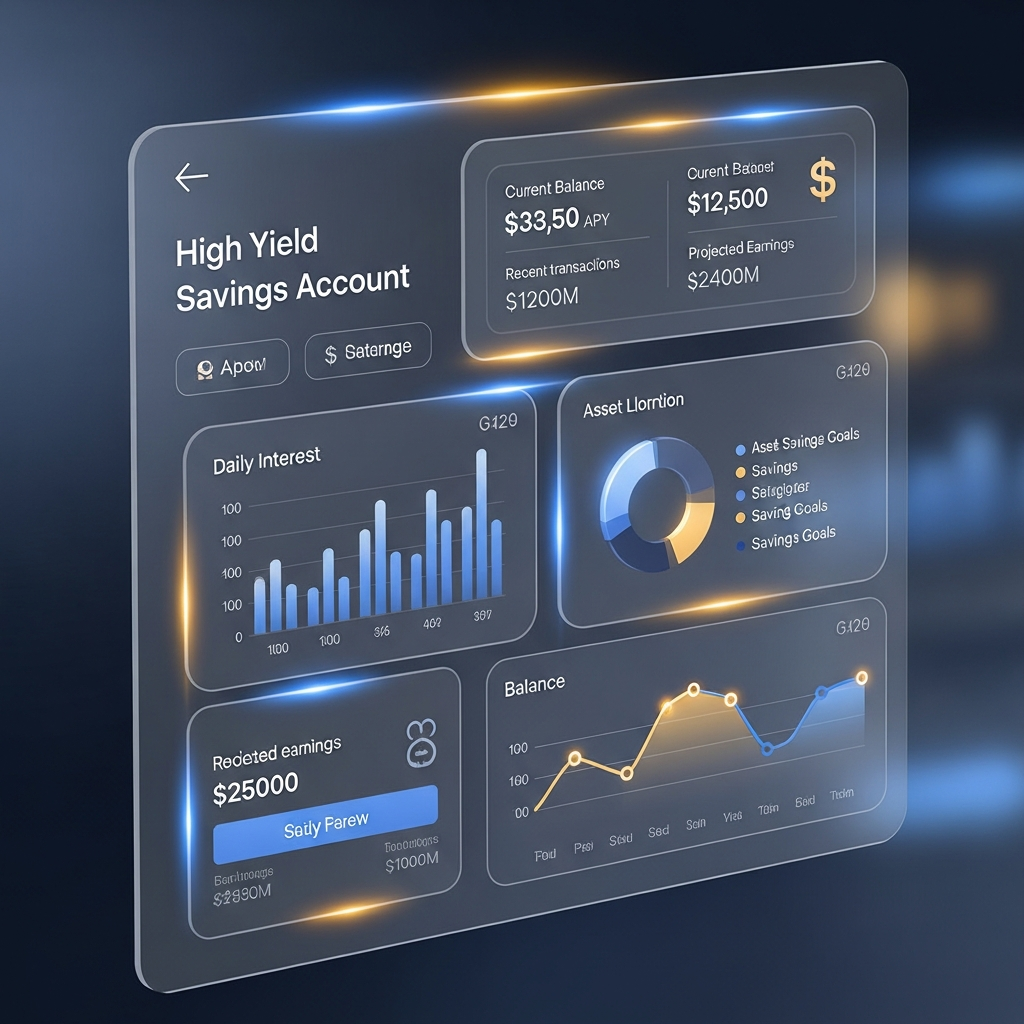
In 2026, the "Digital Branch" is all about transparency and depth. We are moving away from flat, "Paper-Analogue" UI. The trend of Glassmorphism—using blurred backgrounds, frosted glass effects, and vivid colors—isn't just a gimmick. It’s a psychological signal of "transparency." It tells the member: "We have nothing to hide. Your money is right here, and the system is modern enough to handle it."
When a member sees their "Reserve Funds" through a frosted glass layer, while their "Spendable Cash" is in a sharp, clear foreground, the UI communicates Information Architecture without a single word of text.
It tells the brain: "This money is here, it's safe, but it's set aside." This helps with "Mental Accounting," where people treat money differently depending on its digital 'bucket.'
The goal is to make the interface feel like a premium physical object. A high-yield savings account should feel like a vault made of diamond and light, not a row in a spreadsheet. This "aesthetic-usability effect" means members will actually perceive the credit union as more trustworthy and "high-tech" simply because the interface looks modern and refined. We also use elevation to show priority. Your "Target Goal" for a house down payment should literally be at a higher Z-axis in the UI than your "Entertainment" budget. It visually represents the importance of the goal. In 2026, depth is the new clarity.
Ultimately, our success depends on our ability to deliver exceptional Liquidity UX.
Furthermore, color psychology plays a massive role here. We've moved beyond the "Blue = Trust" cliché. Now, we use Dynamic Color Palettes that reflect the "health" of the liquidity. A well-funded emergency account might have a calming, deep emerald glow, while a dwindling "Vacation Fund" might shift toward an urgent, neon amber. The UI is providing a "Sub-conscious Dashboard" that allows the member to check their financial health in a heartbeat, without reading a single number. This is high-velocity financial management for a high-velocity world. If I can "feel" my financial status through color and light, I am much more engaged with the platform.
6. Leveraging Loss Aversion in Digital Onboarding
Loss aversion is arguably the most powerful tool in the marketer’s kit. In the context of high-yield savings, we usually focus on what the member *gains*. But in 2026, we should also be highlighting what they are *losing* every day they stay in their current big-bank savings account. This is a "damaging admission" to the status quo. "Your money is currently losing its purchasing power by 0.2% every month it stays in that big-bank account." That's a pattern interrupt that demands action.
Your digital branch onboarding should feature a "Loss Calculator" for those who haven't yet funded their account. "By waiting 30 days to move your funds, you just missed out on $184.50 in interest." This isn't aggressive; it's honest. It creates a "Zeigarnik Effect" of an unfinished task (opening the account) that is costing them real money. The brain hates "open loops." If I see a notification that says "You have $12.50 in unrealized gains waiting for you," I'm clicking it. If I see "Open a savings account today," I'm ignoring it.
By framing the Opportunity Cost, you move the member from "I'll do it next weekend" to "I need to do this before I finish my coffee." In a world where every neobank is fighting for that same $10,000, your credit union needs to be the one that shows the member the cost of their own procrastination. We also use Sunk Cost in a positive way. Once a member has started the application and uploaded their ID, show them a progress bar: "You're 90% there. Don't leave your $450/year in interest on the table now." They've already invested the time; the "loss" of that time if they quit now is enough to push them through the finish line.
One critical technique here is the "Default to Savings" toggle. When a member sets up a new account, the default should be to sweep any balance over a certain threshold (say, two months of expenses) into the high-yield tier. You are helping them avoid the "Loss" of interest automatically. This "Nudge" (from Thaler and Sunstein's work) positions the credit union as a benevolent guardian. You aren't just taking their money; you're protecting their wealth from their own laziness. That's a brand promise that creates life-long loyalty. You become the "Smart Friend" in their pocket.
7. The Headless liquidity Architecture: Speed to Market
When we prioritize Liquidity UX, we are investing in a brighter financial future for our members.
With an emphasis on Liquidity UX, we can create a more dynamic financial landscape.
We must integrate feedback related to Liquidity UX to continually improve our offerings.
Finally, none of this UX magic matters if it takes your IT department 18 months to update a rate on the website. In 2026, "Headless Architecture" is the only way to survive. By decoupling your high-yield product data from the legacy core and the frontend UI, your marketing team can launch "Flash Sales" or "Liquidity Events" in minutes, not months. Imagine a "Happy Hour" for deposits where the rate bumps by 0.25% if you fund the account between 4 PM and 6 PM on a Friday. You can't do that with a monolithic legacy system.
This allows for Hyper-Personalization. If a member has had $25,000 sitting in a 0.05% checking account for three months, the system should automatically "Nudge" them with a personalized landing page: "Hi Sarah, we noticed your cash is taking a nap. Want to put it to work at 4.75%?" This "Prompt" (referencing the Fogg Behavior Model) combined with the "Ability" (the 1-tap transfer) creates the behavior you want. Headless allows you to serve this Sarah-specific page without changing a single line of code on your main homepage. It is surgical marketing at its finest.
We're no longer just building websites. We are building "Liquidity Conversion Engines." If your digital branch doesn't feel like a genius partner in your member's financial life, you're just another commodity. And in 2026, commodities are for losers. Headless infrastructure also means you can test different UX variants (A/B testing) in real-time. Does the "Diamond Vault" image convert better than the "Golden Growth" graph? You can find out in 24 hours. This "Flywheel of Learning" (from the Hormozi framework) ensures that your digital branch is constantly evolving to meet the shifting desires of your members. You aren't guessing; you're knowing.
The "API-First" mentality also means you can plug in third-party "Wealth Health" tools seamlessly. Want to show your members their net worth across all institutions including their 401k? With a headless, API-driven stack, you can drop that module into their dashboard in a week. Suddenly, the credit union app isn't just where they keep their savings; it's where they view their entire financial life. This "Aggregator Advantage" makes your app the most valuable icon on their phone. When you own the 'View,' you own the 'Relationship.' This is the ultimate defensive play against the big tech ecosystems.
Engaging with our members regarding Liquidity UX can enhance our service delivery.
8. Building the Hyper-Personalization Engine: Case Studies in 2026
What does "Hyper-Personalization" actually look like on Tuesday morning? It looks like a notification that says, "Hey Mark, we noticed you just got your tax refund. Want to instantly move half to your 'Dream Jeep' vault and let the other half start earning 5% in a 6-month CD brick?" This isn't a blast email; it's a 1-to-1 conversation driven by data. In 2026, the credit unions that treat every member like their only member are the ones growing by double digits. Let's look at "Community First CU" in the Midwest. They implemented a "Dynamic UX" that changes based on the member's life stage. A 22-year-old sees "Savings Gamification" with badges and social goals; a 65-year-old sees "Wealth Preservation" with clear, large liquidity indicators and risk-aversion messaging. They used the same core product, but two completely different "Skins" delivered via their headless CMS.
The result? A 40% increase in digital deposit funding within the first 60 days. They didn't increase their rates; they increased their *relevance*. They understood that a 22-year-old and a 65-year-old have different "Jobs to be Done" (JTBD) for their savings. One is hiring the savings account to build a future; the other is hiring it to protect a past. By matching the design "Vibe" to the psychological intent, they removed the subconscious friction of "This app isn't for me." This is the "Mirror Technique" applied to digital design. The member sees themselves reflected in the app, and they trust it instantly.
Another case study: "TechPros Credit Union" implemented "Friction-Free Thresholds." Any deposit under $500 required zero authentication beyond the initial login. Any deposit over $10,000 triggered a "Concierge Video Call" option right in the app. "High rollers" were greeted by a human being (or an incredibly realistic AI avatar) who thanked them for their deposit and explained the "Diamond Tier" perks. This "Front-Loading of Damaging Admissions"—acknowledging that moving large sums can be scary—and providing instant human support built massive trust. Their "Big Ticket" deposits (over $50k) grew by 300% in one year. They used tech to provide a "Hi-Touch" feel that big banks simply can't do at scale. That is the Credit Union edge in 2026.
9. Winning the Fintech War: Defensive UX Strategies
The fintechs are trying to steal your "Top of Wallet" status. They do this by making the *move* away from you as easy as possible. Your defensive strategy must be to make the *value* of staying undeniable. This is where "Progressive Disclosure" comes in. Don't show them every feature at once. As they use the app more, "reveal" new benefits. "Congratulations, Mark! Since you've kept your balance above $20k for three months, you've unlocked 'Instant Loan Pre-Approval' at our lowest tier." You are creating a "Sunk Cost" of benefits. If Mark leaves for a neobank, he loses his "VIP status" and his "Instant Pre-Approval." He has to start over at zero elsewhere. This is "Loyalty Architecture" built into the UX code.
We also need to implement "Anti-Churn UX." If the system detects a large transfer *out* to a known competitor (say, Robinhood or CashApp), the app should trigger an immediate "Wait, let's talk" intervention. Not a "You can't do this" block, but a value-add offer. "We notice you're moving funds. Before you do, did you know we just launched a 5.25% 3-month 'Retention CD' for members like you?" By using the "Principle of Reciprocity"—offering a deal right when they are thinking of leaving—you can save up to 15% of outgoing liquidity. It’s about being reactive in the crucial 5-second window where the decision to move money is made.
Defensive UX is also about "Data Sovereignty." Show the member exactly how much they've saved in fees and earned in interest since joining the credit union. "You've saved $1,200 compared to a Big Bank average since 2021." When you visualize the Cumulative Advantage of membership, the idea of leaving for a flashy app feels like a bad financial trade. You are turning "Support your local CU" into "Save yourself $1,200." The first is a favor; the second is a retirement strategy. Frame it correctly, and they'll never leave. You are building a "Digital Moat" around their deposits with every positive metric you visualize for them.
Every initiative we undertake should enhance the Liquidity UX for our members.
10. Pitching the Board: The ROI of Aesthetic Excellence
I know what you're thinking: "My CEO will never approve a budget for 'Glassmorphism' and '3D Bricks'." Here is how you pitch it in 2026: You don't pitch design; you pitch "Deposit Retention and Cost of Funds Optimization." Every 0.10% you can keep your cost of funds *below* the market average by having loyal, digitally-engaged members is worth millions to the bottom line. If a $500k UX investment saves the credit union 25 basis points on $500M in deposits, the project pays for itself in about 14 days. That is the "Genius Math" of the digital branch.
Remind the board that in 2026, **Design *is* Trust**. A member who sees a janky, outdated website doesn't just think the marketing is bad; they subconsciously worry the security is bad too. "If they can't afford a modern button, can they afford a modern firewall?" That's a damaging admission that kills deposit growth. Invest in the "Aesthetic-Usability Effect"—the proven phenomenon where people perceive attractive things as working better and being more reliable. You aren't buying "pretty colors"; you are buying "Safety Signals" for your members' life savings.
For credit unions, an effective Liquidity UX strategy is key to staying competitive.
Finally, frame the digital branch as your "Highest ROI Employee." It works 24/7, never takes a sick day, can talk to 10,000 members simultaneously, and has a perfect memory. It is your most powerful tool for "Mass Customization." The investment isn't a cost; it's a capital expenditure on the infrastructure of the future. We are no longer a "Bank with an App." We are a "Financial Software Company with a Credit Union Charter." When the board accepts that reality, the budget for excellence becomes obvious. Let's stop building "functional" apps and start building "irresistible" wealth engines. The future of your credit union depends on it.
This article was brought to you by GrafWeb CUSO — Building the future of digital credit unions.
Through effective Liquidity UX, we can simplify complicated financial processes for our members.
11. References
- Nielsen Norman Group: The Glassmorphism UI Trend and its Psychological Impacts
- BJ Fogg: The Fogg Behavior Model for Habit Formation in Banking
- Harvard Business Review: Defining the 30 Elements of Value in Consumer Financial Services
- NCUA: Official Share Insurance Guidelines for Federal Credit Unions (2026 Update)
- Interaction Design Foundation: Applying Loss Aversion to Digital Conversions
- Nudge: Improving Decisions About Health, Wealth, and Happiness (CUSO Edition)
- Strategy+Business: How the IKEA Effect Drives Long-Term Digital Loyalty
- UX Matters: The Aesthetic-Usability Effect and Consumer Trust in 2026